
Redmi Buds 8 Pro Review
Xiaomi released the Redmi Buds 8 Pro towards the end of February, and I have been checking them out for the past few weeks.
I reviewed the Redmi Buds 6 back in January 2026, but never reviewed the Pro variant. With an affordable £65 price point, the new Redmi Buds 8 Pro are well-specced, equipped with Bluetooth 5.4 and support for the SBC, AAC, and LDAC codecs.
Additionally, Xiaomi claims these buds will suppress up to 55 dB of environmental sounds with active noise cancellation enabled. This is supposedly a 20% improvement from the previous generation.
So, how good are they in real life and can they compete with some of the excellent options from Soundcore?
No products found.
Related Reviews
- Xiaomi Buds 5 Pro Wi-Fi Review
- Redmi Buds 6 Review
- Redmi Buds 3 Review
- Sony Inzone Buds Review
- Huawei Freebuds 4 Pro Review
Specification
| Model | M2535E1 |
| Colour Options | Glacier Blue, Obsidian Black, Cloud White |
| Earbud Dimensions | 30.6 x 21.3 x 24.5 mm |
| Charging Case Dimensions | 61.01 x 48.28 x 25.17 mm |
| Weight (Single Earbud) | 5.3 g |
| Weight (Charging Case) | 36.3 g |
| Total Weight | 46.9 g |
| Battery Capacity (Earbuds) | 54 mAh |
| Battery Capacity (Case) | 480 mAh |
| Charging Port | USB Type-C |
| Earbud Input | 5V / 250 mA (max) |
| Case Input | 5V / 700 mA (max) |
| Case Output | 5V / 500 mA (max) |
| Wireless Connectivity | Bluetooth 5.4 |
| Bluetooth Protocols | BLE, HFP, A2DP, AVRCP |
| Communication Range | 10 m (open space) |
| Codec Support | SBC, AAC, LDAC |
| Driver Configuration | 11 mm dynamic + dual 6.7 mm PZT ceramic tweeters |
| ANC Depth | Up to 55 dB |
| IP Rating | IP54 (earbuds only) |
| Package Contents | Earbuds, charging case, USB-C cable, user manual, S/M/L ear tips (M pre-installed) |
Design
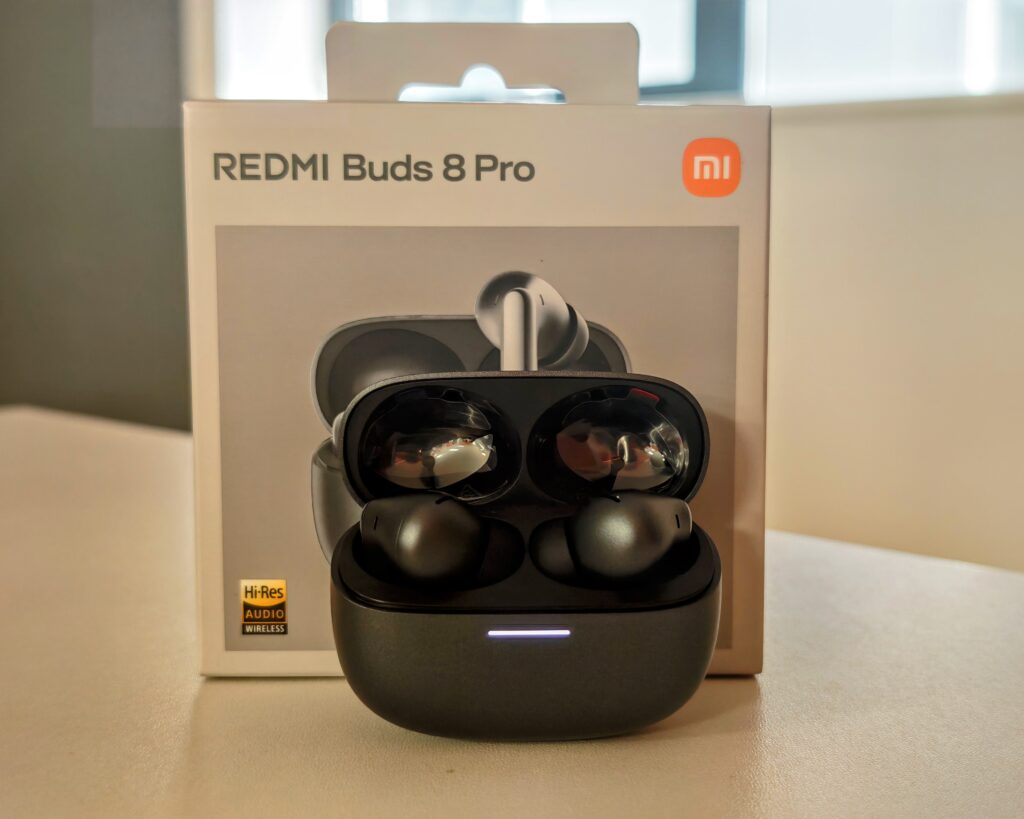
The Redmi Buds 8 Pro follow a fairly familiar design language. If you have used any of the recent Redmi earbuds, you will feel right at home here. They use a closed-ear, in-canal design with silicone tips and a protruding stem, which is broadly similar to what Apple did with the AirPods Pro and what most manufacturers have adopted since.
Each earbud weighs just 5.3 g, which puts them firmly in the lightweight category. In practice, this means they are comfortable enough for extended listening sessions without causing fatigue. The stems house the touch controls and feature a glossy strip on the outer face that catches the light, with a small Redmi logo at the base. The rest of the earbud body has a matte finish that resists fingerprints reasonably well.
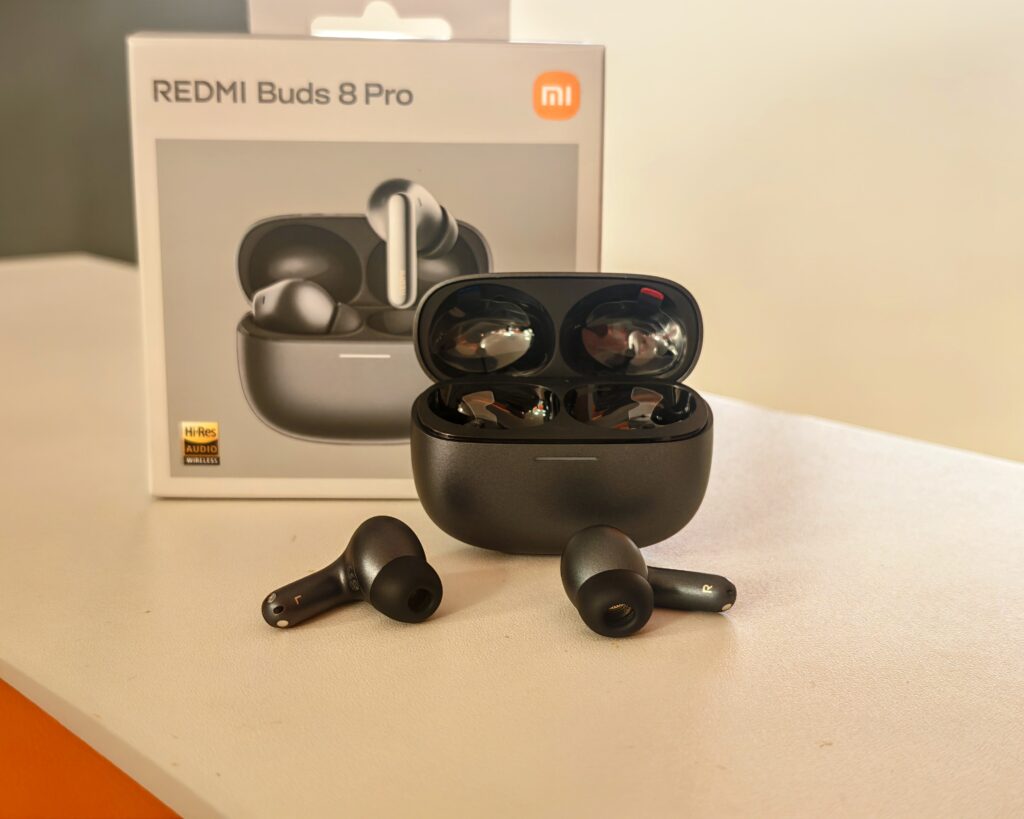
The charging case is compact and pebble-shaped, measuring 61 x 48 x 25 mm. It slips into a jeans pocket without much fuss. The semi-matte shell feels smooth and there is a slim LED bar on the front that indicates battery and pairing status. On the back, there is subtle branding and a ‘triple driver sound’ label. It is a clean, understated design that avoids looking cheap.
The earbuds come in three colours – Glacier Blue, Obsidian Black, and Cloud White. I have been testing the Obsidian Black variant. The buds are rated IP54 for dust and water resistance, which means they can handle sweat during workouts and light rain without any issues. However, they are not suitable for showering or submersion. The charging case does not have any ingress protection rating, which is fairly standard at this price.
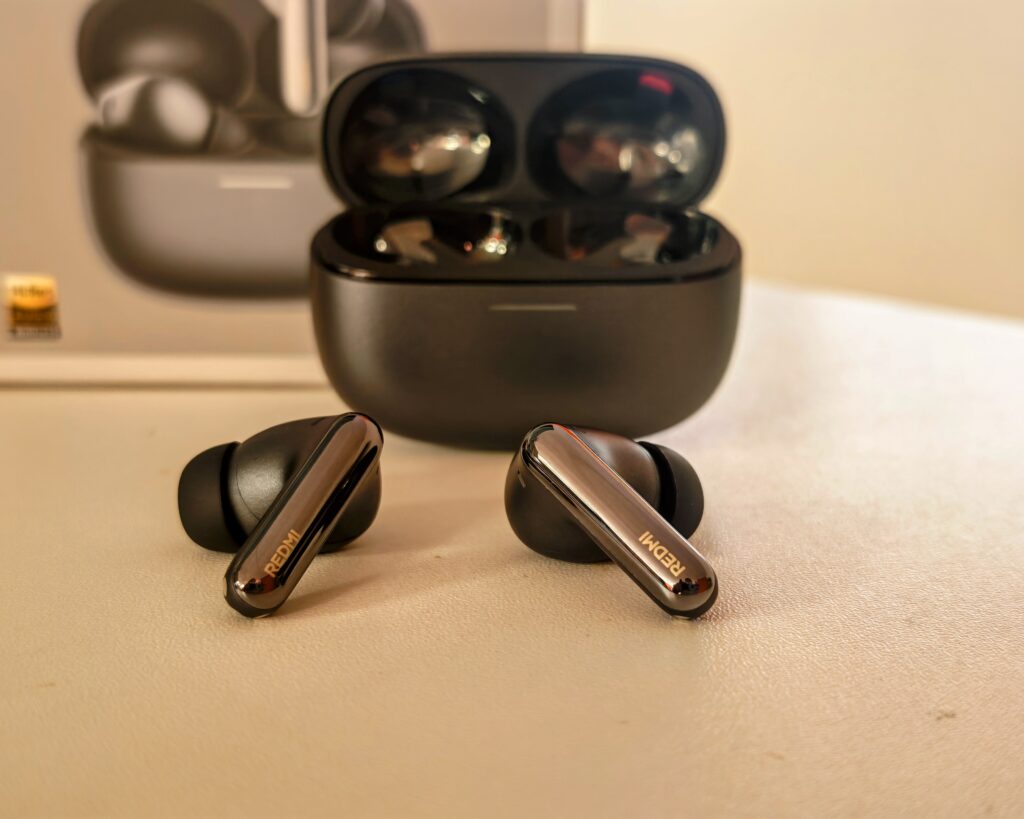
Three sizes of silicone ear tips are included in the box (S, M, and L), with the medium size pre-installed. I found the medium tips provided a good seal for my ears, but it is worth experimenting if you want optimal noise isolation. The box also includes a short USB-C cable and a user manual.
One notable omission is wireless charging. While it is understandable at this price point, it would have been a nice bonus. The older Redmi Buds 6 Pro also lacked wireless charging, so it is a shame Xiaomi did not address this with the new generation.
Xiaomi App
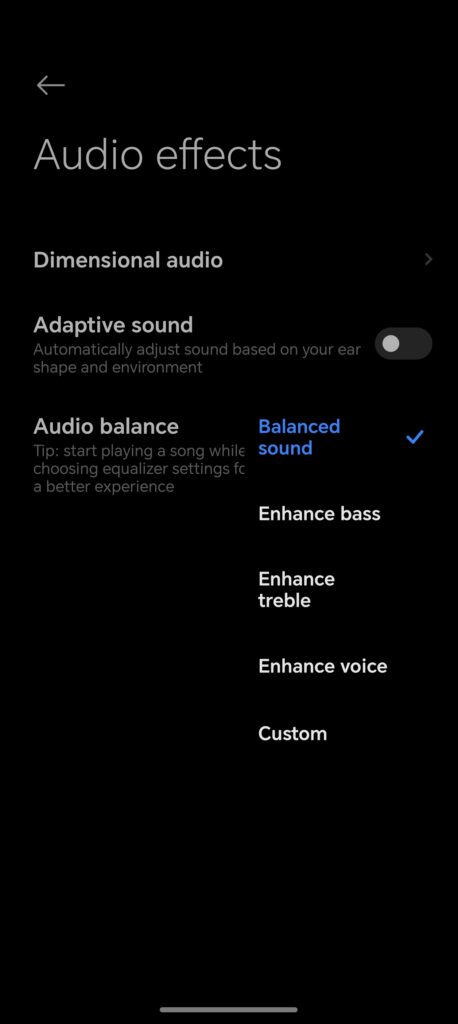
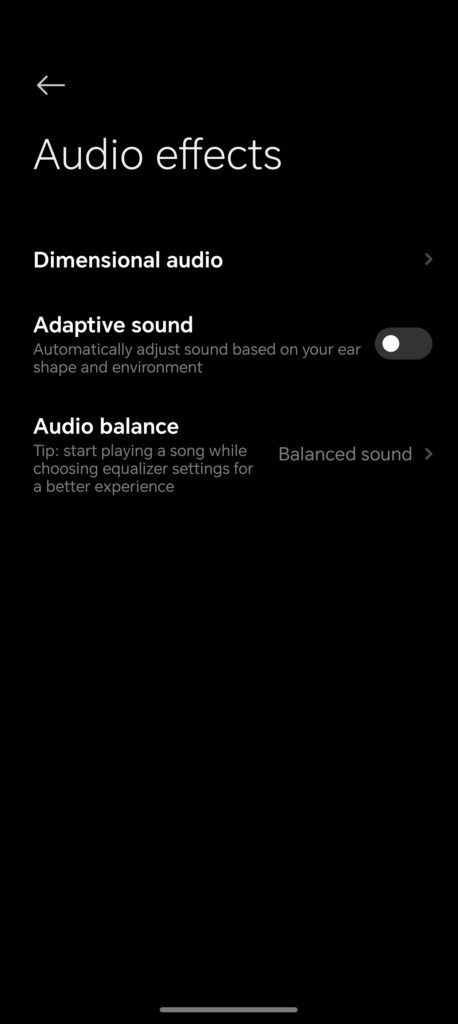
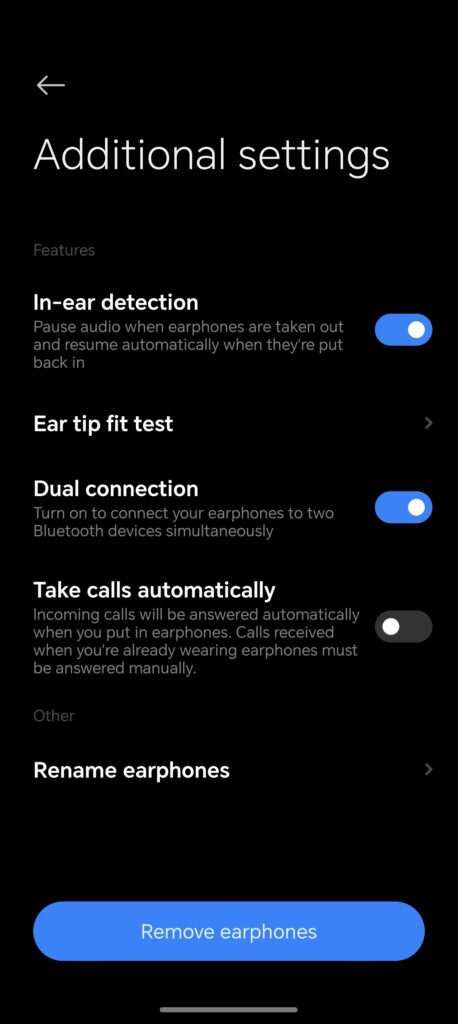
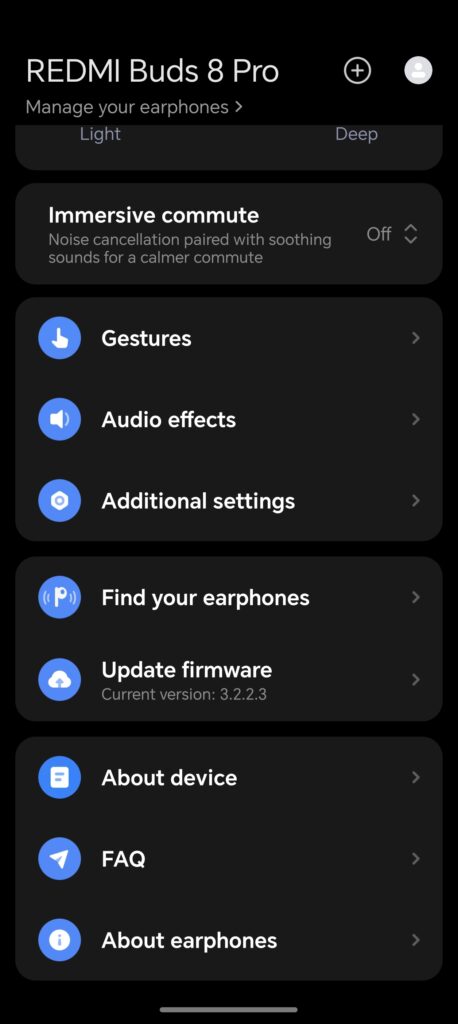
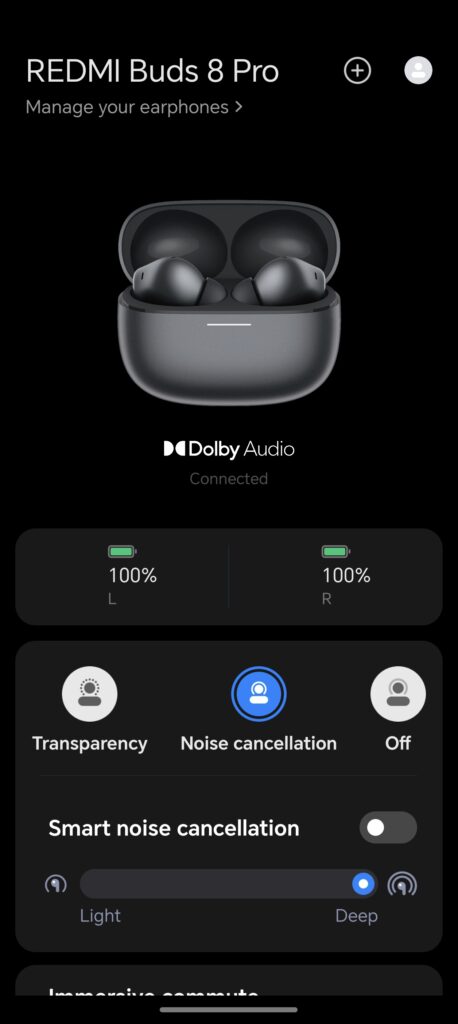
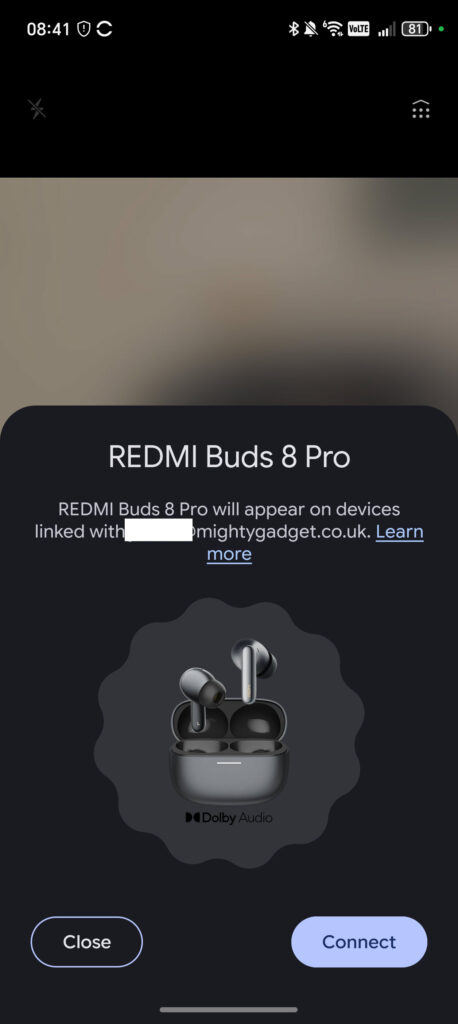
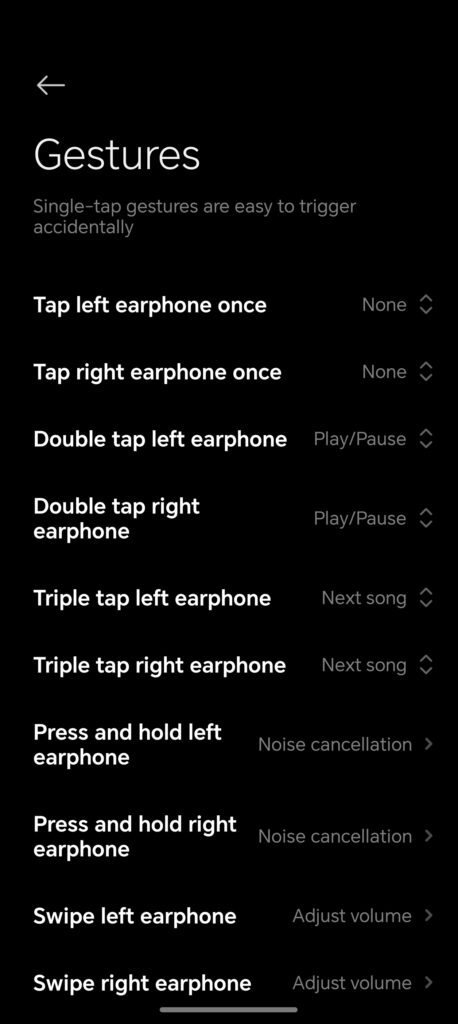
The Redmi Buds 8 Pro are managed through the Xiaomi Earbuds app, which is available on both Android and iOS. The app is straightforward and functional. It allows you to monitor battery levels for each earbud and the case, adjust touch control mappings, tweak noise cancellation strength, and fine-tune the sound using equaliser presets or manual settings.
There is a range of EQ presets available, and you can also create your own custom profile if none of the defaults suit your taste. The app also includes controls for spatial audio with dynamic head tracking, which can add a sense of depth when watching video content. Results with spatial audio vary depending on the source material, but it is a nice option to have.
Xiaomi has also added an ‘Immersive Commuting’ mode that blends ANC with ambient sounds designed for specific environments such as planes, trains, and buses. The idea is that it masks the droning background noise of public transport with more pleasant sounds. It is an interesting concept, and it works reasonably well for helping you focus during a commute, though some of the sound choices are a bit unusual.
The app also supports Google Fast Pair on Android, which makes the initial setup quick and painless. Multipoint connection is supported too, allowing the buds to stay connected to two devices simultaneously. In my testing, switching between my phone and laptop was mostly seamless, though there is occasionally a brief delay.
Sound Quality
The Redmi Buds 8 Pro use a coaxial triple-driver configuration, which is unusual at this price point. The setup consists of an 11 mm dynamic driver with a titanium diaphragm and dual 6.7 mm PZT (piezoelectric ceramic) tweeters. On paper, this is an impressive arrangement that you would typically expect to find in earbuds costing significantly more.
In practice, the sound quality is good. The overall signature leans slightly warm, with a noticeable emphasis in the lower frequencies. Bass performance is solid – kick drums have decent weight and sub-bass has a satisfying rumble. Xiaomi claims improved bass response below 100 Hz compared to the previous generation, and this does seem to hold up in listening tests. Genres like hip-hop, electronic music, and pop benefit from the low-end presence.
However, the bass tuning is not perfect. At times, the low end can feel a touch bloated, particularly in the 50 Hz to 100 Hz range. With some tracks, this can bleed into the lower mids and reduce vocal clarity. If you prefer a tighter, more controlled bass response, you may want to use the EQ in the app to pull back the lower frequencies slightly.
The midrange is reasonably well-handled. Vocals come through clearly enough for casual listening, though they can occasionally feel slightly recessed behind the bass. Acoustic instruments have decent texture and separation. The treble, handled by the dual ceramic tweeters, offers good detail retrieval without becoming harsh or sibilant. Hi-hats and cymbals have a nice shimmer without being fatiguing over long listening sessions.
The buds carry Hi-Res Audio Wireless certification and support LDAC, which allows for higher-quality audio streaming from compatible Android devices. In day-to-day use, the difference between AAC and LDAC is subtle but noticeable if you are listening to high-quality source material. Dolby Audio is also supported, along with Xiaomi’s Dimensional Audio feature with dynamic head tracking.
Soundstage is acceptable for in-ear monitors at this price. There is a reasonable sense of width, though do not expect the openness you would get from open-back headphones. Imaging is decent, with instruments placed fairly well within the stereo field.
Overall, the sound quality punches above the price point. It is not audiophile-grade, but for £65, the triple-driver setup delivers a noticeably richer and more detailed sound than many single-driver competitors in this bracket.
Active Noise Cancellation
Xiaomi claims the Redmi Buds 8 Pro can achieve up to 55 dB of noise reduction, which would represent a 20% improvement over the Redmi Buds 6 Pro. The ANC system samples environmental noise 32,000 times per second and adjusts in real time based on your surroundings and the fit of the earbuds in your ears.
In practice, the noise cancellation is above average for this price point. Low-frequency rumbles from buses, trains, and air conditioning units are noticeably reduced. Commuting on public transport with ANC enabled is a genuinely improved experience – you can listen to music or podcasts at lower volumes without the background drone competing for attention.
Mid-frequency sounds like office chatter and general conversation are dampened, though not eliminated entirely. You will still hear voices at close range, but they are pushed into the background enough to be less distracting. Higher-frequency sounds, such as keyboard typing or a ringing phone, are less effectively blocked. This is consistent with most earbuds at this price.
The adaptive ANC mode works well in most scenarios. It adjusts the cancellation level automatically as you move between different environments, which is convenient if you are going from a noisy street to a quieter office. There is also a transparency mode that lets in ambient sound, useful when you need to hear announcements or have a quick conversation without removing the buds.
Wind noise cancellation is also worth mentioning. Each earbud has three microphones, and Xiaomi’s AI noise reduction is designed to handle wind speeds up to 12 m/s. During outdoor walks and runs, wind noise was noticeably reduced compared to cheaper earbuds I have tried, though it is not completely eliminated in strong gusts.
Compared to the Soundcore Liberty 4 NC, the Redmi Buds 8 Pro hold their own in terms of ANC effectiveness. The Soundcore may have a slight edge in terms of how natural the ANC sounds, but the difference is marginal. Against more expensive options like the Sony WF-1000XM5 or Apple AirPods Pro 2, the Redmi buds obviously fall short, but those cost three to four times as much.
Microphone
Call quality is one area where budget earbuds often fall short, and the Redmi Buds 8 Pro make a reasonable effort to address this. The triple-microphone array on each earbud, combined with AI noise reduction, aims to deliver clear voice transmission even in noisy environments.
In my testing, voice calls in relatively quiet indoor settings were perfectly fine. My voice came through clearly, and the other party had no difficulty hearing me. Outdoors, the AI noise reduction does a decent job of filtering out traffic and wind noise, though the results are not quite as clean as what you would get from premium earbuds.
In particularly noisy environments – a busy cafe or near a road with heavy traffic – the microphone performance drops off. Background noise becomes more audible to the other party, and there can be occasional moments where your voice sounds slightly muffled. This is a common limitation at this price, and the Redmi Buds 8 Pro are no worse than most competitors in this regard.
For video calls and Teams meetings from a home office, these earbuds perform well enough for everyday use. I would not recommend them for critical business calls in noisy environments, but for general use they are perfectly adequate.
Battery Life
Battery life is one area where the Redmi Buds 8 Pro take a step backwards compared to their predecessors. Xiaomi rates the earbuds at up to 8 hours of playback on a single charge with ANC disabled, and up to 33 hours total with the charging case. Those are the headline figures, and they are based on AAC connection at 50% volume with all extra features turned off.
The more realistic number is what you get with ANC enabled, since most buyers of these earbuds will want to use noise cancellation regularly. With ANC turned on, battery life drops to approximately 4.5 hours per charge, with a total of around 16 hours including the case. This is a noticeable downgrade from the Redmi Buds 6 Pro, which managed around 9.5 hours per charge (36 hours total) without ANC.
For context, many competitors in this price range offer 24 to 30 hours of total battery life with ANC active. The 16-hour figure with ANC is genuinely disappointing and is comfortably the weakest aspect of these earbuds. If you are a heavy commuter or frequent traveller, you will find yourself reaching for the charging case more often than you would like.
On the positive side, fast charging partially compensates. A five-minute charge in the case provides approximately two hours of playback, which is genuinely useful when you are in a rush. Charging is via USB-C, and the case charges at up to 5V / 700 mA.
It is frustrating that Xiaomi has not addressed this weakness. The previous generation offered better stamina, and the reduced battery capacity in both the earbuds (54 mAh) and the case (480 mAh) is a clear trade-off for the additional driver hardware. Whether that trade-off is worthwhile depends on your priorities, but I would have preferred Xiaomi to at least match the previous generation’s figures.
Price and Alternative Options
No products found.
The Redmi Buds 8 Pro have an RRP of £65 and are available from Mi.com and Amazon. The older Redmi Buds 6 Pro are available for around £50, which makes them worth considering if battery life is more important to you than the upgraded driver configuration.
The Xiaomi Buds 5 Pro are the premium alternative from Xiaomi’s own range, available for around £160. They offer superior sound quality and build, but the price jump is significant.
Anker Soundcore is likely the strongest alternative brand at this price point. The Soundcore Liberty 5 recently launched for £100 RRP but has already been discounted to around £60. I have not reviewed them yet, but based on Soundcore’s track record, they should be excellent.
The Soundcore Liberty 4 Pro have an RRP of £130 but can currently be found for around £99, and have been as low as £89. I used these as my daily earbuds until I mislaid them, and they are very good across the board.
I thought the Soundcore Liberty 4 NC were superb for the price. They have an RRP of £80 but are currently available for just £55. At that price, they offer strong ANC, good sound quality, and better battery life than the Redmi Buds 8 Pro. If you are primarily concerned with value for money and are not wedded to the Xiaomi ecosystem, they are well worth a look.
The budget earbuds market is fiercely competitive at the moment, and the Redmi Buds 8 Pro face stiff competition from several directions. The triple-driver setup and strong ANC are genuine differentiators, but the battery life weakness is a real concern when alternatives offer significantly more stamina for similar money.
Overall
Overall, the Redmi Buds 8 Pro earbuds are decent. Sound quality is good, active noise cancellation is above average for the price point, and they offer generally an excellent range of features for £65. The triple-driver configuration delivers noticeably richer audio than most single-driver competitors at this price, and the build quality and design are both solid.
However, the battery life is a slight weak spot. The drop from the Redmi Buds 6 Pro’s figures is disappointing, and 16 hours total with ANC active puts them well behind many competitors. The lack of wireless charging, while understandable at this price, is also worth noting.
I am inclined to say I preferred the Soundcore Liberty 4 NC, which are at a slightly lower price point, but they do have a higher RRP. Similarly, I suspect the Soundcore Liberty 5 would make an excellent alternative, if not better, but again, the RRP is quite a bit higher even if the current price is similar.
If you are already within the Xiaomi ecosystem and want earbuds that integrate well with your phone, the Redmi Buds 8 Pro are a solid choice. The sound quality and ANC performance justify the price. Just be prepared to charge them more frequently than you might expect, and consider whether the Soundcore alternatives might suit your needs better.
For buyers who prioritise sound quality and noise cancellation above all else, and who can live with the shorter battery life, these earbuds are a good buy at £65. For everyone else, the competition offers stronger all-round packages at similar or lower prices.
Redmi Buds 8 Pro Review
-
Overall - 75%75%
Summary
The Redmi Buds 8 Pro deliver a strong feature set for the price, with a capable triple-driver setup and above-average ANC that make them particularly appealing for everyday listening and commuting. Sound quality is richer than most rivals in this bracket, and the overall design and app experience are solid. However, the reduced battery life with ANC enabled is a clear drawback and limits their appeal as an all-round option. They remain a good choice for those prioritising sound and noise cancellation, but competitors offer better endurance at similar prices.
Pros
- Strong, detailed audio performance
- Effective ANC for the price
- Comfortable lightweight design
- LDAC and feature-rich app
Cons
- Weak battery with ANC
- No wireless charging
- Bass can sound bloated
- Average call performance outdoors

I am James, a UK-based tech enthusiast and the Editor and Owner of Mighty Gadget, which I’ve proudly run since 2007. Passionate about all things technology, my expertise spans from computers and networking to mobile, wearables, and smart home devices.
As a fitness fanatic who loves running and cycling, I also have a keen interest in fitness-related technology, and I take every opportunity to cover this niche on my blog. My diverse interests allow me to bring a unique perspective to tech blogging, merging lifestyle, fitness, and the latest tech trends.
In my academic pursuits, I earned a BSc in Information Systems Design from UCLAN, before advancing my learning with a Master’s Degree in Computing.
I’m proud to share that Vuelio has consistently ranked Mighty Gadget as one of the top technology blogs in the UK. With my dedication to technology and drive to share my insights, I aim to continue providing my readers with engaging and informative content.
I work directly with the companies he reviews products for or their chosen PR agency.
For Social Media, you can find me on:

![TRENDnet 5 & 8 port Unmanaged 2.5G Switch Switches launched – Another new affordable multi-gig switch [TEG-S380 & TEG-S350]](https://mightygadget.com/wp-content/uploads/2026/07/TRENDnet-Debuts-25G-Switches-768x384.jpg "TRENDnet 5 & 8 port Unmanaged 2.5G Switch Switches launched – Another new affordable multi-gig switch [TEG-S380 & TEG-S350] 13")