
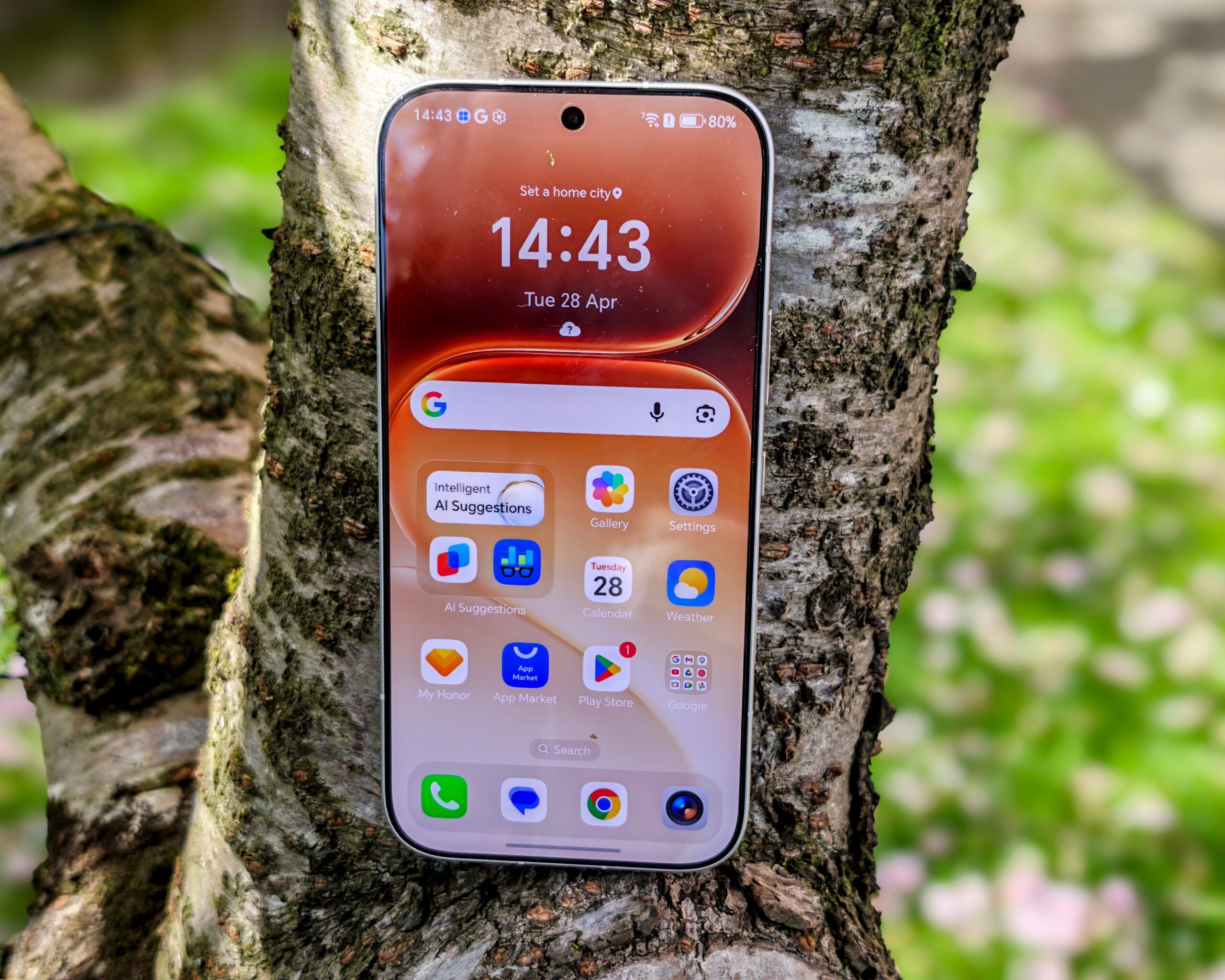
Honor 600 Pro Review vs Magic8 Pro
Back in 2024, I reviewed the Honor 200 Pro and loved it. It felt like a great balance of price and performance, giving you a similar experience to the flagship Honor Magic 6 Pro while being around £500 less.
Things changed a bit last year. The specs were more closely matched to the Honor Magic 7 Pro and so was the price. It was still an excellent phone, but it was not as clear cut as the previous generation, as the Magic 7 Pro was often discounted to a similar price, which would have made it a better buy.
This year is a similar story. The 600 Pro is very similar to the Magic8 Pro. Both are excellent phones and I would suggest checking the price of each before committing to buy.
Related Reviews
- Honor Magic8 Pro Review
- Honor Magic V5 Review vs Magic V3
- Honor 400 Pro Review vs Magic7 Pro
- Honor 400 Lite 5G Review
- Honor Magic7 Pro Review
Specification
| Honor 600 Pro | Honor 400 Pro | Honor Magic8 Pro | |
| Pricing | |||
| Price | £899.99 | £459.99 | £826.99 RRP (from £839 on Amazon) |
| Display | |||
| Screen size | 6.57″ | 6.7″ | 6.71″ |
| Panel type | AMOLED | AMOLED | LTPO OLED |
| Resolution | 1264 x 2728 (458 ppi) | 1280 x 2800 (460 ppi) | 1256 x 2808 (458 ppi) |
| Refresh rate | 120Hz | 120Hz | 120Hz (LTPO adaptive) |
| Peak brightness | 8,000 nits | 5,000 nits | 6,000 nits |
| Performance | |||
| Chipset | Snapdragon 8 Elite (3nm) | Snapdragon 8 Gen 3 (4nm) | Snapdragon 8 Elite Gen 5 (3nm) |
| RAM & Storage | 12GB / 256 or 512GB | 12GB / 256 or 512GB | 12GB / 256 or 512GB 16GB / 512GB or 1TB |
| Cameras | |||
| Main camera | 200MP f/1.9, OIS (CIPA 6.0) | 200MP f/1.9, OIS | 50MP f/1.6, OIS (1/1.3″ sensor) |
| Telephoto | 50MP, 3.5x optical (CIPA 6.5) | 50MP, 3x optical, OIS | 200MP periscope, 3.7x optical, OIS |
| Ultrawide | 12MP, 112 degrees, AF | 12MP, 112 degrees, AF | 50MP, 122 degrees |
| Selfie | 50MP | 50MP + 2MP depth | 50MP + TOF 3D |
| Video | 4K, gyro-EIS, OIS | 4K, gyro-EIS, OIS | 4K up to 120fps, HDR, 10-bit |
| Battery & Charging | |||
| Capacity (EU) | 6,400mAh | 5,300mAh | 6,270mAh |
| Wired charging | 80W | 100W (~39 min full charge) | 100W |
| Wireless charging | 50W | 50W | 80W |
| Reverse charging | 27W wired | 5W wireless | 5W reverse wireless |
| Software | |||
| OS at launch | Android 16, MagicOS 10 | Android 15, MagicOS 9 | Android 16, MagicOS 10 |
| OS updates | 6 major versions | 6 major versions | 7 major versions |
| Build & Design | |||
| Dimensions | 156 x 74.7 x 7.8mm | 160.8 x 76.1 x 8.1mm | 161.2 x 75 x 8.3mm |
| Weight | 195g | 205g | 219g |
| Water resistance | IP68 / IP69 / IP69K | IP68 / IP69 | IP68 / IP69K |
| Connectivity | |||
| Wi-Fi | Wi-Fi 7 | Wi-Fi 7 | Wi-Fi 7 |
| Bluetooth | 6.0, aptX Lossless, LHDC 5 | 5.4, aptX HD | 6.0, aptX Lossless, LHDC 5 |
| USB | USB-C 2.0 | USB-C 2.0 | USB-C 3.2, DisplayPort 1.2 |
| NFC | Yes | Yes | Yes |
| Infrared | Yes | Yes | Yes |
Design and Build Quality
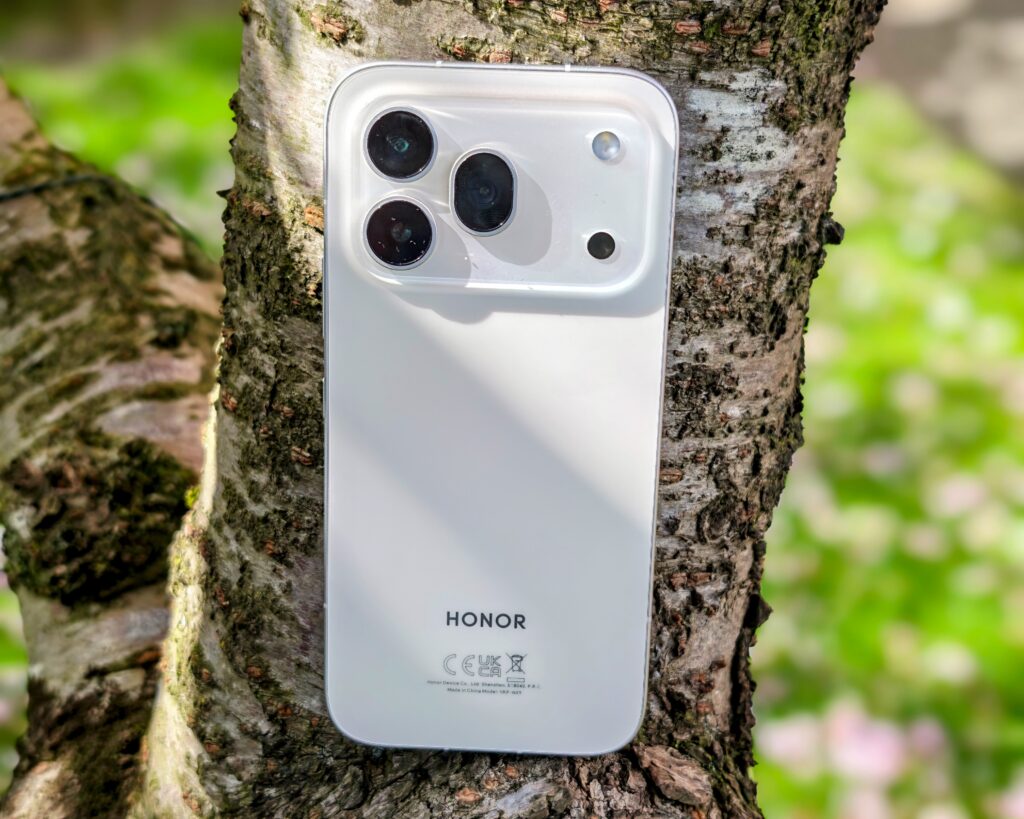
The overall design of the Honor 600 Pro is perhaps one of its strongest selling points, particularly when compared to the Magic8 Pro.
The phone is a touch smaller than the Magic8 Pro and a bit more manageable in the hand without being a compact phone like the Xiaomi 17. At 156 x 74.7 x 7.8mm and weighing just 195g in the EU version, it is noticeably lighter than the Magic8 Pro’s 219g, and that difference is easy to feel after a few hours of use. The flat display also reduces accidental touches along the edges, which is something I appreciate for day-to-day use.
Honor has used a unibody cold-carving process here, sculpting the entire chassis into a seamless form that eliminates visible joins. The back panel is made from a translucent Ultra-Durable Composite Fiber material, which is worth noting is not glass – it retains reasonable optical clarity while offering a warmer, slightly more flexible feel in hand. The mid-frame gets a satin-like matte metal finish that grips well and catches the light in an understated way. My review unit arrived in Golden White, which looks clean and professional and does a decent job of hiding fingerprints thanks to the matte treatment. The glossy camera module surround is the exception and does attract smudges over time.
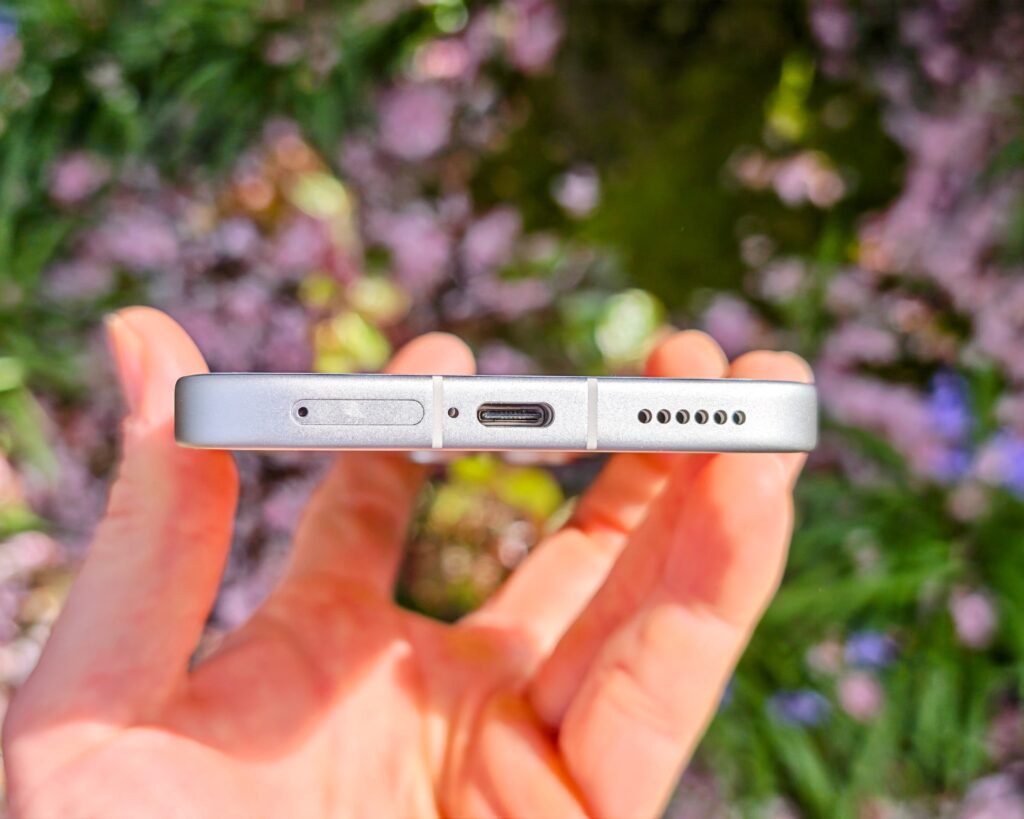
Honor makes much of the 0.98mm bezel measurement, certified by TUV Rheinland as the narrowest on any straight-board Android device. In practice, the bezels do look impressively slim and add to the sense of screen immersion. The large corner radius is another design talking point – it is genuinely among the most rounded of any current Android device, which contributes to the comfortable feel in hand despite the flat edge construction.
The camera bump extends across the full width of the rear, though it does not protrude particularly far, which helps when pocketing the device. It is not pronounced enough to act as a useful resting point when shooting one-handed, which can make the phone feel a little slippery in that use case.
The fingerprint scanner sits noticeably low on the display, which takes some adjustment if you are coming from a device with a more centrally positioned sensor. The optical sensor works well most of the time, though it is occasionally temperamental when hands are very dry or damp – a small number of failed reads per day is not unusual. Face unlock is fast and largely reliable, so it serves as a practical backup. An ultrasonic sensor would have been preferable at this price point.
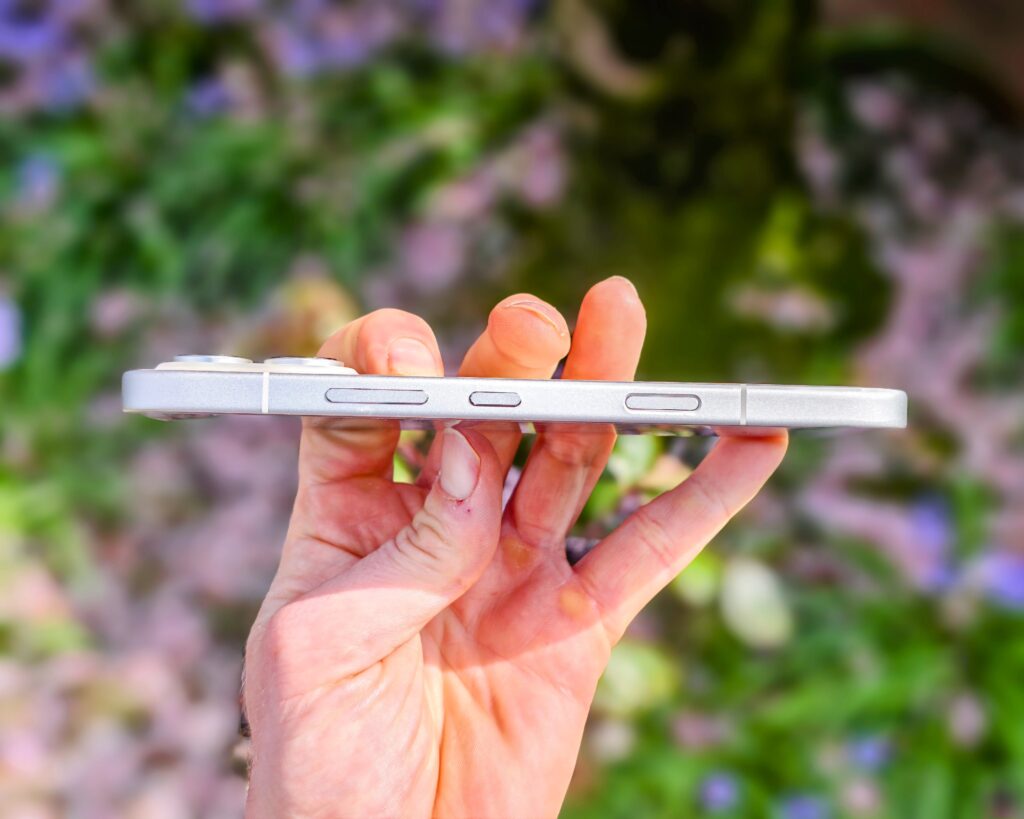
The IP68, IP69 and IP69K ratings provide a solid level of dust and water protection, and the SGS 5-star certification for drop and crush resistance adds further confidence in the build. Colors available in the UK are Golden White and Black, with Orange also offered in some markets.
Display Quality
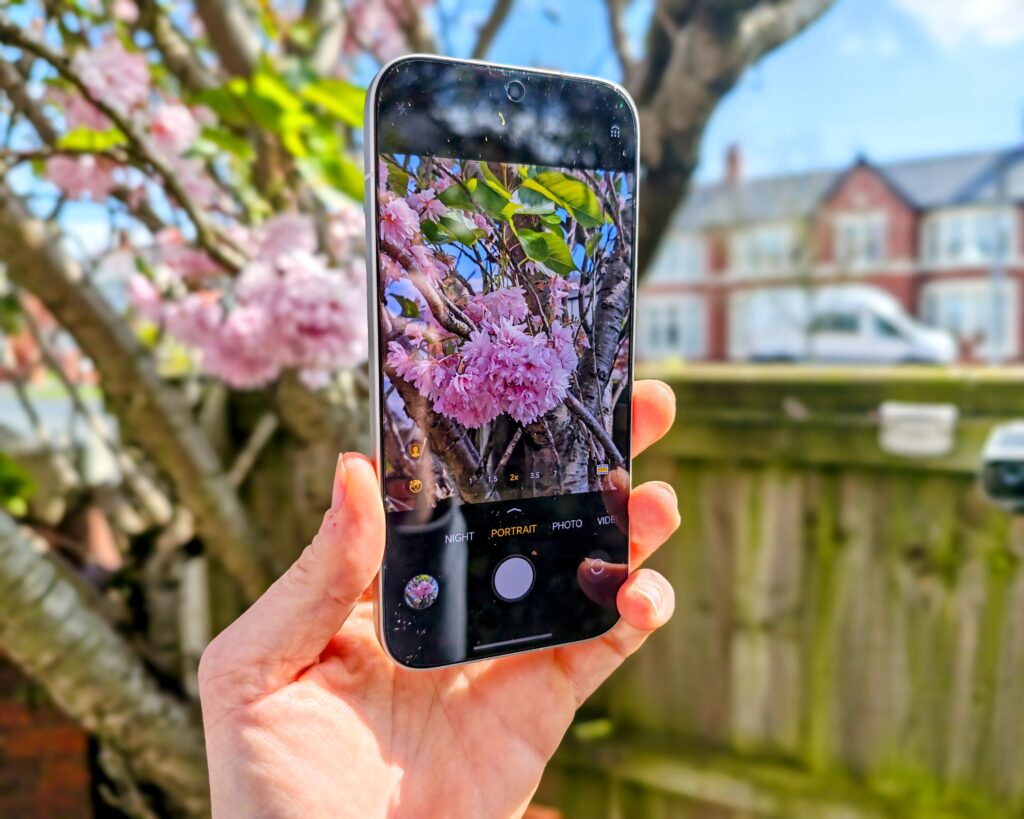
The Honor 600 Pro uses a 6.57-inch AMOLED panel with a resolution of 1264 x 2728 pixels at 458ppi, a 120Hz refresh rate, and a peak brightness of 8,000 nits under certain conditions. In day-to-day use, Sunlight Mode delivers a sustained 4,000 nits at 20% Average Picture Level, which in practical terms means the screen remains clearly readable even under direct sunlight. This is a genuine strength of the device, and the real-world outdoor performance matches what the specification suggests.
Indoor readability is equally strong at up to 800 nits in manual mode. Colour accuracy is good across a wide range of content, with 1.07 billion colours and HONOR Eye Comfort Display providing some degree of blue light management during extended sessions. The 3,840Hz PWM dimming rate is well above the threshold where flicker typically causes eye fatigue, which is worth noting for anyone sensitive to screen flicker.
The 120Hz rate is fixed rather than adaptive. The Magic8 Pro offers LTPO adaptive refresh from 1Hz to 120Hz on its 6.71-inch panel, which makes a difference to battery efficiency during static tasks like reading. The 600 Pro’s display is brighter in peak terms – 8,000 nits versus 6,000 nits on the Magic8 Pro – and its smaller size and flatter corners make it more comfortable for extended single-handed use. The bezels are tight and consistent on all four sides, contributing to a premium feel.
Performance and Benchmarks
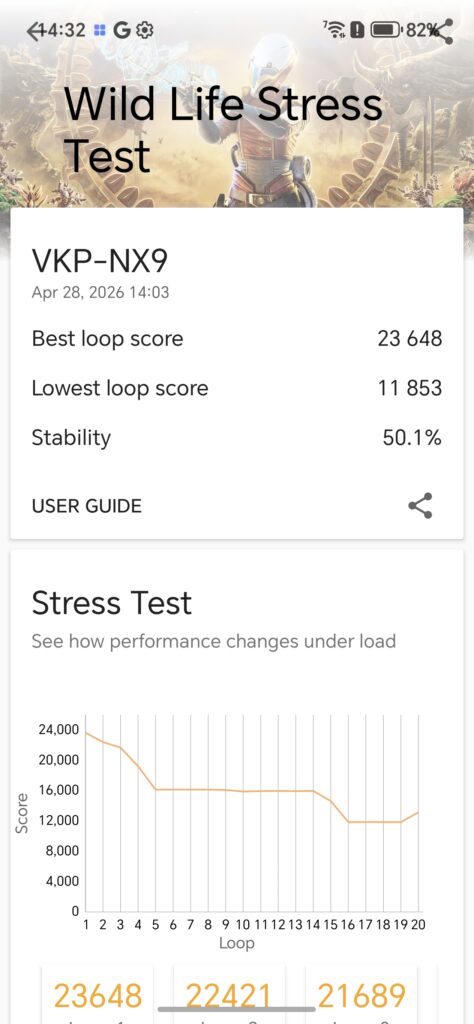
The Honor 600 Pro is powered by the Snapdragon 8 Elite processor, built on a 3nm process. To be clear about what is in this phone versus the Magic8 Pro: the 600 Pro uses the SM8750, which is the same Snapdragon 8 Elite chipset that appeared in devices like the Honor Magic 7 Pro, Samsung Galaxy S25, and OnePlus 13. The Magic8 Pro uses the more recent SM8850, which represents the next generation of that platform.
In practical terms, the performance gap is unlikely to be noticeable for the vast majority of users. Day-to-day tasks, app switching, and browsing are all handled without hesitation, and the 12GB of LPDDR5X RAM keeps things moving smoothly under multitasking load. UFS 4.1 storage provides fast read and write speeds for file management and app loading.
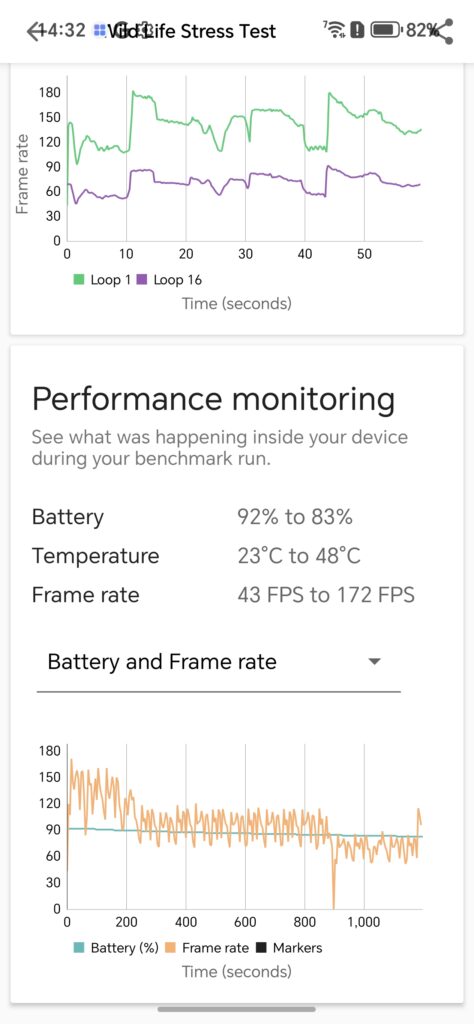
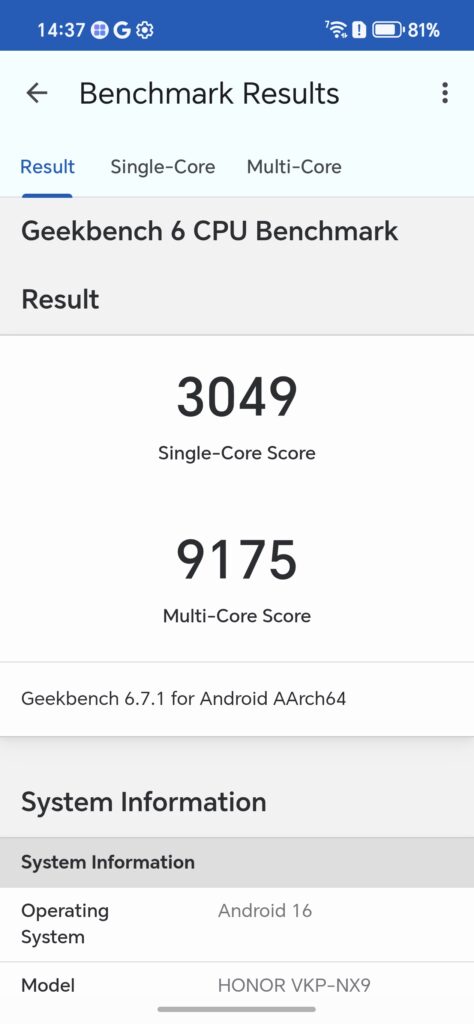
For benchmarks, Geekbench 6 returned scores of 3,049 single-core and 9,175 multi-core. The 3DMark Wildlife Extreme Stress Test recorded a best loop score of 23,648 and a lowest of 11,853, giving a stability rating of 50.1%. That sustained performance figure reflects some thermal throttling under extended GPU load, which is a known characteristic of this chipset generation in thinner devices. For reference, Geekbench 6 single-core results in the 2,800-3,100 range are typical for the SM8750, putting the 600 Pro within the expected performance envelope. Gaming performance in titles like Genshin Impact and PUBG Mobile is strong, with high frame rates achievable in optimised titles. The 12,000 square millimetre vapor chamber cooling system helps sustain performance during longer sessions, though extended gaming will produce some warmth around the upper rear of the device.
Antutu results were not obtainable during testing as the upload function has been blocked on recent devices. The Geekbench and 3DMark figures are a more reliable point of comparison in any case.
Gaming Experience
For gaming, the Snapdragon 8 Elite with its Adreno 830 GPU provides plenty of headroom for the current generation of mobile titles. Titles that support higher frame rate modes run smoothly, and the flat display with its slim bezels makes landscape gaming comfortable without accidental edge touches.
The stereo speaker setup – one above the display, one at the bottom edge – produces a reasonably full sound for media and gaming audio. Volume levels are solid and the separation is clear enough for directional audio cues in games. They are not quite on the level of the best in class, but they are perfectly acceptable for a phone at this price.
The sustained performance under gaming load is adequate, though the 50.1% stress test stability figure from 3DMark does indicate some thermal limitation during prolonged heavy GPU workloads. In shorter gaming sessions this is unlikely to be noticed, but those who routinely play demanding titles for extended periods may occasionally see frame rate dips.
Battery Life and Charging
The Honor 600 Pro uses a 6,400mAh battery in the EU version – Honor rates the battery capacity slightly differently in other markets at 7,000mAh, which relates to different certification standards and component sourcing. The 6,400mAh figure is still one of the larger capacities available in this segment.
In practice, battery life is excellent. With moderate to heavy use – including camera testing, some video streaming, social media, and general browsing – the phone comfortably reaches the end of a full day with charge to spare. Light to moderate users should have no trouble getting through two days between charges. The AI Battery Scheduling system works in the background to optimise power allocation across different usage patterns, and while it is difficult to isolate its contribution, the overall endurance is genuinely strong.
Charging is handled at 80W over the wired HONOR SuperCharge standard, which will take the battery from empty to around 50% in approximately 30 to 35 minutes. Full charges typically complete in around 55 to 60 minutes. The 50W wireless charging is a welcome addition and works at a practically useful speed, though it requires a compatible HONOR wireless charger sold separately. The 27W wired reverse charging is an unusually capable implementation for this end of the market – most competitors offer 5W reverse wireless, which is largely useless for anything practical. Being able to charge an iPhone or pair of earphones at a useful rate from the 600 Pro is a genuine differentiator.
Compared to the Magic8 Pro, the 600 Pro loses out on charging speed – 100W wired and 80W wireless on the Magic8 Pro versus 80W wired and 50W wireless here – but the larger battery compensates in part. For most users the real-world difference in top-up time is acceptable.
MagicOS 10 and Android 16
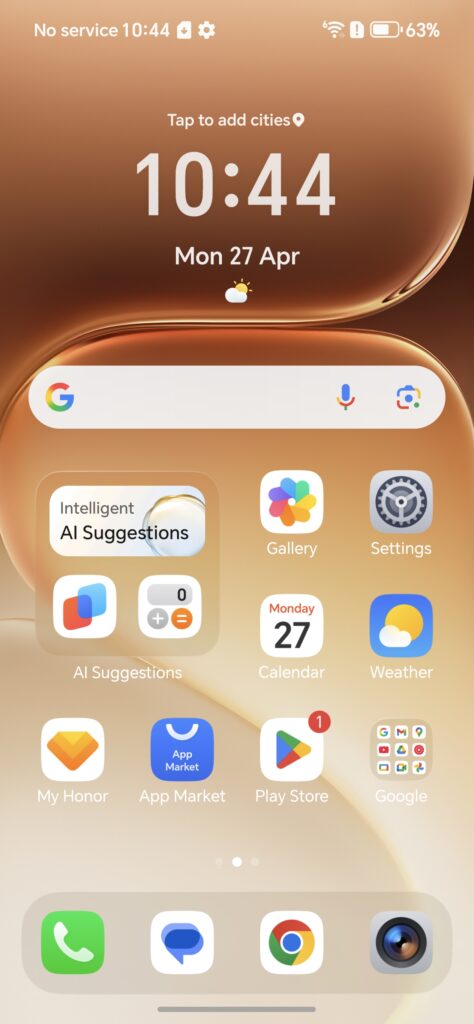
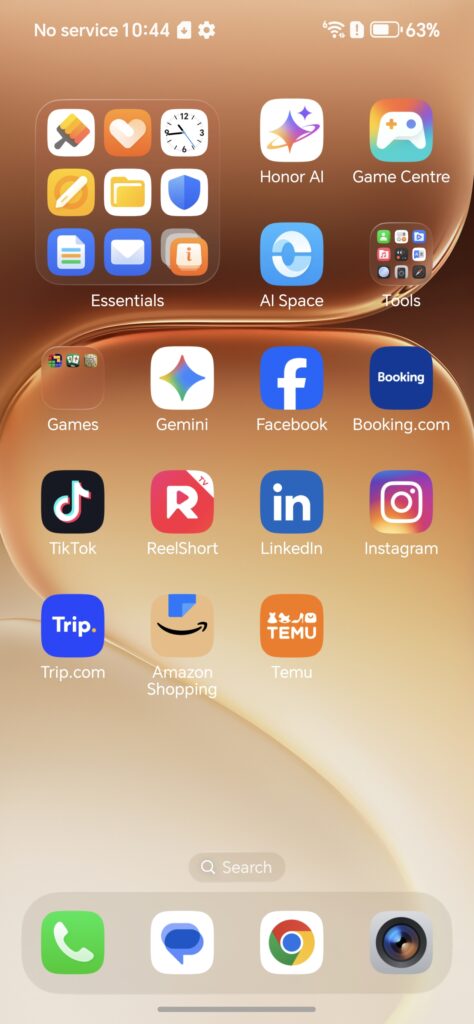



The Honor 600 Pro ships with MagicOS 10 on top of Android 16, and Honor has committed to six major OS updates and security patches in the UK and Europe. That update commitment is competitive with most of the Android market, though the Magic8 Pro goes one further with seven major OS versions – a small but worth noting difference if long-term software support matters to you.
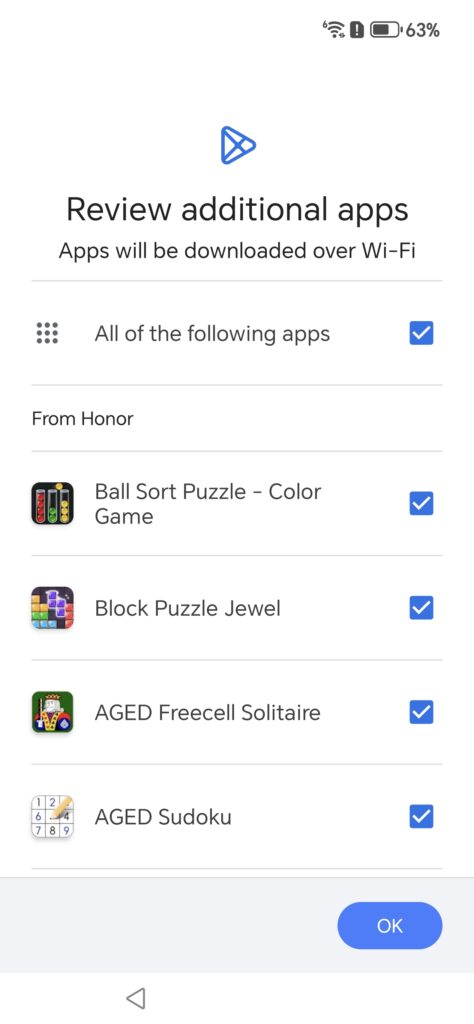
MagicOS 10 will feel familiar to anyone who has used ColorOS or a similarly skinned Android experience. It is not the cleanest implementation of Android – there is a reasonable amount of pre-installed software and Honor prompts you to install additional recommended apps during the setup process, which is a friction point I would rather not have on a near-£900 phone. It is not the worst offender on the market, but it sits on the wrong side of acceptable for a premium device. Hopefully Honor will address the bloatware situation in future updates.
The Always On Display implementation is unfortunately not a true always-on display. It can only be activated by tapping the screen, and scheduling it to appear during set hours is not possible. This is a frustrating omission on a phone at this price, and it is a step behind what Samsung and others offer as standard.
Aside from those gripes, the day-to-day MagicOS experience is smooth. The magazine unlock, customisable themes, and general polish are all present. During pre-launch testing I encountered occasional crashes in certain apps, but these were likely early firmware issues that should be resolved in the retail release.
AI Button and AI Features
The AI Button is a dedicated hardware key on the right edge of the device, positioned below the power button. By default it activates screen recognition when held, surfacing AI-powered actions relevant to whatever is currently on screen. A double tap launches the camera, which is one of its most useful configurations. The button is fully customisable across short press, double press, and long press actions, with a selection of AI-related options available for each.
One limitation worth noting is that the customisation options are limited to a predefined set of AI features and cannot be freely mapped to arbitrary apps or shortcuts in the way that some third-party button remappers allow. If you want to launch a specific app or trigger a system macro, that is not currently possible. The AI screen suggestion feature also encountered errors during testing, though this appeared to be a pre-release issue rather than a design flaw.
AI Image to Video 2.0 is the headline AI feature and is genuinely more capable than the original version on the Honor 400 Pro. You select between one and three reference images from your gallery, add a text prompt describing the desired output, and the phone generates a three to eight second video clip. The addition of a first-and-last-frame mode gives more control over the narrative arc of the generated clip. Results are often impressive, with coherent motion and reasonable attention to the visual style of the source images. The feature works best with well-lit, clearly composed reference photos – it can struggle with complex multi-subject compositions, and very extended or abstract prompts sometimes produce inconsistent results.
The video below was created from the two images beneath it. It did an amazing job of the newfoundland, but the cavapoo looks a bit generic.


The AI Image to Video 2.0 feature is available as a free trial at launch, though Honor has indicated continued usage may eventually require payment. The terms of any paid tier were not confirmed at the time of writing. The Honor Magic8 Pro includes it and you only get three free videos.
AI Photos Agent provides natural language photo editing – describing a change such as ‘remove the person on the left’ or ‘add warm lighting’ and the phone executes it without requiring manual editing knowledge. It works well for straightforward edits and is more accessible than launching a dedicated editing app. The Magic Color presets, which emulate the colour science of Hasselblad, Leica, and Fujifilm, are a fun addition for those who want a specific look applied in one tap without any grading experience.
The Moving Photo Eraser, which removes unwanted subjects from Honor’s live photos, and the Moving Photo Breakout Collage for glasses-free 3D compositions, round out the AI gallery tools. These are niche features that will delight some users and go completely unused by others.
The AI Settings Agent handles voice or text commands for device settings – asking it to enable Bluetooth or adjust display brightness works reliably and is genuinely useful for hands-free adjustments. There is also AI-powered scam call detection that can identify potential voice cloning attempts, which is a practical safety feature.
Camera Hardware and Features
The Honor 600 Pro carries a triple rear camera system consisting of a 200MP main camera on a 1/1.4-inch sensor, a 50MP 3.5x periscope telephoto, and a 12MP ultrawide with autofocus. The front camera is 50MP.
The 1/1.4-inch main sensor is among the larger sensors available in the mid-range to near-flagship segment. CIPA 6.0 rated optical image stabilisation on the main camera and CIPA 6.5 rated OIS on the telephoto represent strong stabilisation performance – CIPA 6.5 in particular is at the top end of what is available on any smartphone lens at present. The ultrawide includes autofocus rather than the fixed focus arrangements found on some competing devices, which extends its usefulness for close-up and macro shots considerably.
The 200MP mode, accessed via High-Res in the camera app, produces very large files with impressive detail when viewed at full resolution. For most everyday shooting, the default binned output at around 12.5MP with the equivalent 2.24 micrometre super pixel produces files that are better balanced for social sharing and storage. The AI-driven Remosaic processing handles the full-resolution output well under good light.
The 50MP periscope telephoto at 3.5x produces clean, well-stabilised shots at its native zoom length. AI Super Zoom 2.0 extends usable zoom further, with the AI enhancement kicking in from 7x and covering up to 120x. The 120x result is impressive as a demonstration, though it requires an internet connection to process the AI enhancement and is inconsistent on complex or irregular subjects – the AI tends to produce painterly artefacts on organic subjects like foliage or animals at very high zoom. Zoom up to around 60x produces more consistently useful results.
The AI Color Engine is designed to eliminate colour cast under artificial lighting, particularly the yellow and red shifts that affect white balance under tungsten and similar sources. It performs well in mixed lighting situations, producing colour that is noticeably more neutral than what you would typically get without intervention.
Compared to the Magic8 Pro’s camera setup, the key difference is the telephoto system. The Magic8 Pro uses a 200MP periscope telephoto with 3.7x optical zoom, which gives it a substantial hardware advantage in zoom quality and low-light telephoto performance. The 600 Pro’s 50MP telephoto at 3.5x is still very capable, but the Magic8 Pro’s main strength over the 600 Pro lies in that telephoto camera.
Photo Quality
In good light the main camera produces detailed, accurate images with natural colour rendering and strong dynamic range management. The AI Color Engine keeps whites looking neutral even under challenging artificial lighting conditions, and the large sensor size provides enough light gathering that HDR processing rarely produces haloing artefacts.
Night photography is where the large sensor and strong OIS combination makes a tangible difference. Single-frame night shots at 1x are detailed and low on noise, with reasonably natural colours maintained. Night portrait mode produces pleasant bokeh with accurate subject separation, and the light-shadow rendering is better than average at this price. SuperMoon 2.0, which combines AI processing with the telephoto, can produce striking lunar images in good conditions, though it benefits from a tripod at very long exposures.
The 12MP ultrawide with autofocus is an underrated part of the package. Many phones at this price still ship with fixed-focus ultrawides, which limits their usefulness for anything closer than a metre or two. The autofocus allows for genuine macro-style shots that are sharp and detailed.
Video quality at 4K captures fine detail with solid EIS and OIS stabilisation working in tandem. There is no 4K at 120 frames per second option, which the Magic8 Pro does offer, but 4K at 60fps handles most shooting scenarios well. The dual stereo microphones produce usable audio for casual recording.









Price and Alternative Options

- [200MP AI SuperNight Camera]: 200MP, 1/1.4-inch extra large image sensor, f/2.6 Exceeding the limit of clarity with AI powered super zoom, providing industry leading telephoto photography experience. Capture everything beyond seeing.All new night mode with customized exposure timer and AI cloud enhancement capturing all the unseen details, recreating every mood and vibe.
- [6270mAh All-Day Battery]:Next Gen HONOR Silicon-carbon Battery, 6270mAh massive volume and industry leading 15% silicon content is ready to outlast any challenge. 100W HONOR Wired SuperCharge and 80W HONOR Wireless SuperCharge ensures that your phone can get back to top condition in no time.
- [AI Magic in One Touch]: Long press to access multiple AI function portals, double-tap to activate camera, or customize your own AI magic tricks, enjoy the freedom and convince of controlling.
- [Snapdragon 8 Elite Gen 5 Mobile Platform]: Powered By The Snapdragon 8 Elite Gen 5 Chipset And Paired With Up To 12GB RAM And 512GB Storage, The HONOR Magic8 Pro Delivers Lightning-Fast Speeds, Effortless Multitasking, And A Smooth Gaming Experience Tailored For All Your Demands.
- [IP68 , IP69 and IP69K Water and Dust Resistance]: With SGS 5-Star Drop Resistance Certification, the screen offers exceptional durability paired with unparalleled excellence.Industry leading water-resistant and dust-proof capability can even stand against high temperature water and high pressure water jets.
The Honor 600 Pro has an RRP of £899.99.
The lower-spec Honor 600 is available for:
- 256GB: £549.99
- 512GB: £599.99
The Honor Magic8 Pro has an RRP of £1,100, but at the time of writing, it was available for just £839 on Amazon.
Compared to other brands, both the Honor Magic8 Pro and Honor 600 Pro offer a great deal for your money in their respective segments.
The value equation here is the central challenge for the 600 Pro. At £899.99 RRP against a Magic8 Pro sitting at £839 on Amazon, the 600 Pro actually costs more than its technically superior stablemate if you shop around. The Magic8 Pro offers a faster charging speed at 100W wired, a better telephoto camera with its 200MP periscope lens, USB-C 3.2 with DisplayPort output, LTPO adaptive refresh, and an extra year of major OS updates. The 600 Pro counters with a brighter display, a larger battery, more compact dimensions and lighter weight, and a slightly lower list price.
For buyers who prioritise portability and display brightness over outright camera zoom capability and charging speed, the 600 Pro has its merits.
But it is likely Honor has an early bird offer, which will swing the value back in favour of the 600 Pro. Over the coming months, I would expect the 600 Pro to get discounted and reach a more realistic street price that is below the Honor Magic8 Pro. At this point, you would have to decide if the price difference/saving is worth it based on your budget/requirements.
When you compare the Honor 600 Pro to other brands, it is far more appealing. The OnePlus 15 is probably the best alternative option to the Xiaomi 15T Pro if you want something a bit cheaper. The Pixel 10 Pro is decent if you are happy with a smaller phone, which can be picked up for £800 (£1000 RRP)
Overall
The Honor 600 Pro is an excellent phone that delivers flagship-grade performance for under £1,000. The combination of the Snapdragon 8 Elite, a large 6,400mAh battery with a useful 27W reverse charging implementation, a genuinely bright and slim display, and a capable 200MP main camera makes for a well-rounded package.
The specification gap between the Honor 600 Pro and the Honor Magic8 Pro has narrowed compared to previous generations. The 600 Pro has a slightly smaller but brighter display, a camera system that is strong but not quite at the level of the Magic8 Pro’s telephoto, a slightly larger battery with slower charging, and less capable USB connectivity. The Magic8 Pro remains the better phone in overall specification terms.
When looking at the RRP of the 600 Pro versus the current street price of the Magic8 Pro, it is difficult to recommend the 600 Pro at full price unless the compact dimensions and superior peak brightness are specifically what you need. I would expect Honor to offer meaningful early-bird deals at launch, which would shift the balance back in the 600 Pro’s favour for those looking for a good deal.
Over the next few months, it will inevitably reach a price point where it becomes the more natural choice for buyers who want a lighter, more pocketable phone with a premium display and competitive camera performance.
Honor 600 Pro Review
-
Overall - 80%80%
Summary
The Honor 600 Pro is a well-executed near-flagship with a strong emphasis on display brightness, battery capacity and everyday usability. Performance is comfortably within flagship territory, and the camera system is reliable across most scenarios, even if it falls short of the Magic8 Pro’s telephoto capabilities. The main issue is positioning: at full RRP, it overlaps too closely with a technically superior sibling that is often available for less. At the right street price, however, it becomes a compelling option for those who prioritise a lighter design and an exceptionally bright display over absolute top-tier specifications.
Pros
- Bright, highly readable display
- Excellent battery life endurance
- Lightweight, comfortable in hand
- Strong everyday performance
Cons
- Price overlaps better alternatives
- Telephoto weaker than flagship
- No LTPO refresh rate (some people prefer this, though)
- Some software bloat present

I am James, a UK-based tech enthusiast and the Editor and Owner of Mighty Gadget, which I’ve proudly run since 2007. Passionate about all things technology, my expertise spans from computers and networking to mobile, wearables, and smart home devices.
As a fitness fanatic who loves running and cycling, I also have a keen interest in fitness-related technology, and I take every opportunity to cover this niche on my blog. My diverse interests allow me to bring a unique perspective to tech blogging, merging lifestyle, fitness, and the latest tech trends.
In my academic pursuits, I earned a BSc in Information Systems Design from UCLAN, before advancing my learning with a Master’s Degree in Computing.
I’m proud to share that Vuelio has consistently ranked Mighty Gadget as one of the top technology blogs in the UK. With my dedication to technology and drive to share my insights, I aim to continue providing my readers with engaging and informative content.
I work directly with the companies he reviews products for or their chosen PR agency.
For Social Media, you can find me on:
0 Comments