Qualcomm announces Snapdragon 4 Gen 5 and Snapdragon 6 Gen 5 mobile platforms
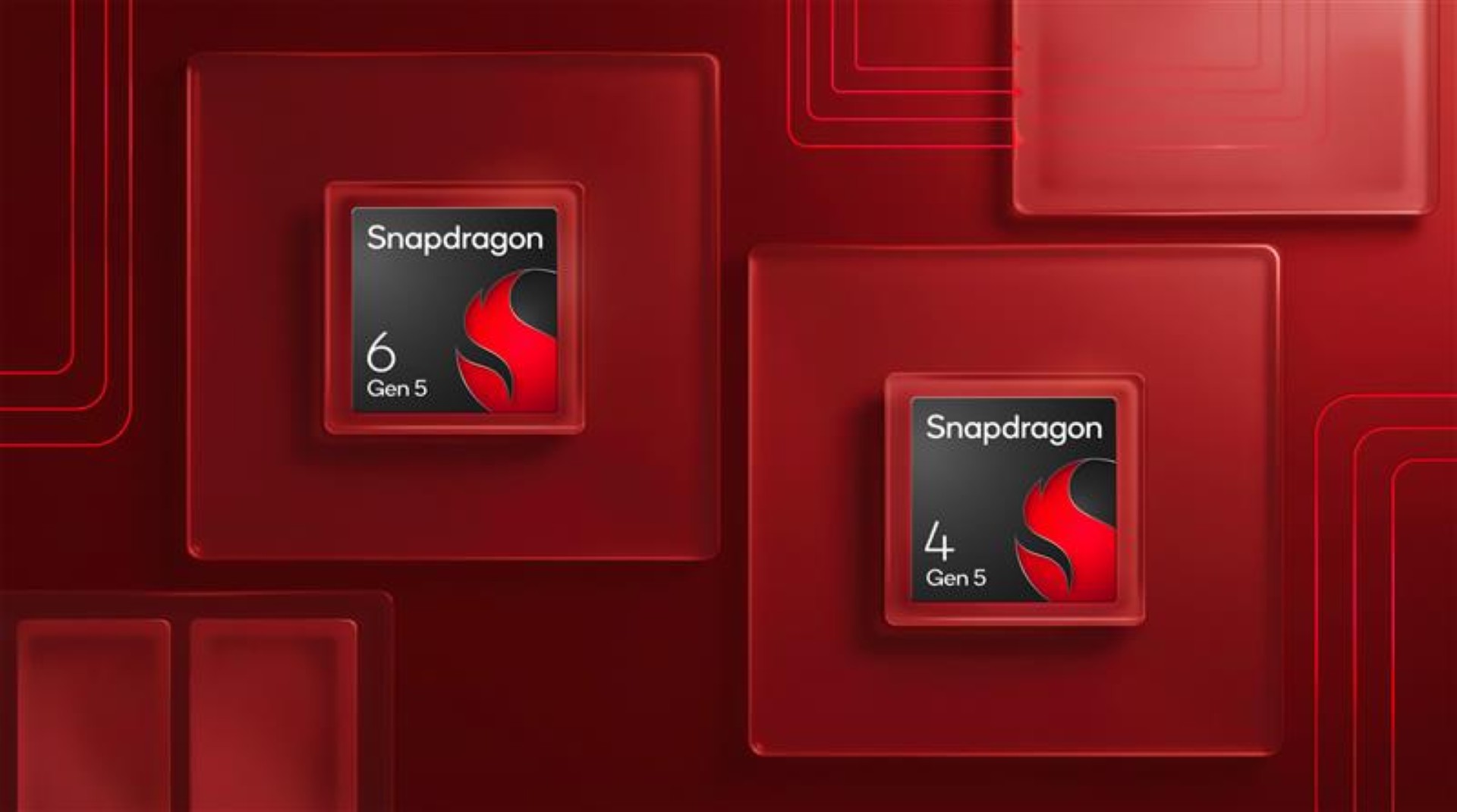
Qualcomm has announced two new mobile platforms, the Snapdragon 4 Gen 5 and Snapdragon 6 Gen 5, targeting the entry-level and mid-range smartphone segments respectively. Both chipsets sit below the company’s flagship Snapdragon 8 series and are designed to bring features typically reserved for higher-tier devices to more affordable handsets. The announcement was made during a press briefing led by Cheng Wei Yan, senior vice president of product management at Qualcomm.
The launch comes at a time when Qualcomm has acknowledged ongoing memory supply constraints affecting pricing and availability across the industry. According to Yan, the company is working closely with its OEM partners to manage these conditions while maintaining its product roadmap and technology leadership.
Snapdragon 4 Gen 5: entry-level with flagship ambitions
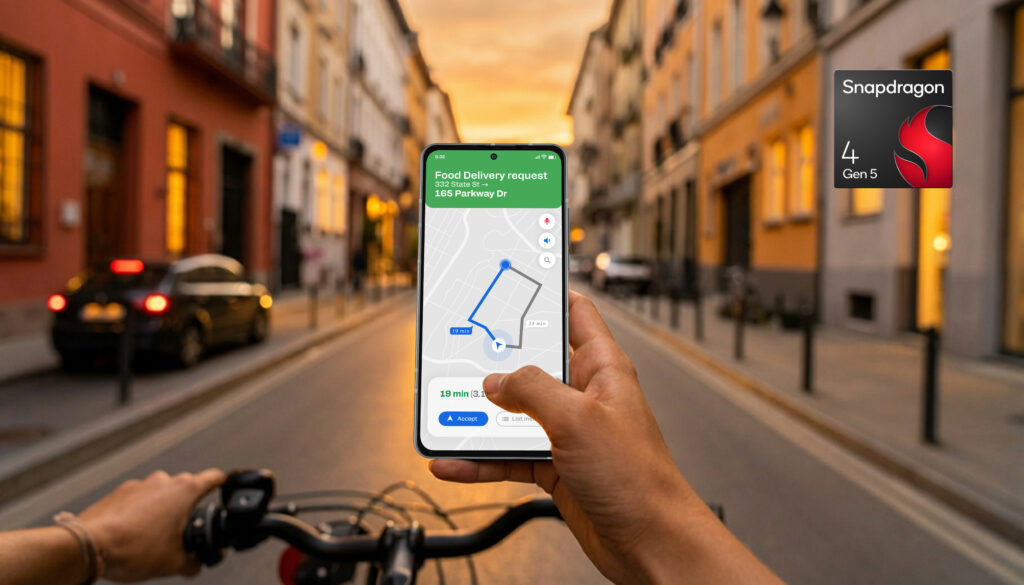
The Snapdragon 4 Gen 5 is Qualcomm’s latest entry-tier mobile platform, positioned as a chipset that brings essential smartphone features together with some capabilities that have traditionally sat in higher price brackets. The platform is built around meaningful improvements to GPU performance, battery efficiency, connectivity and user interface responsiveness.
GPU and graphics performance
At the heart of the performance story is the updated Adreno GPU, which Qualcomm says delivers up to 77% faster graphics performance compared to its predecessor. The company also claims a 54% advantage over competing platforms at this tier. In practical terms, Qualcomm says these gains translate to smoother visuals across gaming, streaming and general app navigation.
Notably, the Snapdragon 4 Gen 5 brings 90 fps gaming to the 400-tier for the first time. Qualcomm states that users can expect between 60 and 90 frames per second in supported game titles, a substantial step up for an entry-level chipset. For context, many budget smartphones have previously been limited to 30 or 60 fps in most titles, so this is a notable bump for the price segment.
Battery life and power efficiency
Power efficiency has been a key focus for the Snapdragon 4 Gen 5. Qualcomm claims 10% overall power savings compared to the previous generation, which the company breaks down into specific real-world gains: up to 1.7 hours of additional music streaming, one hour more video streaming, 35 minutes of extra voice call time and 15 additional minutes of web browsing. These are incremental but meaningful improvements, particularly for users in markets where charging opportunities may be less frequent throughout the day.
5G connectivity and dual SIM support
Connectivity is where Qualcomm has historically positioned itself as a leader, and the Snapdragon 4 Gen 5 continues that trend. The integrated Qualcomm 5G modem-RF system supports the 3GPP Release 17 standard, with peak download speeds of up to 2.8 Gbps.
Perhaps more significant for everyday users is the introduction of 5G plus 5G dual SIM dual active (DSDA) support at this tier for the first time. DSDA allows two SIM cards to remain active simultaneously in 5G mode, enabling seamless management of work and personal lines on a single device. The system will also automatically connect to the fastest available 5G network, which should benefit users who travel between different coverage areas.
Additionally, the platform includes Smart Network Selection Gen 3.0, a context-aware technology that optimises network performance based on usage scenarios. Whether the user is gaming, uploading photos or making video calls, the system adjusts connectivity behaviour to suit the situation. Qualcomm specifically highlighted that this feature works in challenging environments such as lifts, underground trains and car parks, where signal quality typically degrades.
Smooth Motion UI
A new software feature called Snapdragon Smooth Motion UI has been introduced with the 4 Gen 5. Qualcomm says this delivers 43% faster app launches and 25% less screen stutter compared to the previous generation. Screen stutter, often described as jank or jerkiness when scrolling through content, is one of the more noticeable performance issues on budget smartphones. Reducing this should make social media feeds, app switching and general navigation feel noticeably more fluid.
It is worth noting that these figures are Qualcomm’s own claims and real-world results will depend heavily on how OEMs implement the platform, including software optimisation, RAM allocation and storage speed. Nevertheless, the focus on UI responsiveness rather than raw benchmark numbers is a sensible approach for this segment, where day-to-day smoothness often matters more than peak performance.
Camera features
The Snapdragon 4 Gen 5 includes a suite of intelligent camera features designed to make photography more accessible for entry-level users. These include automatic exposure, autofocus and auto white balance adjustments that work together to improve shot consistency without requiring manual intervention.
Electronic image stabilisation (EIS) is included to reduce blur from hand shake or movement during photo and video capture. There is also intelligent face detection, which automatically recognises and focuses on faces during shooting. These are features that have been standard on mid-range and flagship platforms for some time, but their inclusion at the 400-tier level should help narrow the photography gap between budget and premium devices.
Audio capabilities
On the audio front, the Snapdragon 4 Gen 5 includes Snapdragon Sound technology with several notable features. The Qualcomm Acoustic Audio Codec provides high-resolution audio playback directly from the device, while Qualcomm aptX Adaptive Audio is designed to maintain uninterrupted wireless sound across gaming, video and music streaming. Support for 96 kHz lossless music streaming is also included, which is a surprisingly capable specification for an entry-level chipset and should appeal to users who care about audio quality but cannot stretch to a more expensive handset.
Snapdragon 6 Gen 5: mid-range positioning

Qualcomm also confirmed the Snapdragon 6 Gen 5 as part of the same announcement. This platform sits in the company’s mid-range tier, above the 4 series but below the Snapdragon 7 and 8 series. While detailed specifications for the 6 Gen 5 were covered in a separate segment of the briefing, the platform is designed to deliver what Qualcomm describes as the most in-demand features for high-tier smartphones at a more accessible price point.
The Snapdragon 6 series has traditionally served as a bridge between entry-level and premium, offering a balance of performance, camera capabilities and connectivity that targets the bulk of the global smartphone market. Specific benchmarks, feature breakdowns and OEM design wins for the 6 Gen 5 are expected to be shared as part of the full launch materials.
Portfolio context and naming structure
Qualcomm took the opportunity during the briefing to clarify its Snapdragon naming convention and how the various tiers fit together. The Snapdragon 8 series remains the premium flagship tier where the company debuts its most advanced technology. The Snapdragon 7 series delivers high-demand features for upper mid-range devices. The Snapdragon 6 series covers mid-range handsets, while the Snapdragon 4 series targets entry-level products with essential features.
The company emphasised that the 4 and 6 series are critical to its broader strategy of connecting billions of users worldwide. According to Qualcomm’s internal research, 88% of consumers surveyed have a favourable opinion of the Snapdragon brand, while 82% consider the chipset an important factor when choosing a device. Consumer priorities consistently rank battery life, camera quality, performance and connectivity as the top factors in purchase decisions, and Qualcomm says both new platforms have been designed with these priorities in mind.
Availability
The Snapdragon 4 Gen 5 and Snapdragon 6 Gen 5 were formally announced under an embargo that lifts on Wednesday, 7 May 2025 at 7:00 am BST (11:00 pm Pacific Time on 6 May). Launch materials, including detailed specification sheets and partner announcements, are expected to be distributed to press ahead of the embargo lift. Qualcomm has not yet confirmed specific device launches or pricing for handsets powered by either platform, though OEM announcements typically follow shortly after a Snapdragon platform launch.
Both platforms are expected to appear in devices from a range of global smartphone manufacturers in the coming months, with the 4 Gen 5 likely to feature in handsets priced below the £250 mark and the 6 Gen 5 targeting the £250 to £400 segment, based on historical pricing patterns for these tiers.

I am James, a UK-based tech enthusiast and the Editor and Owner of Mighty Gadget, which I’ve proudly run since 2007. Passionate about all things technology, my expertise spans from computers and networking to mobile, wearables, and smart home devices.
As a fitness fanatic who loves running and cycling, I also have a keen interest in fitness-related technology, and I take every opportunity to cover this niche on my blog. My diverse interests allow me to bring a unique perspective to tech blogging, merging lifestyle, fitness, and the latest tech trends.
In my academic pursuits, I earned a BSc in Information Systems Design from UCLAN, before advancing my learning with a Master’s Degree in Computing.
I’m proud to share that Vuelio has consistently ranked Mighty Gadget as one of the top technology blogs in the UK. With my dedication to technology and drive to share my insights, I aim to continue providing my readers with engaging and informative content.
I work directly with the companies he reviews products for or their chosen PR agency.
For Social Media, you can find me on: