Anker 757 PowerHouse vs Jackery Explorer 1500 vs EcoFlow DELTA Portable Power Stations Compared
Portable power stations have become increasingly popular in recent years, being a superior product to the old fashioned leisure batteries or traditional generators.
I reviewed the Jackery Explorer 500 and its SolarSaga 100 Solar Panel last year, as well as the EcoFlow River Max 600Wh, with both of them being superb options.
Both Jackery and EcoFlow have a wide range of power stations, with Jackery topping out at a 1534Wh capacity battery and EcoFlow going all the way up to 3.6kWh with the Delta Pro.
The other big brand in the game is Anker, and up until now, they have been on the smaller side, topping out with the Anker 545 Portable Power Station, capable of 778Wh. In the UK the only option I can see is the 400W Anker Portable Power Station, PowerHouse II.

- Large capacity: the 388 Wh capacity offers multiple charges for almost any mobile device. Charge an iPhone 11 (3,110 mAh) 23 times, a MacBook Air 2020 (60Wh) 5 times, an iPad Air (30Wh) 11 times or a camera more than 20 times.
- CHARGE 8 DEVICES AT THE SAME TIME: With a 300W AC output, 60W USB-C port, 3 USB-A ports, a power outlet and 2 DC ports, PowerHouse provides the ports you need to charge all your devices at the same time.
- High-speed charging: The PowerIQ 3.0 USB-C port from PowerHouse can charge a MacBook Air 2020 up to 50% in just over 40 minutes - this is 40% faster than an original MacBook charger.
- Stable Power Supply The built in socket uses a pure sine wave inverter to ensure the performance is just as good as what you get at home. Reduces audible and electrical noise on fans, lamps, speakers, TVs and other sensitive devices.
- What you get: PowerHouse II 400 portable power station, 65 W adapter, USB-A to USB-C cable, USB-C to USB-C cable, welcome guide.
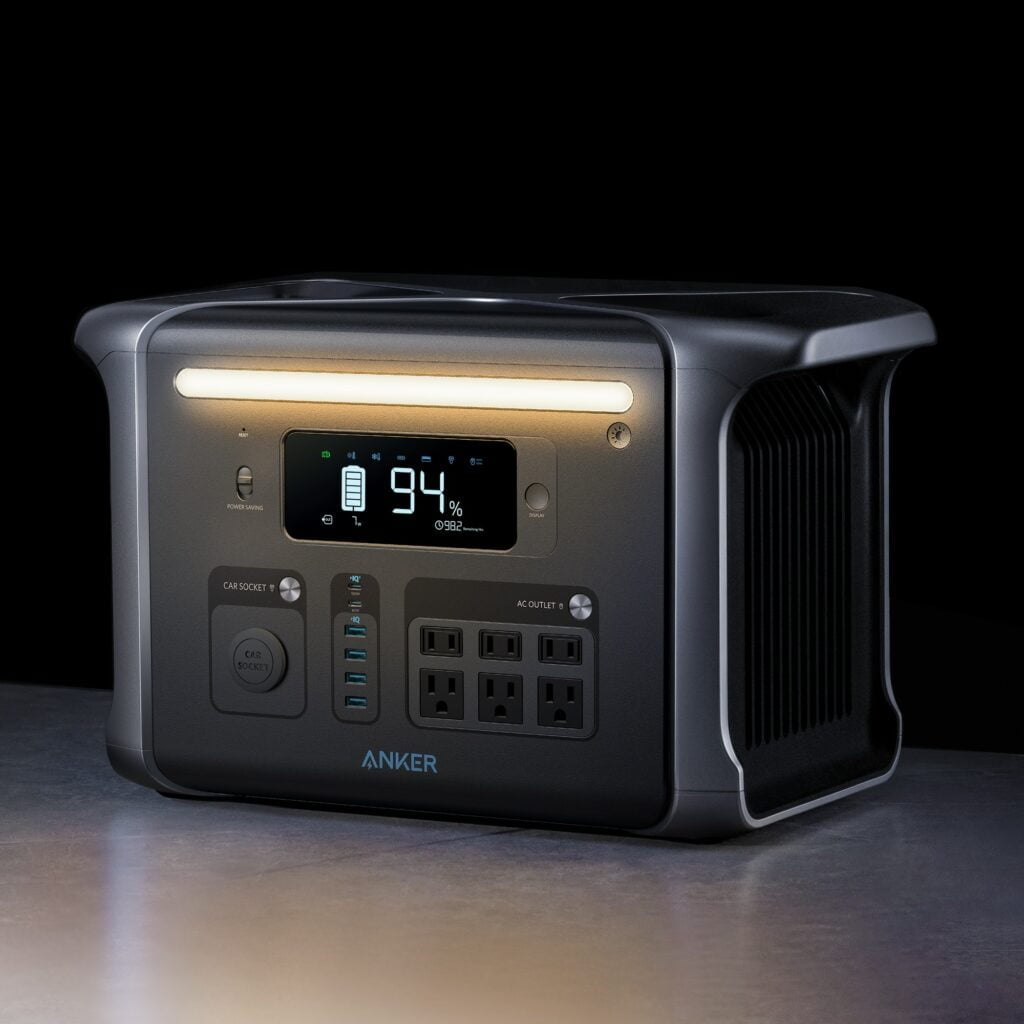
This week, Anker announced the new Anker 757 PowerHouse, which ups the capacity to 1229Wh with a total 1500W output.
How does this compare with the larger power stations from Jackery and EcoFlow?

- Long-Lasting Portable Power Station With a 10-Year Lifespan: With our proprietary long-lasting technology InfiniPower, combined with LiFePO4 batteries, ultra-durable electronic components, a smart temperature control system that monitors temperature up to 100 times per second, and impact-resistant structural design, Anker 757 PowerHouse is built to last over a decade, even with everyday use.
- Ultra-Powerful Capacity: With a 1229Wh capacity and 1500 wattage, PowerHouse is an ideal solution to power all your essential devices and appliances during a trip, such as an electric grill, coffee maker, refrigerator, and more.
- 9 Ports for All: The power station has all the ports you need to charge your devices and appliances. It is equipped with 2 AC ports, 4 USB-A ports, 2 USB-C ports, and a car outlet. With a fast-charging 100W USB-C port, charge your laptop at fast speeds via a single cable and get rid of bulky adapters.
- 5-Year Full-Device Warranty: Instead of the average 2 years, Anker 757 Portable Power Station is designed to reliably power your devices every day for 10 years. Additionally, it offers a superior 5-year full-device warranty for a guaranteed, worry-free experience.
- What You Get: Anker SOLIX F1200 Portable Power Station (PowerHouse 757), 3 types of charging cable (AC charging cable, car charging cable, solar charging cable), user manual, our worry-free 5-year warranty, and friendly customer service.
Anker 757 PowerHouse vs Jackery Explorer 1500 vs EcoFlow DELTA Specification
[table id=459 /]
Anker 757 PowerHouse vs Jackery Explorer 1500 vs EcoFlow DELTA Comparison
This comparison ended up more interesting than my usual comparisons. There is quite a bit of difference between the three products, and I would say there is no clear winner.
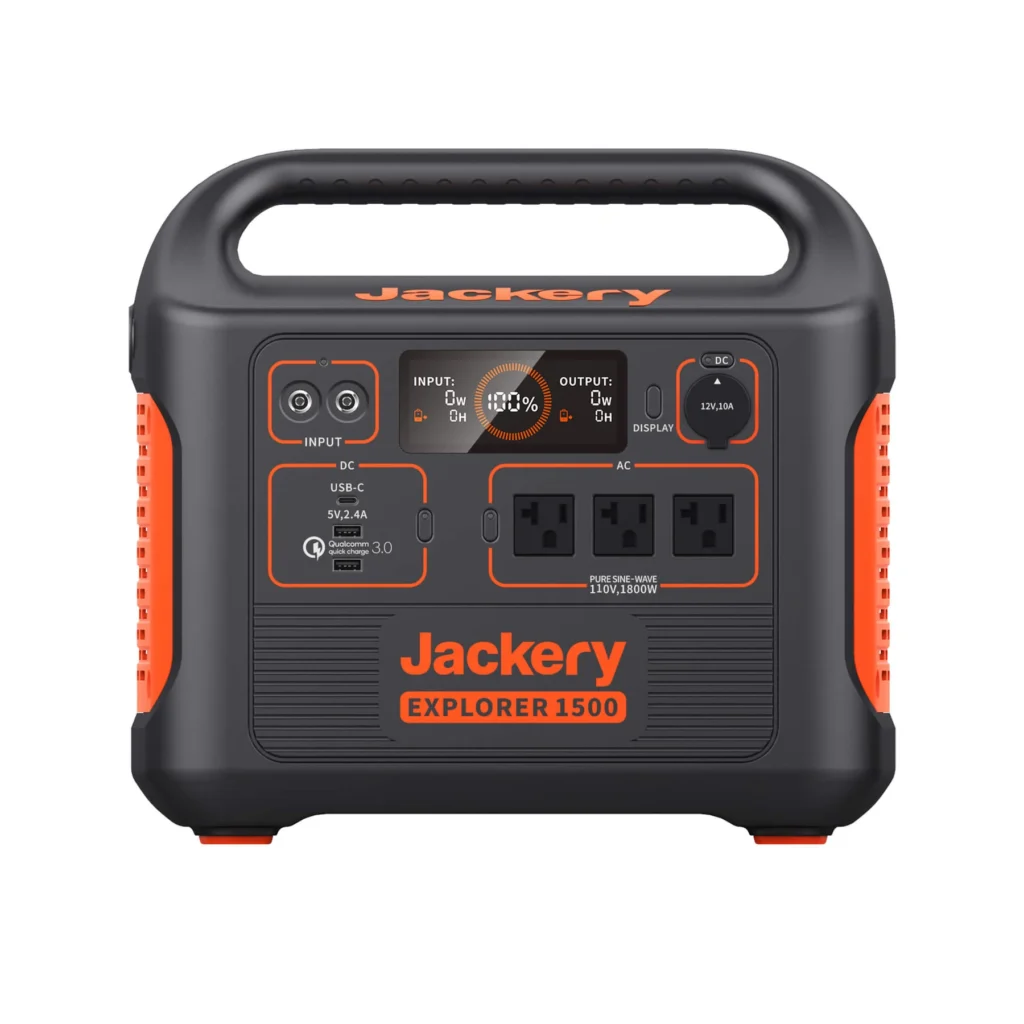
The Jackery Explorer 1500 is perhaps the least favourable overall specification, it has the most expensive RRP, but it does have the largest capacity. While the other products round up the capacity, Jackery rounds down and has a 25% higher capacity than the Anker 757, which somewhat justifies the 30% price difference.
You might argue that the Jackery Explorer 1000 is a better comparison, it is just 18.5% smaller in capacity but priced at $ 1,099, making it 21% cheaper than the other product.
Either way, both the Jackery Explorer 1000 and 1500 have a lower port count and slower charging.
The Anker 757 PowerHouse has the lowest capacity and lowest AC output of the three units but weighs considerably more. It also has the lowest solar charging capacity, and Anker hasn’t announced the price or availability of its solar panels yet.
That’s a poor start for Anker, until you look at the rest of the spec. In particular, Anker state that they use a new Lithium Iron Phosphate (LiFePO4) battery which is what you find in the latest electric cars. This charges faster and has considerably higher durability than the Lithium-ion found in the other two.
Anker claim this can do 3000 charge cycles while retaining 100% capacity. That sounds too good to be true, but they have also backed this up with an impressive 5-year warranty, 2.5x what the other two brands offer. When you are spending $1400 on a battery, you want it to last as long as possible, and this should be a major selling point.
The charge speeds outclass the others too, 1 hour to 80% and 1.5 hours to 100%. This will be particularly important for anyone that is lives remotely or in a vehicle. You may only have limited time to charge your power station.
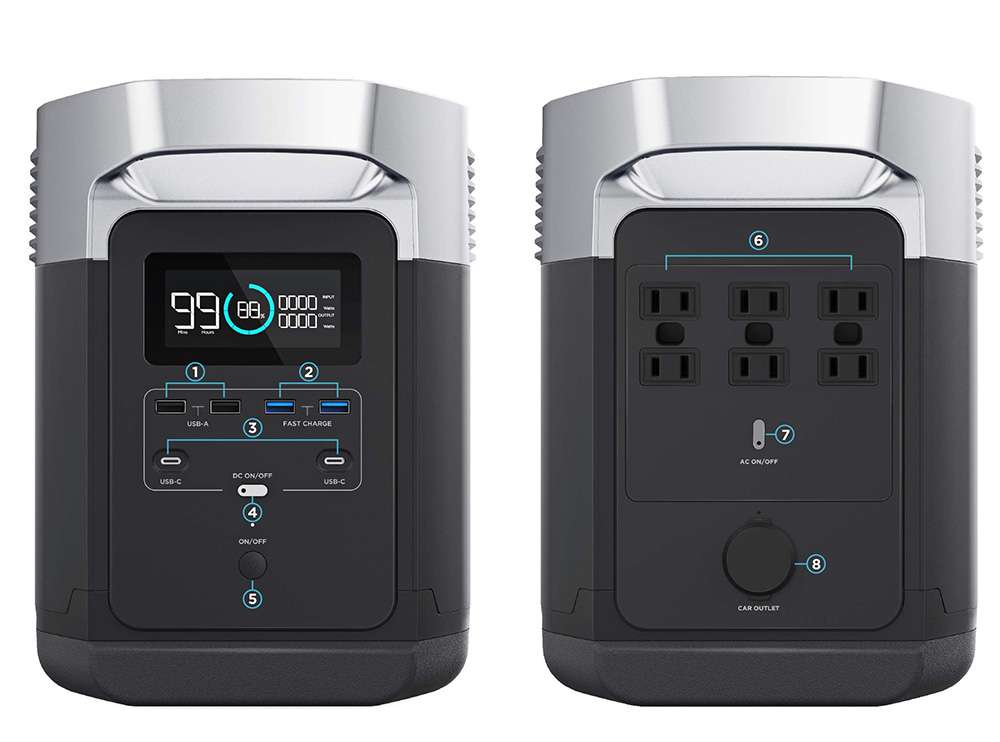
While the overall output wattage may be lower than the other two, you have the best port selection—six AC outlets, four USB-A, and then two USB-C with one capable of 100W.
Solar Panels
Anker will be launching a 100W solar panel, but at the moment, we don’t know the price.
The specification of the Anker 625 Solar Panel is:
- Integrated USB-C port delivers 15W of direct power
- XT-60 Output: 100W (can be combined for up to 300Ws)
- USB-A Output: 1x USB-A 12W
- USB-C Output: 1x USB-C 15W
- Dimensions: 525 x 470 x 85 mm (Folded); 1446 x 525 x 45 mm (Unfolded)
- Weight: 5kg / 11lbs
The other two brands have excellent options.
Jackery has the cheapest 100W solar panel at $300 RRP, but EcoFlow has a greater range with 400W panel that they have just launched for $1200. They also have a 220W Bifacial Solar Panel for $649. They don’t have a 100W model, but they have 110W at $399 RRP (but it is currently $299).
Overall
Anker may be the heaviest power station by a considerable margin and have the smallest output, but the impressive warranty and incredible longevity of the LiFePO4 will surely make the Anker 757 PowerHouse an appealing choice over the other options out there.
UK Price and Availability

The Anker 757 Portable Power Station is now available for £1,399 from Amazon.
Jackery doesn’t sell the 1500W model in the UK at the moment, but the Jackery Explorer 1000 is £1,154.99, which is available on Amazon.
EcoFlow sells the Delta for £1,299. However, its port configuration appears to be a bit different. There are 4 UK sockets, then four USB-A and two USB-C. This is also available on Amazon.

I am James, a UK-based tech enthusiast and the Editor and Owner of Mighty Gadget, which I’ve proudly run since 2007. Passionate about all things technology, my expertise spans from computers and networking to mobile, wearables, and smart home devices.
As a fitness fanatic who loves running and cycling, I also have a keen interest in fitness-related technology, and I take every opportunity to cover this niche on my blog. My diverse interests allow me to bring a unique perspective to tech blogging, merging lifestyle, fitness, and the latest tech trends.
In my academic pursuits, I earned a BSc in Information Systems Design from UCLAN, before advancing my learning with a Master’s Degree in Computing.
I’m proud to share that Vuelio has consistently ranked Mighty Gadget as one of the top technology blogs in the UK. With my dedication to technology and drive to share my insights, I aim to continue providing my readers with engaging and informative content.
I work directly with the companies he reviews products for or their chosen PR agency.
For Social Media, you can find me on: