SIVGA Lyrebird Review – Quad-Driver Hybrid IEMs
I reviewed the excellent flagship SIVGA Nightingale PRO back in December 2025, and prior to that the over-ear SIVGA Robin and SIVGA Phoenix.
I have been impressed with every SIVGA product I have tested so far. The brand consistently offers premium features at a lower price point than more established rivals, alongside the attractive wooden styling that runs through almost all of its range.
The latest release is the SIVGA Lyrebird, an interesting pair of IEMs thanks to their quad driver design: a 10 mm polymer composite dynamic driver, a balanced armature driver, a micro planar driver and a 9.2 mm multilayer piezoelectric ceramic driver. You would think a design like this would command a premium price, but the Lyrebird is available for a reasonable £124.
Specification
| Specification | SIVGA Lyrebird |
| Product type | Quad-driver hybrid in-ear monitors (IEMs) |
| Driver configuration | Quad-driver hybrid per side |
| Dynamic driver | 10 mm polymer composite dynamic driver |
| Balanced armature | 1 x balanced armature driver |
| Planar driver | 1 x micro planar driver |
| Piezoelectric driver | 9.2 mm multilayer piezoelectric ceramic driver |
| Impedance | 14 ohms +/-15% @ 1 kHz |
| Sensitivity | 108 +/-3 dB @ 1 kHz |
| Frequency response | 20 Hz – 20 kHz |
| Total harmonic distortion | <=1% @ 1 kHz |
| Housing material | CNC-machined aviation-grade aluminium alloy |
| Faceplate | Stabilised wood |
| Fit | Ergonomic over-ear |
| Connector | 0.78 mm 2-pin detachable |
| Plug | 4.4 mm balanced |
| Cable type | Hybrid detachable cable |
| Cable length | 120 +/-10 cm |
| Cable construction | 30-core Furukawa OFC + 10-core silver-plated copper + 10-core enamelled gold-plated silver-copper |
| Included ear tips | 7 pairs, two types |
| Carrying case | Crazy horse leather case |
| Package contents | Lyrebird earphones, carrying case, 7 pairs of ear tips, user manual and product certificate |
Design and Build Quality
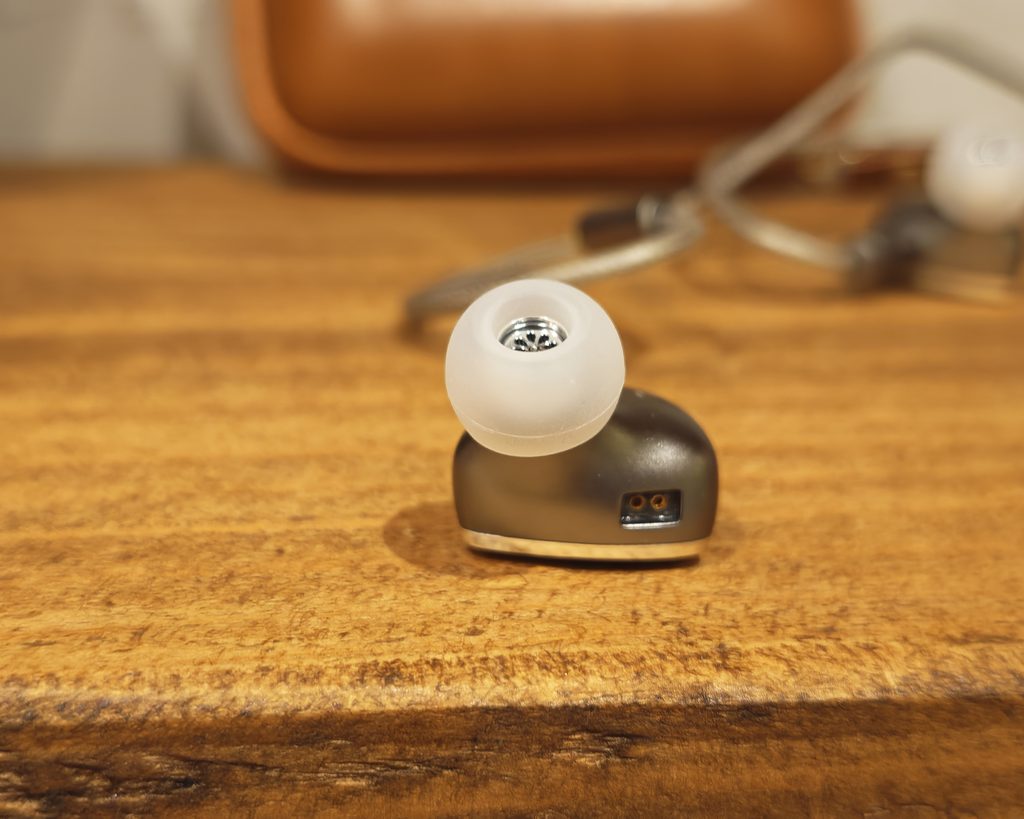

The packaging, design and build quality are more premium than you would expect for IEMs at this price. Just like the Nightingale PRO, the Lyrebird comes supplied in a high quality leather hardcase that is compact enough to slip into a jacket pocket rather than a bulky zip case that ends up left at home.


Each earpiece uses a CNC machined aluminium alloy shell paired with a stabilised wood faceplate, so the grain pattern on your pair will be unique to that unit. The shells are on the smaller side and reasonably light, which should help them fit a wide range of ear shapes, and the 0.78 mm 2-pin cable uses a mix of Furukawa OFC, silver-plated copper and gold-plated silver-copper conductors, terminating in a 4.4 mm balanced plug rather than the more common 3.5 mm. You get a selection of ear tips contained in their own plastic box, including four sizes of silicone tips, so most people should find a fit that seals well without needing to buy anything extra.

Sound Quality
For testing, I used the Khadas Tea Pro DAC for when I am walking around, and the Fosi Audio K7 when I am sat at my desk.

From the SIVGA website the driver design is:
- 10 mm polymer composite dynamic driver, providing elastic bass with a relaxed presentation
- Balanced armature, for clear mids with focused vocals and fine detail
- Micro planar driver, for smooth treble extension with low distortion
- 9.2 mm multilayer piezoelectric ceramic driver, for precise ultra-high frequency response
I wouldn’t really describe myself as an audiophile. I am very sensitive to treble and try to avoid anything too bright, and a lot of the genres I prefer tend to favour bass. That bias is worth bearing in mind.
One practical point worth flagging before getting into the tuning: the Lyrebird is not the easiest IEM to drive, rated at 14 ohms and 108 dB sensitivity.
With four different driver types working together, cohesion is not guaranteed. It would be easy to end up with a sound that feels like several components playing on top of each other rather than as one voice. To SIVGA’s credit, the Lyrebird avoids that problem. The transition between the dynamic driver’s bass, the balanced armature’s mid-range and the planar and piezoelectric drivers’ treble is smooth, and there is little sense of any single driver drawing attention to itself. The piezoelectric driver can add a faint metallic edge to transients if you listen closely on treble heavy tracks, but it does not dominate the overall presentation.
Like most dynamic driver based IEMs, the Lyrebird benefits from a short burn-in period. Other reviewers have found the bass gains elasticity and rhythm within the first couple of hours of use, and my own experience matched that. Fresh out of the box the low end felt a little thin, and it settled into a more natural balance after some initial listening.
Bass
The bass on the Lyrebird is present rather than boosted. The 10 mm dynamic driver gives it a controlled, elastic low end with enough weight to give male vocals, piano and cello the right tonality, without bleeding up into the mids. There is a gentle rise into the mid-bass that gives songs a sense of body, but sub-bass rumble is fairly restrained. If you want the kind of chest-thumping sub-bass shelf found on a lot of budget Chinese IEMs, this is not that set. Bass heads should look elsewhere, but if you want a low end that stays out of the way of the rest of the frequency range, this is a well judged tuning.
Mids
Mid-range clarity is one of the stronger points of the Lyrebird. The balanced armature driver does the heavy lifting here, and it comes through with a neutral and natural presentation. Pinna gain, the rise in the upper mids that gives vocals and instruments their forward, in-your-face quality, is kept fairly restrained. That appears to be a deliberate choice by SIVGA, and it means instruments such as piano and acoustic guitar sound composed rather than shouty, though it also means the mids do not push forward as much as some listeners might expect from a set with this many drivers on board.
Treble
Treble is where the Lyrebird’s extra drivers earn their keep. The micro planar driver extends smoothly into the higher registers, and the 9.2 mm piezoelectric ceramic driver adds sparkle and air at the very top. While I am sensitive to treble, I didn’t experience too much sharpness with these IEMs, and cymbals and strings have a genuine sense of shimmer without becoming fatiguing over a listening session.
On my ears, and through the sources I used for testing, it never tipped into outright sibilance, but if you are particularly treble sensitive, or have been left with ringing ears after a long session with a bright set before, it is worth trying before you buy, or checking a measurement graph first.
Vocals
Vocals are a genuine highlight. Male vocals have a glossy, natural weight to them, while female vocals capture fine breath detail and texture without becoming thin or edgy. The balanced armature driver keeps diction and detail clear, and vocals sit with a slightly forward positioning in the mix, giving them presence without dominating the rest of the track. Whether you are listening to intimate acoustic recordings or busier pop production, vocals come through with a level of clarity that punches above the Lyrebird’s price.
Price and Alternative Options
The SIVGA Lyrebird are available directly from sivgashop.com for £124.
Other IEM options from SIVGA include:
- SIVGA SM100 Dynamic Driver IEMs – £33
- SIVGA Que Beryllium-Plated Dynamic Driver IEMs – £59
- SIVGA Nightingale Planar Magnetic IEMs – £211
- SIVGA Nightingale PRO – £224
The Simgot SuperMix 4 has essentially the same quad driver design. I have not used them so can’t compare directly, but these are available for £137 from Ali Express or £160 from Amazon.
Outside the SIVGA range, the Blon A6 and Dita Audio Project M2 are both worth considering if the Lyrebird’s tuning appeals to you but you want to spend a little less or a fair bit more.
Overall
The SIVGA Lyrebird is a genuinely interesting release. Fitting a 10 mm dynamic driver, a balanced armature, a micro planar driver and a piezoelectric ceramic driver into such a small aluminium shell is no small achievement, and SIVGA deserves credit for stepping outside its usual single dynamic driver formula while keeping the brand’s house sound intact. Build quality, the leather case and the included cable are all well above what I would expect at this price, and the stabilised wood faceplates give each pair its own character.
Sonically, this is a neutral, slightly bright IEM with a natural mid-range, clear vocals and a treble that has genuine sparkle without becoming harsh, at least to my ears. Where the criticism lies is in how much the extra drivers actually add over SIVGA’s own cheaper Que, or over rivals such as the Blon A6, which offers a similar tuning with more body for less money. The pinna gain and treble peaks could have been smoothed out further to make better use of the four driver design, and a committed bass head is unlikely to get on with the restrained low end.
If you want a clean, neutral IEM with a bright, detailed top end and a bass that stays out of the way of vocals and mids, the Lyrebird is a strong option at £124, and the build quality and accessories alone make it feel like good value. If sub-bass weight, treble sensitivity, or squeezing the most obvious benefit out of a four driver design is a priority for you, it is worth trying before you commit, or weighing it up against the SIVGA Que or Blon A6 as alternatives.
SIVGA Lyrebird Review
-
Overall - 80%80%
Summary
The SIVGA Lyrebird delivers an impressively cohesive sound considering its unusual four-driver configuration. Its tuning is relatively neutral with excellent vocal clarity, controlled bass and an airy, detailed treble response that avoids becoming excessively harsh. Build quality is another major strength, with the aluminium shells, stabilised wood faceplates, premium cable and leather case all feeling more expensive than the £124 asking price suggests.
The restrained sub-bass will not suit bass-heavy preferences, while particularly treble-sensitive listeners may find the upper frequencies slightly too prominent. It is also debatable whether the complex driver arrangement delivers a dramatic improvement over cheaper alternatives. Nevertheless, the Lyrebird is a well-built and technically capable IEM that offers good value for listeners who favour clarity, vocals and a clean, detailed presentation.
Pros
- Excellent vocal clarity
- Cohesive four-driver presentation
- Premium build and accessories
- Detailed, airy treble
- Comfortable compact aluminium shells
Cons
- Sub-bass lacks substantial weight
- Treble can sound slightly bright
- Limited benefit from four drivers
- Bass heads should look elsewhere

I am James, a UK-based tech enthusiast and the Editor and Owner of Mighty Gadget, which I’ve proudly run since 2007. Passionate about all things technology, my expertise spans from computers and networking to mobile, wearables, and smart home devices.
As a fitness fanatic who loves running and cycling, I also have a keen interest in fitness-related technology, and I take every opportunity to cover this niche on my blog. My diverse interests allow me to bring a unique perspective to tech blogging, merging lifestyle, fitness, and the latest tech trends.
In my academic pursuits, I earned a BSc in Information Systems Design from UCLAN, before advancing my learning with a Master’s Degree in Computing.
I’m proud to share that Vuelio has consistently ranked Mighty Gadget as one of the top technology blogs in the UK. With my dedication to technology and drive to share my insights, I aim to continue providing my readers with engaging and informative content.
I work directly with the companies he reviews products for or their chosen PR agency.
For Social Media, you can find me on: