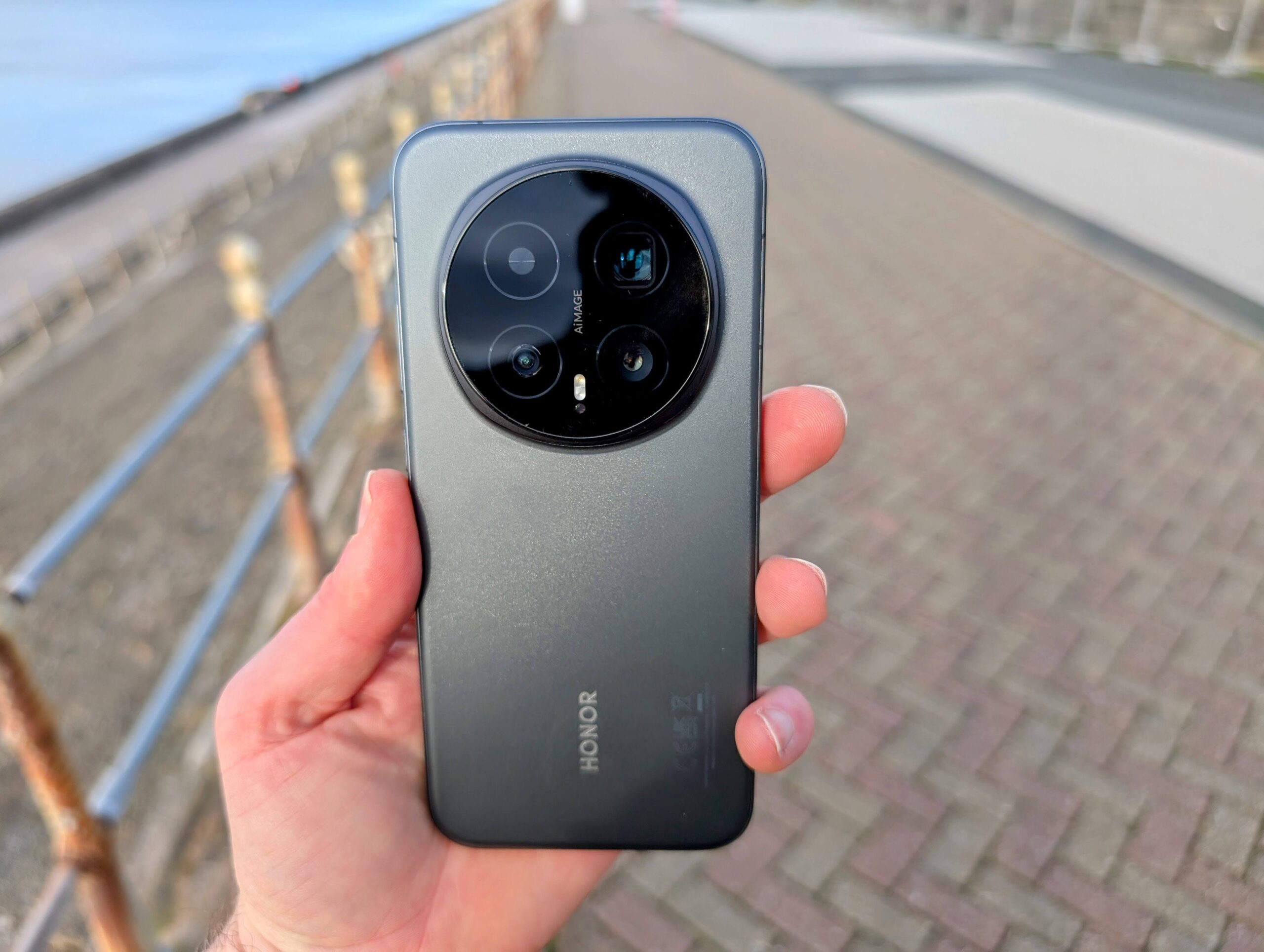
Honor Magic8 Pro Review – Outstanding Zoom Performance
The Honor Magic8 Pro arrives as the latest iteration in what has become my preferred flagship Android series. After using the Magic7 Pro extensively last year, I was keen to see whether Honor could refine an already strong formula without inflating the price too much.
Key Specifications
The Magic8 Pro runs Qualcomm’s Snapdragon 8 Elite Gen 5 paired with up to 16GB RAM and UFS 4.1 storage. The 6.71 inch LTPO OLED display hits 6000 nits peak brightness and supports 4320Hz PWM dimming. The rear camera setup includes a 50MP f/1.6 main sensor, 200MP f/2.6 periscope telephoto at 3.7x optical zoom, and 50MP ultrawide. Battery capacity varies by region – 7100mAh in some markets but 6270mAh in Europe – with 100W wired and 80W wireless charging. The phone ships with Android 16 and MagicOS 10, with Honor now promising seven years of updates.
Design and Practicality
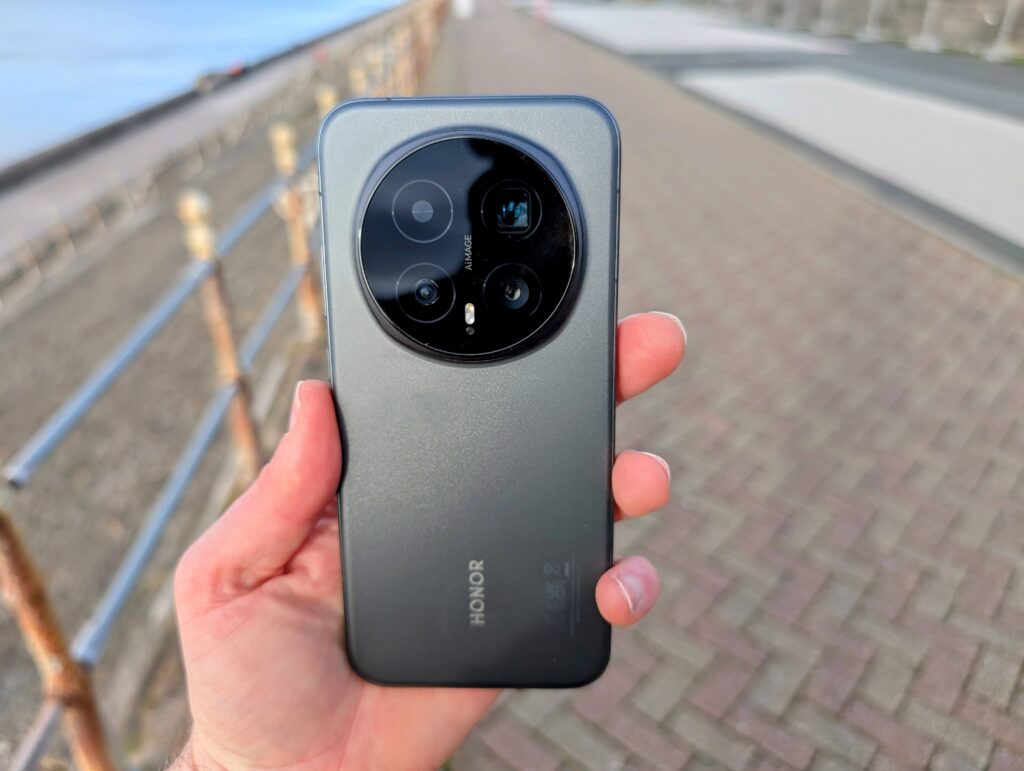
Honor has trimmed the footprint slightly from the Magic7 Pro. At 219g and 8.3mm thick, it remains a substantial device, but the reduction in display size from 6.8 to 6.71 inches makes it fractionally easier to handle one-handed. The camera module is still enormous and unavoidable in a pocket, though the circular design at least provides a natural resting point for your finger.
Build quality is excellent. The aerospace-grade aluminium frame and NanoCrystal Shield glass feel robust, and the IP68/IP69K rating goes beyond what most competitors offer. The matte finish on the Sunrise Gold variant I tested does a decent job hiding fingerprints, which is more than can be said for many glass-backed flagships.
The in-display ultrasonic fingerprint scanner is quick and reliable, complemented by a 3D face unlock system that works well in varied lighting. The main ergonomic compromise is the pill-shaped camera cutout, which is larger than a standard punch hole and noticeable during video playback.
Display Quality
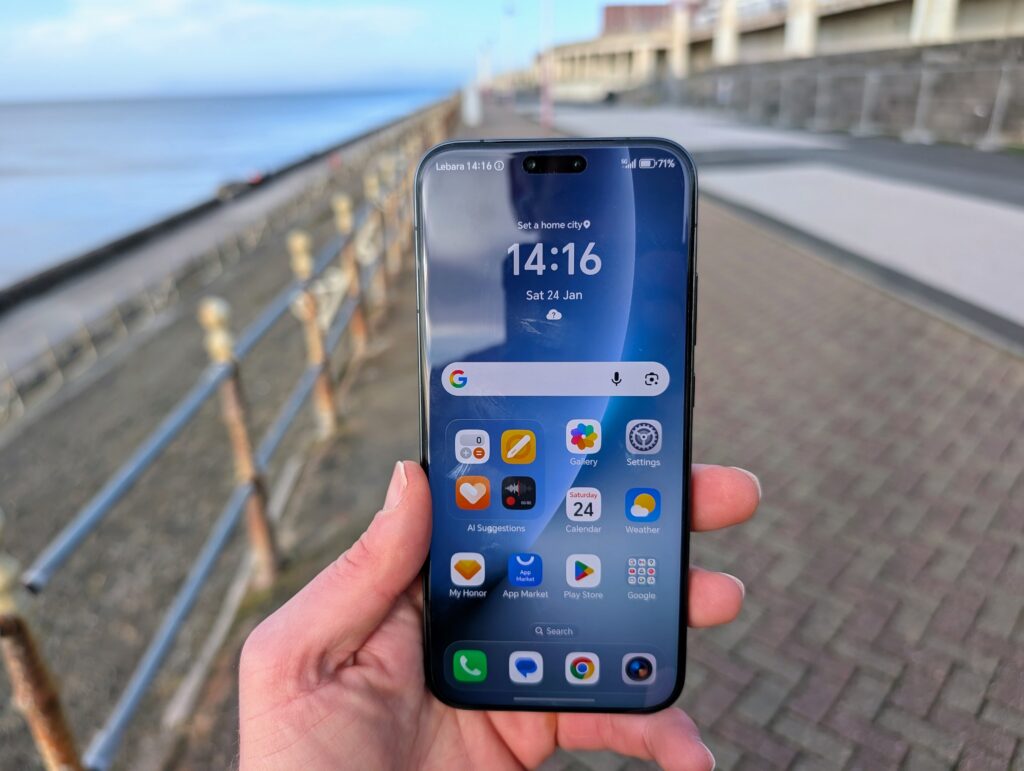
The 6.71 inch panel is genuinely impressive. Peak brightness of 6000 nits translates to excellent outdoor visibility, and I had no issues using maps or the camera in direct winter sunlight. Resolution sits at 1256 x 2808, which looks sharp in daily use even if it falls slightly short of true QHD density.
Honor’s focus on eye comfort continues with 4320Hz PWM dimming and a chip-level AI defocus mode designed to reduce eye strain during extended use. As someone mildly sensitive to OLED flicker, I have had no issues with long reading sessions. The circadian night display mode aggressively warms colour temperature in the evening, which I find helpful but can be adjusted if it feels too strong.
Performance and Thermals
The Snapdragon 8 Elite Gen 5 delivers predictably strong performance. In AnTuTu the phone scores close to 4 million with performance mode enabled. 3DMark Wild Life Extreme starts above 8000 but throttles to roughly half that score after 20 minutes of sustained load, which is consistent with the platform’s thermal behaviour.
What separates the Magic8 Pro from some rivals is thermal management. Where I have measured over 50 degrees Celsius on certain metal-framed devices, the Honor tends to settle in the mid-40s. It still gets warm under heavy gaming, particularly when charging, but remains comfortable to hold in normal conditions.
Gaming performance is solid across demanding titles, with the phone supporting up to 120fps in compatible games. AI-based upscaling and frame generation work well enough, though you will see occasional frame dips after extended sessions in the most intensive scenarios. The lack of a battery bypass mode for gaming while plugged in is a missed opportunity.
Battery Life and Charging
Battery tech remains a highlight. The 6270mAh silicon-carbon cell in the European model is up by around 1000mAh from the Magic7 Pro, though it is frustrating that some regions get 7100mAh at a similar price point. In real-world use, the phone comfortably handles a day and a half of moderate to heavy use, with two full days realistic under lighter workloads.
Charging at 100W wired gets you to full in around 45 minutes with the larger battery, closer to 35 minutes with the smaller EU cell. A 15 minute top-up reaches around 40 percent, which is enough to see you through a long evening. Wireless charging at 80W is faster than most competitors offer, and there is 5W reverse charging for accessories.
Software and AI Features
MagicOS 10 on Android 16 has been stable in my testing, with no major app crashes or notification issues. The UI remains busy compared to stock Android, and Honor pre-installs a fair number of proprietary apps, but most can be disabled if you prefer a cleaner setup. The seven-year update commitment matches Samsung and Google, which makes the phone more viable as a long-term purchase.
The dedicated AI button on the side can be remapped to various functions. By default, a double press launches the camera, which I found useful, while a long press triggers AI screen suggestions. The implementation is more flexible than old hard-wired assistant keys, though I preferred leaving the short press unassigned to avoid accidental triggers.
AI features are pervasive across the system. Some tools like AI eraser and reflection removal are genuinely useful for quick photo touch-ups. Others feel more experimental, and there is the usual question of how comfortable you are with cloud-driven AI workflows. Honor does run many perceptual and safety functions on-device, which is preferable.
Camera Performance
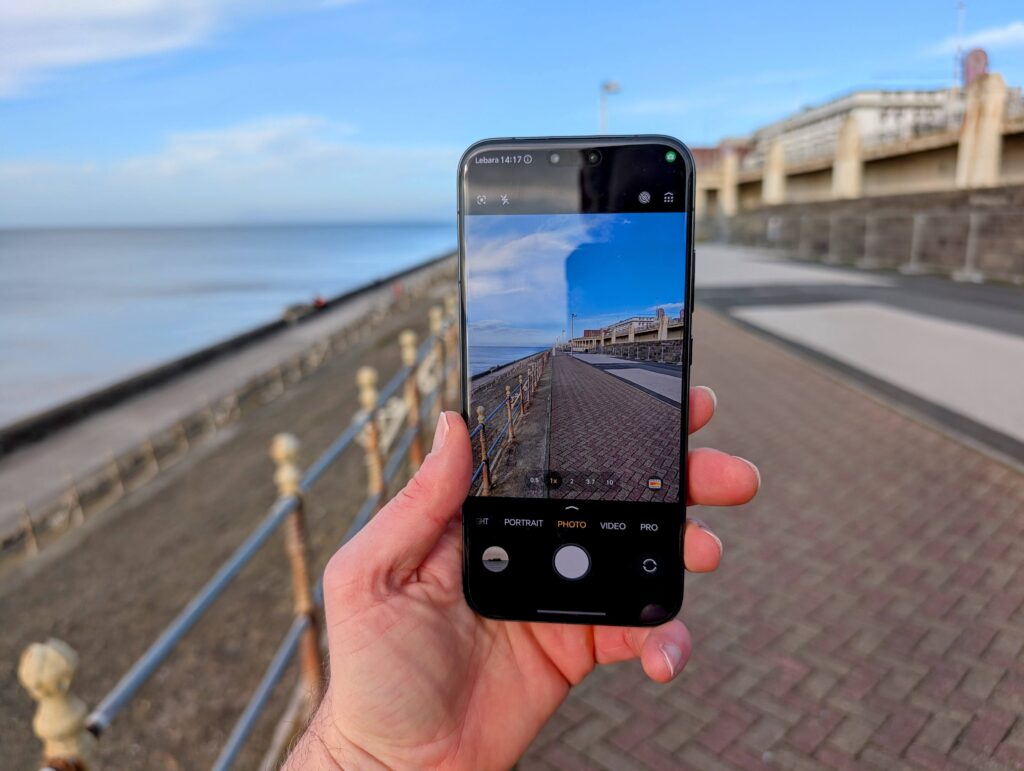
The camera setup on paper looks similar to the Magic7 Pro with targeted improvements. The main sensor is fixed at f/1.6, losing the variable aperture of its predecessor, which I would still count as a slight regression for those who valued that control. The telephoto moves from 3x to 3.7x optical and benefits from a large 1/1.4 inch sensor with strong stabilisation.
In practice, the main camera produces detailed images with wide dynamic range in good light. Night mode is excellent, with the phone handling 2 second handheld exposures without major blur. The 200MP telephoto is a standout, delivering crisp images at its native 3.7x and remaining very usable at 10x. At night, the telephoto holds up better than most competitors out to around 10x before noise and softness become problematic.
The ultrawide is competent in daylight but falls behind in low light, which is typical. The 2.5cm macro mode is genuinely useful for close-up work. Portrait mode does a good job with subject separation, and night portraits handle tricky backgrounds better than many phones I have tested.
Video tops out at 4K 120fps on the rear cameras. Footage is sharp with good stabilisation, though autofocus can occasionally hunt in busy low light scenes with multiple moving subjects. Audio capture is acceptable for casual use but sounds a bit thin at distance. The 50MP selfie camera is strong, with 4K 60fps video that holds up well for front-facing recording.




Pricing and Competition
At launch the Magic8 Pro sits around £1100, but bundle deals bring it closer to £900, which is where it needs to be to make sense. The Samsung Galaxy S25 Ultra costs around £1249, the S25 Edge is about £1100 but with weaker battery and charging, and the Google Pixel 10 Pro XL comes in around £1200. The OnePlus 15 undercuts at £829 but with weaker camera hardware.
Compared to Samsung and Google, the Magic8 Pro offers a larger battery, faster charging and a slightly lower price. Samsung still wins on video quality and ecosystem integration in the UK, while Google’s camera processing remains very strong for stills and skin tones. The OnePlus 15 is worth considering if you value battery and performance over camera versatility and can accept the price difference.
Verdict
The Honor Magic8 Pro is a very competent flagship that gets the fundamentals right. The combination of a large silicon-carbon battery, fast charging, bright display, strong telephoto camera and solid performance makes it easy to recommend in this price range. It may not be the objectively best phone in every category, but it strikes a sensible balance between price, battery, performance and camera versatility without leaning too hard into one area at the expense of others.
If I were buying a new Android flagship around the £900 to £1000 mark today, the Magic8 Pro would be very high on my shortlist and would probably edge out the alternatives for my own use. The main caveats are the regional battery differences, the loss of variable aperture on the main camera, and MagicOS being busier than stock Android. For most people shopping at this level, those compromises are acceptable given what you gain elsewhere.