Fitnexa SomniPods 3 Review – Low-profile noise-cancelling sleep earbuds with hybrid ANC
I have always had terrible sleep. I struggle to get to sleep. I am a very light sleeper, and I wake up a lot throughout the night.
I am fit, healthy and do not have sleep apnoea. I just have a cursed, hyperactive brain that does not want to sleep.
Sleep earbuds have grown in popularity over the years. They tend to be geared towards side sleepers, with the earbuds having a very slim profile to avoid causing discomfort when your head is on the pillow.
In the past, I have reviewed the Kokoon Nightbuds, which were good but had a buggy app and an expensive subscription. Then there was the Anker Soundcore Sleep A10, which I thought was superb but had some annoying quirks, and a year later I reviewed the Soundcore Sleep A20, which was even better. I have not had the chance to review the newer Soundcore Sleep A30.
So Anker Soundcore seem to be dominating the sleep earbuds category, but Fitnexa reckons it has a superior product with the SomniPods 3.
A bit of context on the brand is worth setting out, because Fitnexa is not a name most people will recognise. It started life as an AI health and fitness app, and the SomniPods 3 are its first piece of hardware. The 3 in the name is a little confusing as a result, since there is no SomniPods 1 or 2 that I can find, and these should not be muddled with the similarly named Somnibuds from a different company. Naming aside, the pitch is clear enough. These are pitched as some of the thinnest ANC sleep earbuds on the market, and they are designed to work alongside the wider Fitnexa app rather than as a standalone audio product.
Specification
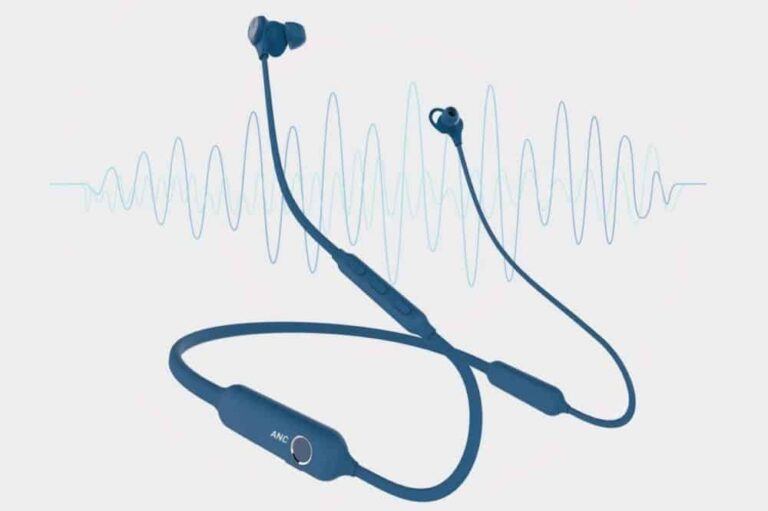
The headline numbers give a reasonable picture of what these are trying to be. They are tiny, they carry hybrid ANC, and they support a full set of high-quality codecs, which is unusual for a product aimed squarely at sleep.
| Specification | Details |
| Drivers | 4.6 mm dynamic driver |
| Weight | 3.3 g per earbud |
| Sleep monitoring | 3-axis sensor, 85% or higher accuracy compared to PSG (manufacturer claim) |
| Active noise cancellation | Hybrid ANC, up to 42 dB reduction (manufacturer claim) |
| Sound profile | Balanced sound with 10-band EQ (via app) |
| AI features | AI Sleep Coach, snore masking |
| Bluetooth version | Bluetooth 5.4 |
| Water resistance | IPX4 (earbuds) |
| Supported codecs | SBC, AAC, aptX, LDAC |
| Fit options | Two ear-tip shapes across five sizes, plus four wing sizes |
| Charging method | USB-C and wireless charging |
| Playback time | Up to 12 hours (ANC off), up to 6.5 hours (ANC on) |
| Charging speed | 10-minute charge provides up to 1.5 hours of playback |
| Total battery life | Up to 48 hours (with charging case) |
| Controls | Touch controls |
Design

The case is a flat, round puck in a soft off-white, almost cream colour, with a matte finish that does not feel cheap. It is one of the nicer sleep earbud cases I have handled, and the lid opens to reveal the two buds sat in a shallow well with L and R markings between them. A single status LED sits on the front edge, and charging is handled by USB-C on the underside or by placing the case on a wireless charging pad. Wireless charging is a genuinely useful inclusion at this price, and not something every rival offers.


The buds themselves are the main event. At 3.3 g each they are properly light, and they sit low in the ear rather than sticking out. Each bud uses a flared silicone tip with a soft wing, or fin, that tucks into the ridge of your ear to hold everything in place. On the underside you can see the charging contacts and a small microphone grille. The whole thing is built around the idea of disappearing once it is in, and for the most part it succeeds.
Control is handled by touch, which I have mixed feelings about on a sleep product. Touch controls are fine when you are awake and listening to music, but half-asleep in the dark, fumbling for a bud and accidentally triggering a tap is easy to do. The buds carry an IPX4 rating, so light sweat or the odd splash is not a concern, though these are not earbuds you would wear in the shower or out in heavy rain.

Fit and accessories
Fitnexa has put real thought into fit, which matters more on a sleep product than on normal earbuds because you are wearing them for hours while lying still. There are two tip shapes across five sizes, plus four wing sizes, which gives a large number of possible combinations. The silicone is soft and pliable, almost saggy in feel, but that flexibility is what lets the buds settle into different ear shapes without pressure points.
It took me a few goes to learn the correct way of seating them. Because the buds are so small, there is a slight twist-and-tuck action to get the wing sitting correctly, and the first couple of nights I was not confident they would stay put. They always did. I would sometimes go to bed convinced one would be lost in the sheets by morning, only to find it exactly where I left it. For casual use I tend to reach for larger tips for better isolation, but with these I have had more success going down a size, because the tighter fit can become uncomfortable over a longer stretch.
Fitnexa App
You cannot get far without the Fitnexa app, which is required to set the buds up and to access most of their features. The app is free to download, and at its core it is a broad health hub rather than a simple earbud companion. You can log food, water and workouts, view sleep data, and chat with an AI assistant. The food recognition is genuinely clever from what I have seen, identifying meals from a photo and breaking down the rough nutrition, though that is a side feature for anyone buying these purely for sleep.
The sleep side is where my interest sits. After a night, the Sleep tab gives you a score out of 100, a total duration, and a breakdown of deep, light, REM and awake time, along with a graph of how those stages moved across the night. There is an AI assistant, branded Nexa in my app, that you can talk to for a plain-language summary, plus a separate Mindscape area for the sound content. It is a lot of functionality, and the interface is reasonably attractive, but it can be busy and a little fiddly to move around, which matches the buggy app experience I have read about from other reviewers.
I will be upfront about the sleep scoring, because it left me unconvinced. One night logged a duration of 8 hours 27 minutes and still came back with a score of 38, rated as Bad, while the written summary told me I had slept well overall and blamed rising morning light for the tail end of the night. A near eight-and-a-half-hour night being scored as Bad, with the app’s own text contradicting the number, is the kind of thing that erodes trust in the metric. The stage breakdown that produced it showed only 29 minutes of REM and 1 hour 27 minutes awake, so I can see the maths behind the low score, but a single headline number that disagrees with its own description is not all that useful. As with any wrist or ear-based tracker, I would treat the stage data as a rough trend rather than a clinical readout. The manufacturer quotes 85% or higher accuracy against a proper sleep study, which is fine for spotting patterns over weeks but not something to lose sleep over on any single night.
One feature I did warm to is sleep position tracking. The buds can tell whether you are on your left, right, back or front, and they count how often you turn over during the night. It is the first time I have seen this on a pair of sleep earbuds, and it is the sort of stat that is interesting without being something you can fixate on, which is a healthier way to engage with sleep tracking than chasing an arbitrary score.
Sound library and timers
The in-app sound library is more extensive than the handful of noises baked into some rivals. It is split into categories including Sleep, Relaxation, Focus, Brain Waves and Meditation, with options such as rain, soft rain, water, breeze, temple bell and drum, soft flute, pink noise, gray noise, and binaural alpha and theta tracks. Some of these carry a small marker that indicates premium content, so not everything is available on the free tier.
There is also an auto-off timer for the audio, with preset durations of 5, 10 and 15 minutes, a longer 180-minute option, and a Cycle mode. This is a sensible touch, because it lets the sound fade out once you are likely asleep rather than running all night and draining the battery. It also ties into the battery management point I will come to later, where limiting how long ANC and audio run is the main way of stretching a charge across a full night.
Subscription Features
Everything has to have a subscription nowadays, which is something I have grown to hate. Thankfully, with Fitnexa this is completely optional, and I could justify a subscription if it genuinely helped improve my sleep.
The paid tier sits at around £7.64 per month at current exchange rates, with a weekly option of roughly £2.29 if you want to dip in and out, and the buds are often bundled with a few months of access included. The free tier covers the core sleep tracking, the sound library, the EQ and the basic AI summaries, so you are not locked out of the main reason for buying the product. What you pay for is the deeper analysis: richer nutrition coaching, more detailed health reports, and a higher allowance of AI queries, since the free tier limits how many requests you can make in a day.
My view is the same as it is with most hardware that leans on a subscription. The buds should deliver their core value without an ongoing fee, and to Fitnexa’s credit they largely do. I would still rather see the deeper sleep analytics handed to owners as standard, with the subscription reserved for the wider lifestyle and nutrition coaching, because longitudinal sleep data is exactly the sort of thing that builds loyalty when it is left open. There is also no integration with Apple Health or similar platforms at the time of writing, which is a missed opportunity for anyone already tracking with a watch or ring.
Side sleeping comfort
This is the single most important thing a pair of sleep earbuds has to get right, and the SomniPods 3 are generally excellent for side sleeping. With my head on the pillow in a side position, I get no noticeable feeling of the earbud being pressed into my ear, beyond the simple sensation of wearing an earbud at all. The low-profile shape does what it is supposed to, and there is none of the discomfort I have had with bulkier buds that effectively wake you up every time you roll onto them.
The fair caveat, and it applies to me with any in-ear product rather than these in particular, is that wearing earbuds for long periods can cause a bit of discomfort over time. For casual daytime use I normally wear large tips for the improved isolation, but the tighter fit can start to ache after a while. Dropping down a tip size has helped a lot here, trading a little isolation for comfort that lasts longer into the night. If you are someone who already finds earplugs or earbuds uncomfortable after an hour or two, no sleep bud, including this one, will completely solve that.
Side sleepers should also be aware of one quirk that other reviewers have flagged, which is the potential for the bud shell to rub against the pillowcase and create a faint friction noise as you move. I have not found it to be a constant problem, but it is the sort of thing that can break the silence these are trying to create, and it is worth knowing about if you are a very active sleeper.
Noise cancellation for sleep
The SomniPods 3 use a hybrid ANC system that combines feedforward and feedback microphones, with Fitnexa quoting up to 42 dB of reduction under its own test conditions. In practice, the active cancellation is backed up by the passive seal from the flared tips, and then by whatever sound you choose to layer on top. I would not put the ANC on the level of a flagship pair from Bose or Sony, but it is solid, and for sleep purposes the combination of a decent seal and gentle masking matters more than raw cancellation depth.
I tested the cancellation around the home as well as in bed, and it does a good job of flattening the low, constant drones that tend to keep a light sleeper awake, things like distant traffic or a fan. It is less effective against sudden, sharp noises, which is true of almost all ANC. There is also a snore-masking mode that uses the microphones to detect snoring and counter it, which I cannot meaningfully test because I sleep alone, but it is a sensible inclusion for shared beds.
The one structural limitation is battery, which I will expand on shortly. Because ANC roughly halves the runtime, the app lets you set how long it stays active rather than running all night, which is a reasonable compromise but does mean ANC is best thought of as a tool for falling asleep rather than something that protects you from dawn until you wake.
White noise and sleep improvement features


I have never been able to get along with white noise. I can see the appeal, and plenty of people swear by it, but the pitch has never worked for me and tends to keep my brain switched on rather than settling it.
It is a similar story with the other sounds that are supposed to be relaxing. As much as I like the sound of rain in real life, I find the rain loops on sleep earbuds too distracting, partly because the loop point is often noticeable and the sound resets just as you are drifting off. Where I have had more success is with the lower-pitched options. I found the brown noise the most effective of the lot, because the deeper tone does not grate on me the way higher-pitched white noise does. If you are buying these mainly for masking sound, I would suggest spending your first few nights working through the library to find the pitch that suits you, rather than assuming the default white noise is the one to use.
The brain wave and binaural tracks are an interesting extra, and the science behind them is debatable, so I would not buy these on the strength of those alone. Treat them as another flavour of background sound to experiment with rather than a guaranteed route to better sleep.
Sound Quality
For the job these are designed to do, the sound quality is hard to fault. When you are going to sleep at a low volume, there is nothing negative to say. I am not listening to loud drum and bass where I want a wall of sub-bass, nor do I need pristine clarity to fall asleep to a podcast or some gentle ambient sound, and the SomniPods 3 handle that low-volume, late-night use very well.
One thing I noticed is that sound quality actually improves slightly on whichever ear is against the pillow, because the extra isolation from the outside world lets you hear more detail. It is a small effect, but a real one.
I have also worn these around the home to judge general sound quality, and they are decent enough for everyday listening. On the right track there is plenty of bass and a pleasantly warm profile. On other tracks I did notice a slight absence of low end, where a general-purpose pair of earbuds would give you more obvious bass. That is not a surprise given the tiny 4.6 mm driver and the slim housing, and it is a fair trade for the comfort. The inclusion of LDAC and aptX, along with a 10-band EQ, is generous for a sleep product, and the EQ is the tool to reach for if you want to nudge the balance to your taste. These are not a replacement for a proper set of daily earbuds, but they are far better than they need to be for the price and purpose.
Battery Life
The SomniPods 3 are rated for 6.5 hours with ANC on and 12 hours with it off, with the case taking the total to around 48 hours. In my use, and from the figures other reviewers have measured, real-world runtime lands a little under those claims, closer to 11 hours with ANC off and under 6 hours with it on, which is normal for any ANC earbud.
That ANC-on figure is the catch. It is about average for noise-cancelling earbuds, but it is not enough to cover a full eight-hour night with cancellation running the whole time. This is almost certainly why the app lets you customise how long ANC stays enabled, so you can use it to get to sleep and then let it switch off. If you particularly need active cancellation running from the moment you go to bed until you wake in a consistently noisy environment, such as a hotel on a busy street, these will not last the distance on a single charge, and that is a real limitation to factor in.
For my own use it has been a non-issue. I have not worn them for a full night through to morning, so the battery life has not been a problem, and the 10-minute fast charge that returns up to 1.5 hours of playback is handy for topping up before bed. Wireless charging also makes it easy to keep the case ready on a bedside pad. If your priority is all-night ANC in a loud room, though, weigh this carefully, because the headline 48-hour figure refers to total capacity with the case, not a single overnight session.
Price and Alternative Options
The Fitnexa SomniPods 3 have an RRP of $189.99, and at the time of writing they were discounted to $159.99 as a Father’s Day promotion. For UK buyers, when I went through to checkout, $32 of tax was applied, taking the total to $191.99, which works out at around £144.
It is worth flagging that Fitnexa’s pricing has bounced around a fair amount with launch and seasonal promotions, and other reviewers have reported figures closer to £115 at earlier points, so the exact price you pay will depend on the offer running when you buy and on the dollar conversion at checkout. Buying in dollars and absorbing tax on top is a slightly awkward experience for a UK buyer, and I would like to see proper UK pricing and stock rather than a currency conversion at the till. At the time of writing these were also not available on Amazon, which removes the easy returns and buyer protection a lot of people prefer.
The Anker Soundcore Sleep A30 are probably the best alternative option. They have an RRP of £200 but are available for around £140, which puts them right alongside the SomniPods 3 on price. Anker has a longer track record in this category and a more mature app, so they are the obvious cross-shop.
Then there are the Ozlo Sleepbuds, which have an RRP of £299 and are available for around £234. The Ozlo team has a pedigree rooted in the original Bose Sleepbuds, and the buds carry sensors that the others do not, but the price is a significant step up and aimed at a different buyer.
Set against that field, the SomniPods 3 are competitively priced rather than cheap. You are getting wireless charging, a strong codec list and a large fit kit for your money, which counts in their favour, but they are entering a category where Anker in particular is well established and keenly priced.
Overall
As far as sleep-focused earbuds go, there is very little to genuinely complain about with the Fitnexa SomniPods 3. They excel at the main thing you want from sleep earbuds, which is a slim profile that lets you sleep on your side comfortably for extended periods, and they back that up with a nicer case, a more complete codec list, and a wider fit kit than I expected at this price.
They are not perfect. The ANC-on battery life will not cover a full noisy night, the app can be busy and its sleep score left me unconvinced on at least one occasion, there is no Apple Health integration, and side sleepers may occasionally notice the shell brushing the pillow. None of these are deal-breakers for the way I would use them, and several of the software issues are the kind of thing Fitnexa could improve with updates over time.
For me, wearing earbuds in general can cause discomfort over a long stretch, so these are probably not something I would wear every single night. I also generally sleep in the bed by myself, so I do not have to worry about masking a partner’s snoring. Where they will earn their keep is travel. Any time I am in a hotel trying to drown out street noise or noisy guests, these are going in my bag, and the combination of comfort, decent passive isolation and gentle masking is well suited to exactly that. If you are a side sleeper after a comfortable, well-specified pair of sleep buds and you are happy to manage the ANC battery, the SomniPods 3 are a credible alternative to the Soundcore range, provided the price is right on the day you buy.
Fitnexa SomniPods 3 Review
-
Overall - 90%90%
Summary
The Fitnexa SomniPods 3 deliver where it matters most for sleep earbuds: comfort. Their ultra-low-profile design makes them exceptionally well suited to side sleepers, while the generous selection of ear tips and wings helps achieve a secure fit for most users. Sound quality is surprisingly good for such compact earbuds, and features such as hybrid ANC, wireless charging, LDAC support and sleep position tracking add genuine value.
The accompanying app offers plenty of functionality, but the sleep scoring can feel inconsistent, and the ANC battery life falls short of covering a full night’s sleep. Even so, if your primary goal is blocking out distractions while falling asleep or travelling, the SomniPods 3 are a capable and well-rounded option that competes well against more established rivals.
Pros
- Excellent side-sleeper comfort
- Secure and highly adjustable fit
- Wireless charging included
- Good sound for sleep
- Comprehensive sleep sound library
Cons
- ANC won’t last all night
- Sleep scores lack consistency
- App can feel cluttered
- No Apple Health integration
- UK pricing lacks clarity

I am James, a UK-based tech enthusiast and the Editor and Owner of Mighty Gadget, which I’ve proudly run since 2007. Passionate about all things technology, my expertise spans from computers and networking to mobile, wearables, and smart home devices.
As a fitness fanatic who loves running and cycling, I also have a keen interest in fitness-related technology, and I take every opportunity to cover this niche on my blog. My diverse interests allow me to bring a unique perspective to tech blogging, merging lifestyle, fitness, and the latest tech trends.
In my academic pursuits, I earned a BSc in Information Systems Design from UCLAN, before advancing my learning with a Master’s Degree in Computing.
I’m proud to share that Vuelio has consistently ranked Mighty Gadget as one of the top technology blogs in the UK. With my dedication to technology and drive to share my insights, I aim to continue providing my readers with engaging and informative content.
I work directly with the companies he reviews products for or their chosen PR agency.
For Social Media, you can find me on: