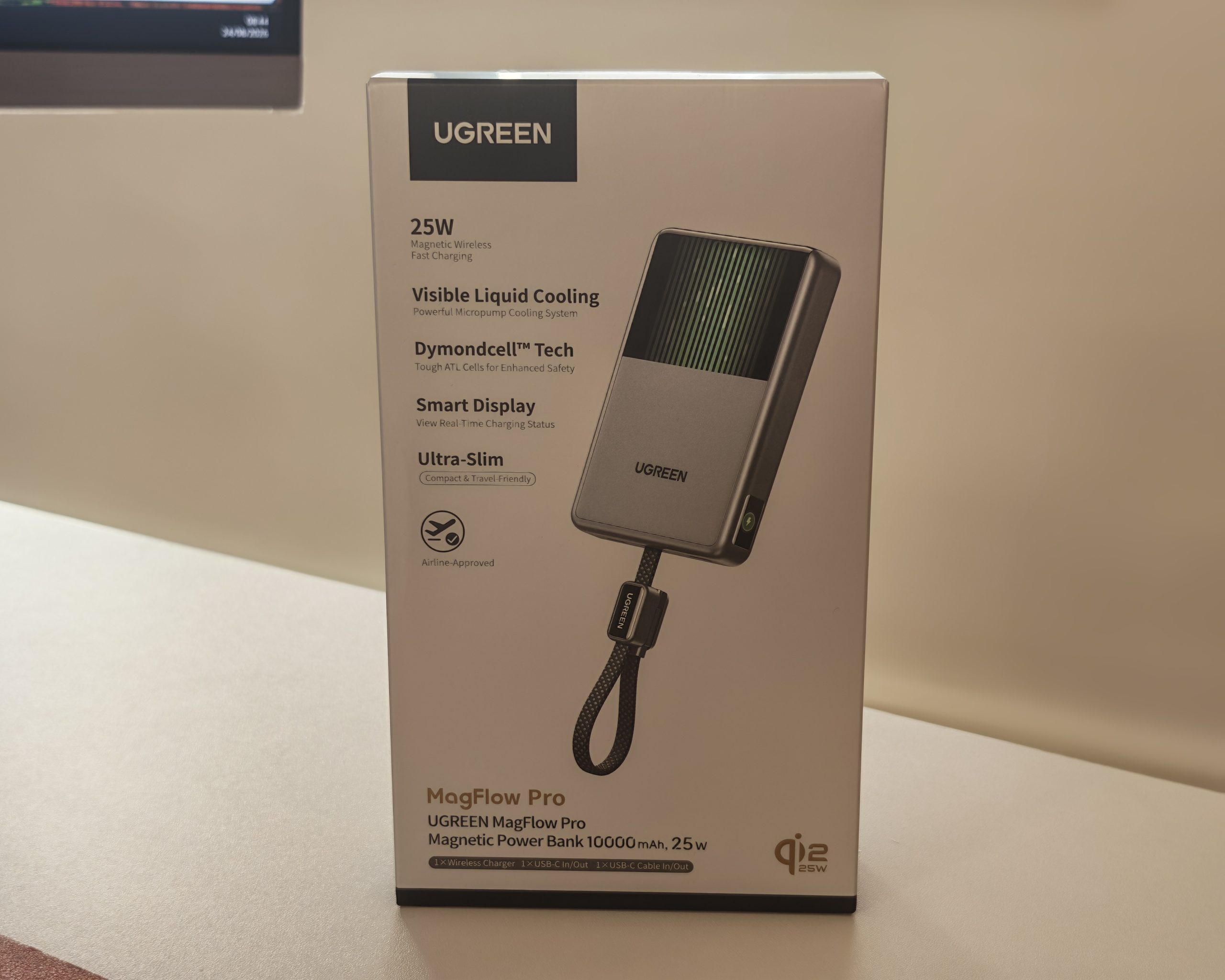
2026 UGREEN MagFlow Pro Magnetic Power Bank 25W (10,000mAh) Review – PB793 vs PB773
I reviewed the MagFlow Pro Magnetic Power Bank 25W this time last year and found it an excellent power bank that I still use today. The built-in cable and Qi2 charging make it perfect for days out.
This has now been updated with a 2026 model of the same name, with some useful but incremental improvements.

- 45W Fast Charge & 30W Self‑Recharge: 45W USB‑C output powers laptops and phones; 30W input refills the bank fast. Charges iPhone 17 Pro Max from 0 to 65% in just 30 mins – perfect for quick top‑ups
- CryoPulse Multi‑Layer Cooling: Liquid layer cooling-advanced heat dissipation keeps temperatures low even during 25W wireless charging, preventing throttling and extending battery life for safer, consistent power
- Smart Digital Display: Real‑time readout shows charging wattage, battery level, and total cycle count – always know your status at a glance, no guessing
- Qi2 Certified Magnetic Wireless: 25W fast wireless charging with ultra‑strong magnets that lock your phone in perfect alignment – stable, efficient, and hassle‑free every time
- Built‑in Cable & Carry Strap: The integrated USB‑C cable doubles as a durable carry strap, tested over 10,000 bends – always have a cord ready, tangle‑free and convenient

PB793 MagFlow Pro Magnetic Power Bank vs PB773 MagFlow Pro Magnetic Power Bank Specification
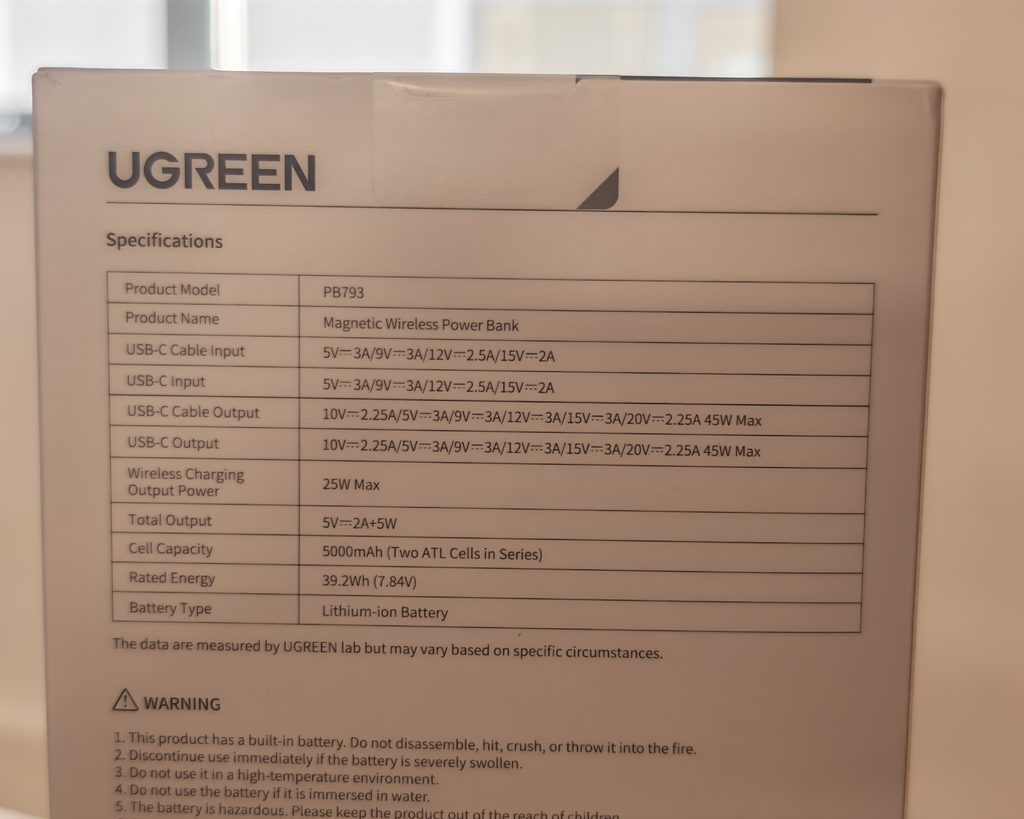
| Specification | UGREEN MagFlow Pro PB793 | UGREEN MagFlow Pro PB773 |
|---|---|---|
| Product type | Magnetic wireless power bank | Magnetic wireless power bank |
| USB-C cable input | 5V/3A, 9V/3A, 12V/2.5A, 15V/2A | 5V/3A, 9V/3A, 12V/2.5A, 15V/2A |
| USB-C port input | 5V/3A, 9V/3A, 12V/2.5A, 15V/2A | 5V/3A, 9V/3A, 12V/2.5A, 15V/2A |
| Maximum input power | 30W | 30W |
| USB-C cable output | 5V/3A, 9V/3A, 10V/2.25A, 12V/3A, 15V/3A, 20V/2.25A | 5V/3A, 9V/3A, 10V/2.25A, 12V/2.5A, 15V/2A, 20V/1.5A |
| USB-C port output | 5V/3A, 9V/3A, 10V/2.25A, 12V/3A, 15V/3A, 20V/2.25A | 5V/3A, 9V/3A, 10V/2.25A, 12V/2.5A, 15V/2A, 20V/1.5A |
| Maximum wired output | 45W | 30W |
| Wireless charging output | Up to 25W | Up to 25W, including iPhone |
| Total output charging multiple devices | 5V/2A wired + 5W wireless | 5V/1.5A wired + 5W wireless |
| Battery type | Lithium-ion | Lithium-ion polymer |
| Cell configuration | Two 5,000mAh ATL cells in series | Two 5,000mAh cells in series |
| Total cell capacity | 10,000mAh | 10,000mAh |
| Rated capacity | Not stated | 5,600mAh at 5V/3A |
| Rated energy | 39.2Wh at 7.84V | 36Wh at 7.2V |
| Battery charging limit voltage | Not stated | 4.25V per cell |
What’s Different?
On paper, the PB793 is a measured update rather than a wholesale redesign. The headline change is wired output, which jumps from 30W (20V/1.5A) to 45W (20V/2.25A), a 50% increase that should make a real difference when topping the power bank back up or fast charging a laptop or camera accessory on the move.
Rated energy also rises, from 36Wh to 39.2Wh, a gain of around 9%, despite both power banks using two 5,000mAh cells and sharing the same 10,000mAh total capacity. UGREEN has not published a rated capacity or charging limit voltage for the PB793, so it is difficult to say exactly why the energy figure has increased, but the shift from a lithium-ion polymer cell in the PB773 to a lithium-ion cell in the PB793 suggests a change in cell chemistry or configuration is behind it.
The feature UGREEN is leading with is CryoPulse, a micro-pump liquid cooling system that the company says circulates coolant around the cells and charging circuitry to keep temperatures down and maintain stable charging speeds for longer. According to UGREEN’s own testing, peak surface temperature is kept up to 10°C below the roughly 48°C reference point it uses for a typical 25W wireless charger, which it translates into a claimed 44% reduction in heat buildup. Those are UGREEN’s own figures rather than anything I have independently verified, but the underlying principle, that heat is the main reason wireless chargers throttle down from their advertised peak wattage, is well established. A cooling system that genuinely holds temperatures down should help sustain charging speeds for longer rather than only hitting them briefly before dropping off.
Cosmetically, the PB793 adds a higher resolution side display and a second, front-facing LCD panel that shows an animation intended to represent the CryoPulse cooling in action.
Design
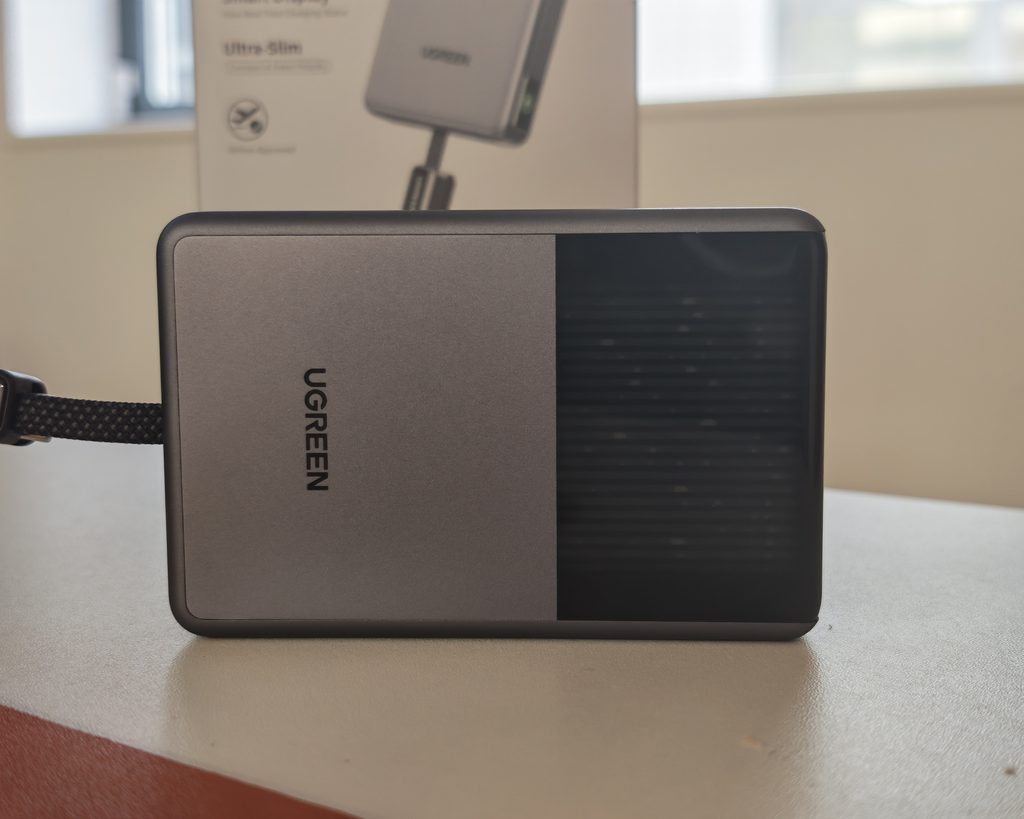
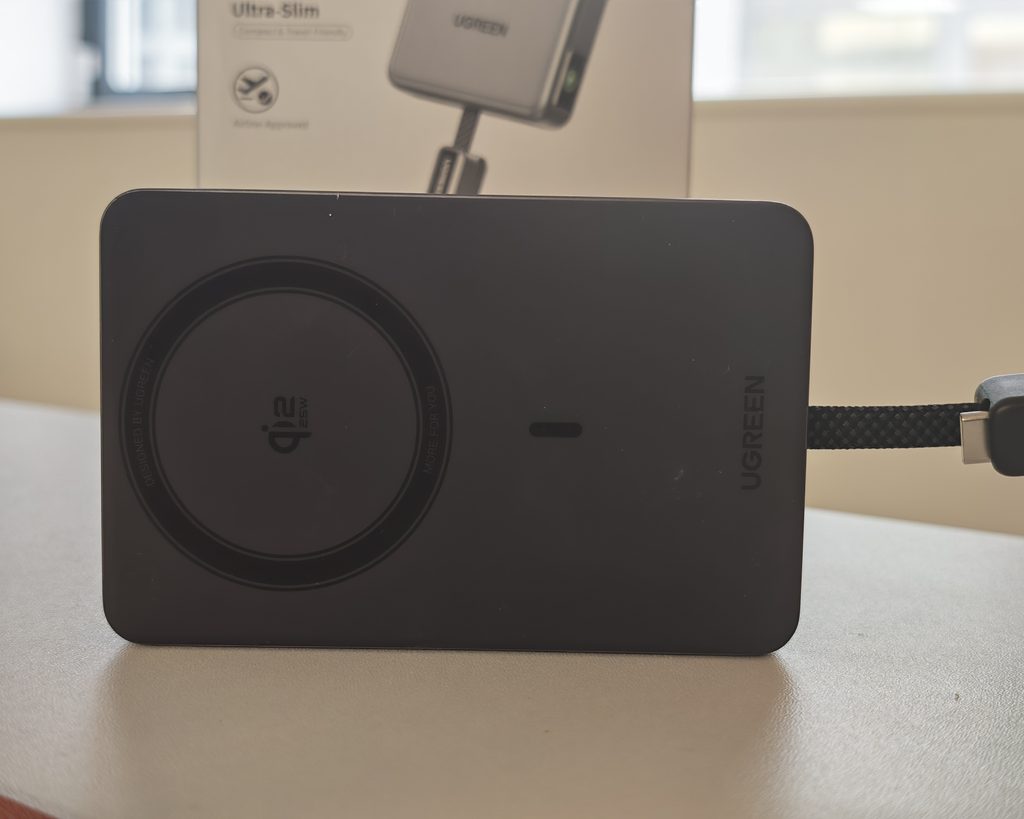
The design has been tweaked rather than overhauled, and the two power banks are a similar size and weight. The PB793 measures 108.4 x 70.5 x 16.2mm and weighs 230g.
One change I am less keen on is the built-in USB-C cable. The PB773 tucked its plug neatly into a recess in the body, while the PB793’s cable and connector sit slightly proud of the casing. It is a minor point, but the older design felt a little tidier both in the hand and in a bag.
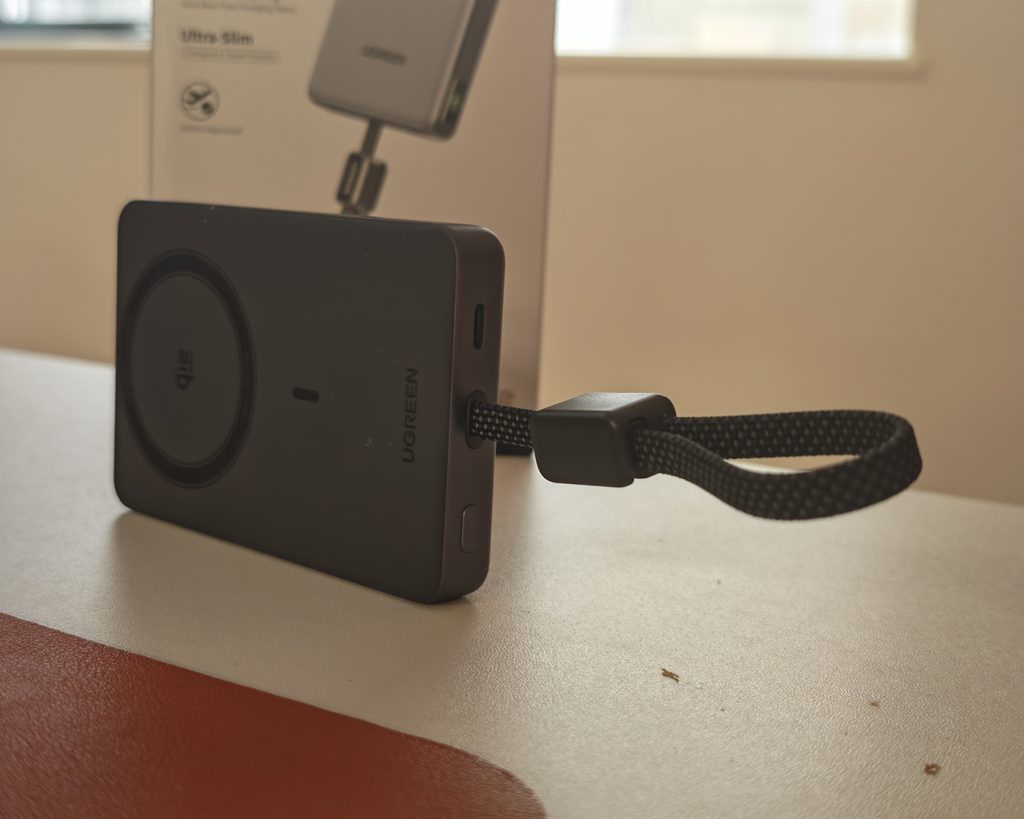
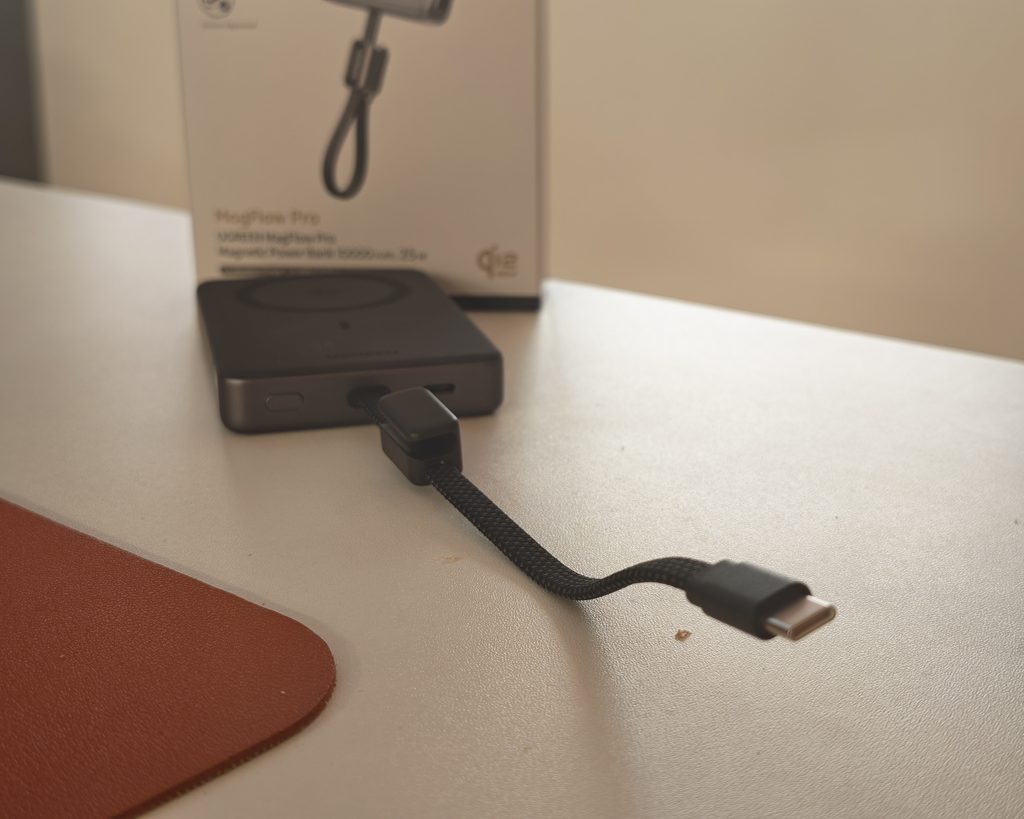
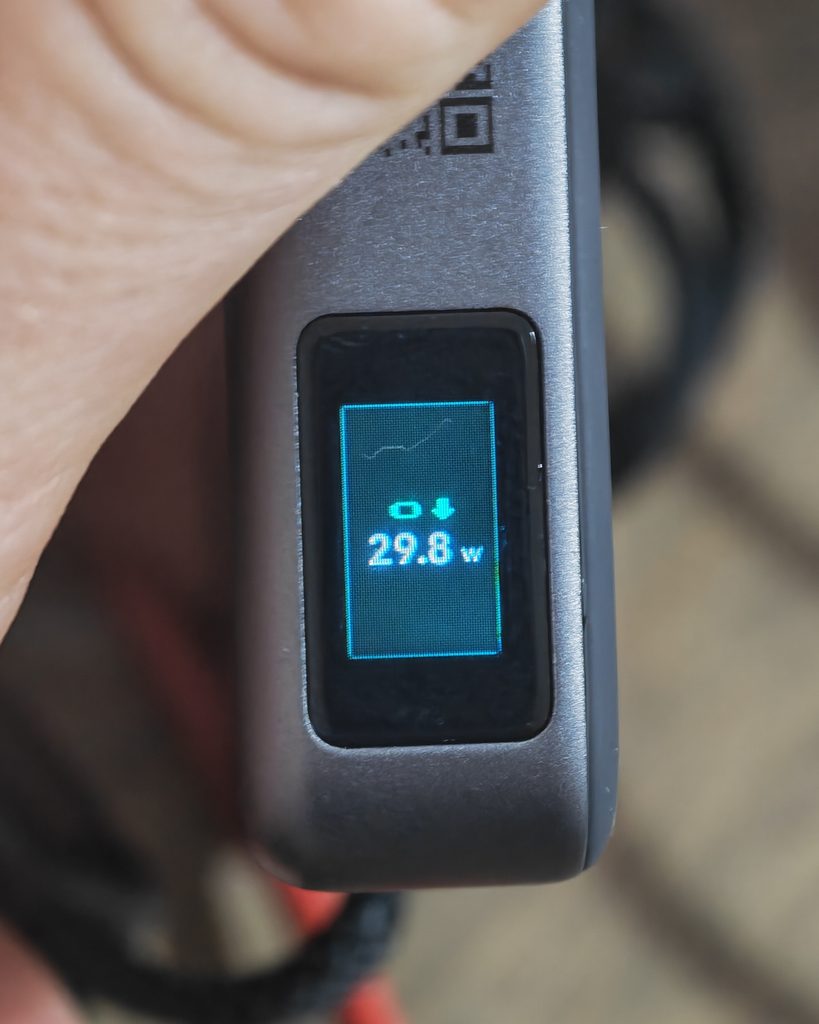
The side display has been upgraded to a higher resolution panel that now shows live input and output wattage, which is a genuinely useful addition when you want to confirm how much power is actually flowing rather than trusting the box. The new front-facing LCD is more of a talking point than a functional feature. According to UGREEN’s product guide, it displays an animation representing the CryoPulse liquid cooling system, but it does not show anything you could not already see on the side display, so it feels more like a decision made for the marketing photos than something that adds real value for the person using it day to day.
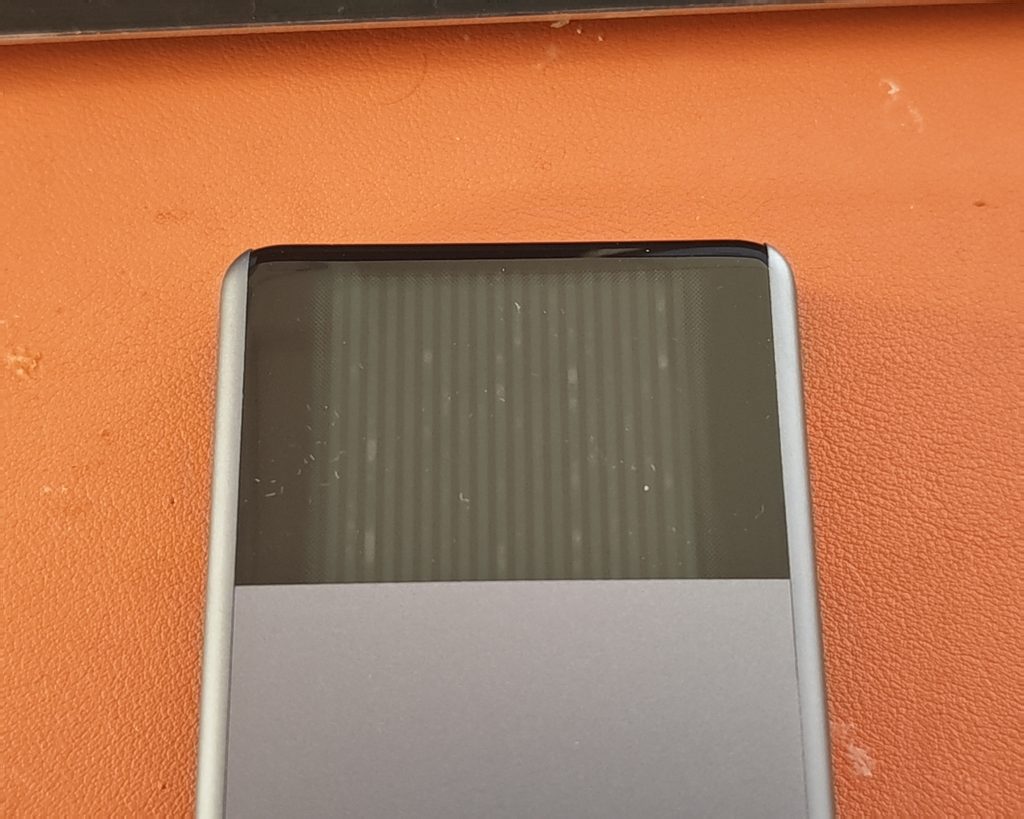
Both power banks keep the same layout otherwise: a built-in USB-C cable, a second USB-C port, and Qi2 magnetic charging on the back.
Ports / Output
The PB793 can output up to 45W from either the built-in cable or the second USB-C port, covering the following profiles: 5V/3A (15W), 9V/3A (27W), 10V/2.25A (22.5W), 12V/3A (36W), 15V/3A (45W) and 20V/2.25A (45W). That is a genuine improvement over the PB773’s 30W ceiling and puts the PB793 within range of fast charging a tablet or a lightweight laptop, not just topping up a phone.
Wireless charging tops out at the full 25W Qi2 allows, though how much power your phone actually receives depends on the device. UGREEN’s compatibility chart lists 25W for the iPhone 17 series and the iPhone 16 series running iOS 26 or later, plus the Galaxy S26 Ultra and Pixel 10 Pro XL. Older or smaller phones step down: the iPhone 16 and 16 Pro are capped at 22W, the iPhone Air and Galaxy S26+ at 20W, and the iPhone 12 to 15 series, Pixel 10 and 10 Pro, and Galaxy S25 range at 15W. Samsung’s S25 phones also need a magnetic case fitted before wireless charging will work at all.
If you want to charge two devices at once, the totals are more modest. Using the wired output and the wireless pad together caps wired charging at 10W and wireless at 5W. That is an improvement on the PB773’s 7.5W wired limit in the same scenario, but it is still well short of what either output can manage on its own, so this is best thought of as a fast single-device charger that can also trickle-charge a second gadget, rather than a true dual fast charger.
Safety and Battery Life
UGREEN backs the PB793 with what it calls Dymondcell 2.0, a battery architecture built around high-density ATL cells with 13-layer circuit protection. The company states the power bank retains 90% of its original capacity after 800 charge cycles, which is a reasonable figure for this category and should translate into a couple of years of daily use before capacity becomes noticeably compromised.
On the safety side, UGREEN says the PB793 has passed a 4mm tungsten nail penetration test, a 2.5 tonne crush test, and a seven hour continuous overcharge and 135°C hot box test without fire or explosion, and it carries CE, FCC, UL, PSE, UKCA and CB certification. A Thermal Guard system monitors temperature 240 times a second and automatically adjusts power output to keep charging within safe limits. None of this is something I have been able to test myself, but it is a reasonably thorough set of claims for a power bank at this price, and having the certifications listed is a sensible baseline to look for.
Performance
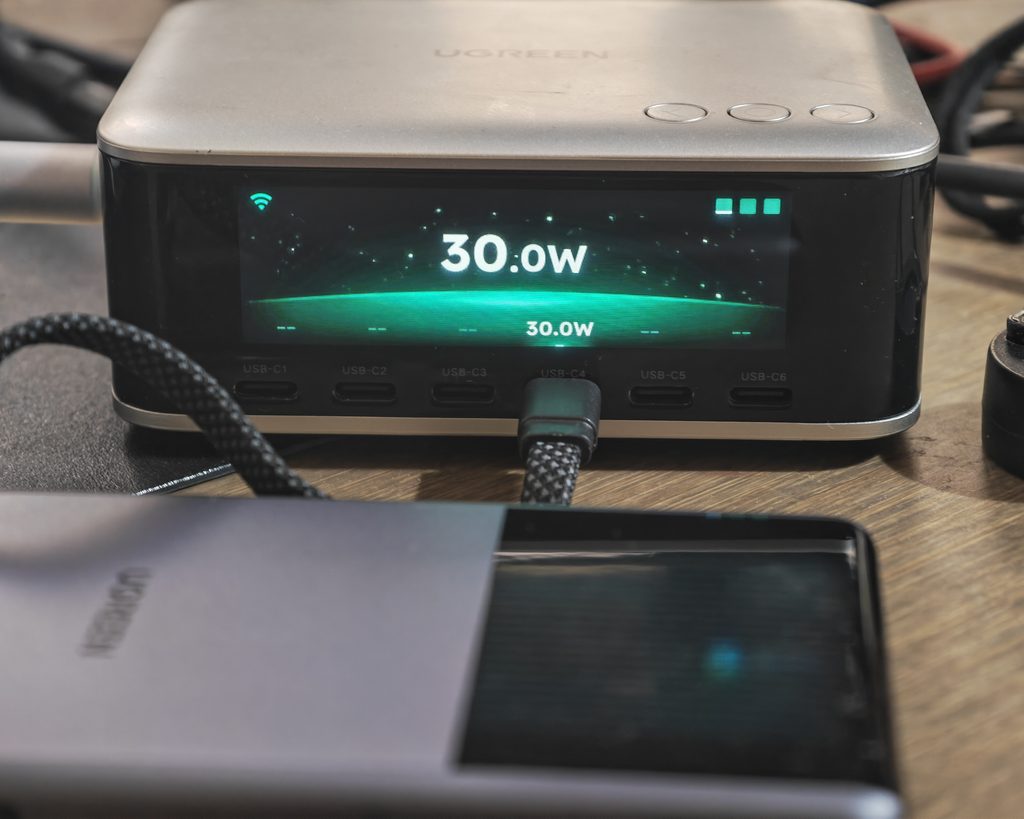
I charged the MagFlow Pro from the Nexode Pro 300W Desktop Charger I reviewed recently, which confirmed the 30W input on both the charger’s display and the power bank’s own screen.
For output, I tested with the ZHIYUN MOLUS X100 LED Lights, which need 100W to reach maximum brightness. That confirmed the PB793 is capable of its rated 45W wired output.
Unfortunately, I do not have a phone capable of the full 25W Qi2 wireless charging, so I was not able to push the wireless side to its limit. With my Pixel 9 Pro, I measured 10W, which is in line with what an older, non-Qi2 phone should expect from this charger rather than a shortfall in the power bank itself.
Price and Alternative Options
- 45W Fast Charge & 30W Self‑Recharge: 45W USB‑C output powers laptops and phones; 30W input refills the bank fast. Charges iPhone 17 Pro Max from 0 to 65% in just 30 mins – perfect for quick top‑ups
- CryoPulse Multi‑Layer Cooling: Liquid layer cooling-advanced heat dissipation keeps temperatures low even during 25W wireless charging, preventing throttling and extending battery life for safer, consistent power
- Smart Digital Display: Real‑time readout shows charging wattage, battery level, and total cycle count – always know your status at a glance, no guessing
- Qi2 Certified Magnetic Wireless: 25W fast wireless charging with ultra‑strong magnets that lock your phone in perfect alignment – stable, efficient, and hassle‑free every time
- Built‑in Cable & Carry Strap: The integrated USB‑C cable doubles as a durable carry strap, tested over 10,000 bends – always have a cord ready, tangle‑free and convenient
The UGREEN MagFlow Pro PB793 launches at £109.99 / €119.99 / $149.99, and I would expect discounts to appear fairly soon after release, as is typical for UGREEN.
The UGREEN MagFlow Pro PB773 is listed at £80, but UGREEN currently has 30% off available directly, and it can also be found on Amazon for £53 at the time of writing.
For comparison, the Ecoflow Qi2.2 MagSafe Power Bank 10,000mAh is available for £53, though it does not have particularly strong reviews on Amazon. INIU’s P781, a 25W Qi2.2 10,000mAh magnetic portable charger, is available for £55.
Overall
The MagFlow Pro Magnetic Power Bank 10,000mAh 25W, model number PB793, is a decent upgrade over last year’s PB773. You get faster wired charging, slightly more capacity, and it should sustain its charging speeds better thanks to the improved cooling system.
The large price gap between the two models makes it hard to recommend the PB793 over the PB773 based on the pricing UGREEN has supplied so far. As is usually the case with a brand like UGREEN, though, the RRP rarely reflects what people actually end up paying, and I would expect the PB793 to be discounted not long after launch.
Once this newer model comes down in price a bit, it will then be an excellent option for anyone looking for a versatile power bank that is well suited for days out.
2026 UGREEN MagFlow Pro Magnetic Power Bank 25W (10,000mAh) Review - PB793 vs PB773
-
Overall - 75%75%
Summary
The UGREEN MagFlow Pro PB793 is a sensible refresh rather than a dramatic overhaul. Faster wired charging and the CryoPulse cooling system are the real gains, while the new front display adds little beyond novelty. It remains a strong all-rounder, though the price premium over the outgoing PB773 is hard to ignore until discounts land.
Pros
- Faster 45W wired charging
- Cooling helps sustain charging speeds
- Useful wattage readout on display
Cons
- Pricier than the PB773
- Front display feels rather pointless
- Multi-device charging remains quite limited

I am James, a UK-based tech enthusiast and the Editor and Owner of Mighty Gadget, which I’ve proudly run since 2007. Passionate about all things technology, my expertise spans from computers and networking to mobile, wearables, and smart home devices.
As a fitness fanatic who loves running and cycling, I also have a keen interest in fitness-related technology, and I take every opportunity to cover this niche on my blog. My diverse interests allow me to bring a unique perspective to tech blogging, merging lifestyle, fitness, and the latest tech trends.
In my academic pursuits, I earned a BSc in Information Systems Design from UCLAN, before advancing my learning with a Master’s Degree in Computing.
I’m proud to share that Vuelio has consistently ranked Mighty Gadget as one of the top technology blogs in the UK. With my dedication to technology and drive to share my insights, I aim to continue providing my readers with engaging and informative content.
I work directly with the companies he reviews products for or their chosen PR agency.
For Social Media, you can find me on: