Cheapest WiFi 7 Access Points – Affordable WiFi 7 Upgrades
Following my recent review of the EnGenius ECW520 WiFi 7 access point, I thought it would be beneficial to examine the current state of the market.
With the launch of WiFi 7, we saw networking hardware prices reach new heights, with the Netgear Orbi RBE973 quad-band mesh system being a prime example of this, with the three-pack costing £2200.
Unifi was one of the first brands to launch a Wi-Fi 7 access point with the Ubiquiti Unifi U7 Pro, and it was a surprisingly affordable price point of $180/£171 at the time of launch. It came with some criticism as this Pro model launched with a 2x2x2 MIMO design rather than 4×2 that was used on the U6 Pro. Personally, I didn’t think this was too bad, as the U7 Pro was only slightly more expensive than the older model, yet it implemented a third radio for 6Ghz.
Since then, the range of options has exploded. Unifi themselves have 13 separate WiFi 7 access points that aim to cover every scenario, from home users/small businesses to large enterprises.
With all these options, it has become increasingly confusing about what to buy, with the main differentiating features being:
- Dual Band vs Tri Band – Dual band ditches the ultra-fast 6Ghz network, but WiFi 6 still brings significant performance gains to the 5Ghz network.
- MIMO Design – With options for 4, 6, 8, 10 and 12 streams. This would be 2×2 for two streams for a dual band, or 4x4x4 being four streams for each band. The more streams, the higher the capacity the access point can handle.
- 2.5GbE or 10GbE – I think all the WiFI 7 APs I have listed have at least 2.5GbE and this is adequate most of the time, but with 6GHz and 320MHz channel width, you can saturate this, and if you have a 4x4x4 AP, then you could easily have multiple clients that would saturate lower speed Ethernet ports.
- Channel Width – Less of a concern, but some brands limit 5GHz to 80MHz. In contrast, some brands like Unifi allow you to go up to 240MHz. While this allows much higher speeds, it is not a very practical solution, especially if you have more than one access point.
Dual Band WiFi 7 Access Points (No 6Ghz)
Ubiquiti Unifi
Unifi U7 Lite – £94.80

- UbiQuiti
- Wireless Access Points
Key Specs:
- WiFi 7 (802.11be), dual band (2.4 GHz + 5 GHz)
- 2 × 2 MU-MIMO on both bands
- Throughput: up to 688 Mbps on 2.4 GHz, 4.3 Gbps on 5 GHz
- 1 × 2.5 GbE RJ45 Ethernet (PoE, 802.3af)
- 115 m² coverage
- Supports 200+ clients
- Channel widths: 20/40 MHz (2.4 GHz), up to 240 MHz (5 GHz)
- Ceiling/wall mountable, no Bluetooth
Overview:
In my experience, the U7 Lite delivers genuinely solid basic WiFi 7 performance at a price point that makes sense for home and small office deployments. The inclusion of a 2.5 GbE port is welcome, but most users won’t see much practical benefit over Gigabit unless running multiple WiFi 7 clients with genuine multi-gigabit needs. It is a simple unit with good cloud management and basic features. The lack of Bluetooth is a minor disappointment if you’re already invested in the UniFi ecosystem with IoT, but it’s not a dealbreaker for most. Range and concurrent client support are decent, though lacking a 6 GHz band means there’s some limitation on futureproofing.
U7 In-Wall – £142.80

Key Specs:
- WiFi 7 dual band (2.4 GHz + 5 GHz)
- 2 × 2 MU-MIMO, 688 Mbps (2.4 GHz), 4.3 Gbps (5 GHz)
- 3 × 2.5 GbE RJ45 (includes PoE-in and PoE-out for chaining)
- 115 m² coverage
- 200+ clients
- Wall mounted, compact form factor
- Band steering, fast roaming, cloud management
Overview:
The U7 In-Wall model is clearly targeted at hospitality, student accommodation, or hotel-style deployments where each room may require an access point and LAN passthrough. It offers a neat, flush installation with solid 2.5 GbE support and the bonus of PoE-out for powering devices like IP phones. On balance, you pay a bit extra for the form factor, and the performance is essentially identical to the Lite. It’s best if you need the all-in-one wall switch and AP combo.
U7 Outdoor – £190.80

- UbiQuiti
- Wireless Access Points
Key Specs:
- WiFi 7 dual band
- 2 × 2 MIMO (2.4 GHz + 5 GHz)
- Up to 465 m² open space coverage, supports 200+ clients
- 1 × 2.5 GbE Ethernet (PoE+)
- Weatherproof, IP-rated enclosure (wall/pole mount)
- Software-adjustable antenna beamwidth, omni-directional supplied
Overview:
Outdoor WiFi 7 is still relatively rare and generally expensive. The U7 Outdoor does a good job of balancing price and performance, though you’ll pay for the durability. In my testing, range is impressive in open air, but performance falls sharply with obstructions. Installation is straightforward, and the unit is built to last, but consider line-of-sight requirements and make sure you really need an outdoor-rated device. Power-over-Ethernet is a necessity for most installs, but most home users can save by opting for an indoor model.
Zyxel Nebula
NWA50BE – £90

- WIFI 7 PERFORMANCE: Qualcomm quad-core CPU delivers up to 5.1Gbps across 2.4GHz (688Mbps) and 5GHz (4324Mbps), enabling real-time responsiveness for home offices and small businesses
- SMART MESH MLO: Dual-radio backhaul with Multi-Link Operation creates cable-free mesh deployments with higher bandwidth, lower latency, and stronger interference resistance than single-radio systems
- NEBULAFLEX MANAGEMENT: Switch freely between standalone local GUI and Nebula cloud management at any time, no subscription required, no IP addresses or passwords needed for cloud-based setup
- ADDITIONAL 2.5GBE UPLINK: The 1/2.5GbE port unlocks full WiFi 7 performance beyond standard gigabit, integrating with existing infrastructure without costly network upgrades for small offices and homes
- BACKWARD COMPATIBLE: Supports IEEE 802.11be/ax/ac/n/g/b/a with WPA3 security, MU-MIMO, and fast roaming via 802.11r/k/v, integrates seamlessly with existing WiFi 6 devices and networks
Key Specs:
- WiFi 7, dual band (2.4 GHz + 5 GHz)
- 2 × 2 MU-MIMO
- Max rates: 688 Mbps (2.4 GHz), 4.3 Gbps (5 GHz)
- 1 × 1/2.5 GbE LAN (PoE, 802.3at)
- Supports 20/40/80/160/240 MHz channels
- Internal antennas: 2 dBi (2.4 GHz), 3 dBi (5 GHz)
- Cloud or standalone management
Overview:
Zyxel seriously undercuts its main rivals in price, making the NWA50BE an excellent choice for anyone wanting to step up to WiFi 7 on a tight budget. The build quality reflects this – it is plasticky and a little basic, but performance is more than respectable for small offices or home use. Nebula cloud management is robust (and free for the base features), which adds considerable value. Limitations include somewhat basic RF features and lower receive sensitivity, but for the price it is hard to fault.
NWA50BEPRO – £109
- WIFI 7 SPEED UPGRADE: Powered by a Qualcomm quad-core CPU, this BE6500 dual-radio AP delivers up to 6.5 Gbps across 2.4GHz, 5GHz, and 6GHz bands for enterprise-grade performance
- BANDFLEX TECHNOLOGY: Choose between 5GHz or 6GHz radio operation via configuration, integrate into your existing 5GHz network today while staying ready for 6GHz deployment as devices adopt the band
- SMART MESH MLO: Dual-radio backhaul establishes dynamic wireless mesh links automatically, delivering superior bandwidth, reduced latency, and interference resistance without complex cabling
- FLEXIBLE MANAGEMENT: NebulaFlex lets you switch between standalone local GUI and Nebula cloud management, use the Nebula app for guided setup or control the AP entirely offline
- ADDITIONAL 2.5GBE WIRED UPLINK: The 2.5GbE LAN port with 802.3at PoE support (16W draw) enables multi-gigabit backhaul speeds that unlock WiFi 7's full potential without a full network overhaul

Key Specs:
- Enhanced version of the NWA50BE
- WiFi 7, dual band
- 1 × 2.5 GbE, PoE+ powered
- Multi-link and mesh features
- Slightly higher antenna gain
Overview:
You’re paying a small premium over the NWA50BE for enhanced specs and an upgraded antenna configuration. Personally, I’d only recommend the PRO model if you’re pushing for the highest reliability in a slightly tougher RF environment, or planning a larger managed Nebula rollout where the incremental improvements in coverage and power draw might be worth it.
NWA90BE – £115
- WIFI 7 SPEEDS UP TO 5.1GBPS: Powered by a Qualcomm quad-core CPU, this BE5100 dual-radio AP delivers 688Mbps on 2.4GHz and 4324Mbps on 5GHz for smooth 4K streaming and video conferencing
- SMART MESH MLO WITH DUAL-RADIO BACKHAUL: Multi-Link Operation creates dynamic wireless links across both radios at once, delivering higher bandwidth and lower latency than single-radio mesh systems
- FLEXIBLE MANAGEMENT, NO FORCED SUBSCRIPTION: NebulaFlex lets you switch between standalone local GUI and Nebula Cloud at any time, with no IPs or passwords to memorize
- ENTERPRISE-GRADE SECURITY FOR SMALL BUSINESS NETWORKS: Supports IEEE 802.1X and RADIUS authentication, WPA3 encryption, captive portal with custom branding, rogue AP detection, and MAC filtering
- WITH A 2.5GBE UPLINK FOR FULL WIFI 7 THROUGHPUT: The 2.5GbE Ethernet port surpasses standard gigabit limits to match WiFi 7 speeds, with PoE 802.3at support at 16W for flexible cable-free installation
Key Specs:
- WiFi 7, dual band (2.4 GHz + 5 GHz)
- 2 × 2 MU-MIMO
- 688 Mbps (2.4 GHz), 4.3 Gbps (5 GHz)
- 1 × 2.5 GbE LAN, PoE+ (802.3at)
- Internal antennas, mesh and MLO support
Overview:
The NWA90BE is positioned as Zyxel’s best-value “performance” WiFi 7 unit. It doesn’t move too far ahead of the NWA50BE for most usage scenarios, but it does introduce mesh, more advanced management features, and improved resilience to interference. It’s easy to recommend if you want just a tad more futureproofing and don’t mind paying slightly over the most basic model.
NWA90BEPRO – £140
Key Specs:
- Variant of NWA90BE with upgraded hardware/software support
- 2 × 2 MU-MIMO
- PoE/PoE+ support, enhanced management
- 1 × 2.5 GbE
Overview:
Most users won’t need the ‘PRO’ features, but if you’re deploying into environments with high client density or want some extra configuration headroom, the price jump is reasonable. This model is best suited for more demanding installations, or if you’re building an all-Zyxel network and need more uniform feature parity.
NWA110BE – £150

- WIFI 7 SPEED UP TO 6.5GBPS: Dual-radio BE6500 access point delivers 688Mbps on 2.4GHz, 4324Mbps on 5GHz, and up to 5764Mbps on 6GHz with MU-MIMO for lag-free video conferencing and 4K/8K streaming
- BANDFLEX DUAL-BAND FLEXIBILITY: Configurable radio supports either 5GHz or 6GHz operation, integrating into existing 5GHz deployments while preparing your network for 6GHz adoption
- ADVANCED RF FILTER DESIGN: Built-in filters eliminate interference between 5GHz and 6GHz bands and minimize 4G/5G cellular interference, ensuring stable signal quality across all channels
- FLEXIBLE POWERING OPTIONS: Operates via PoE+ (IEEE 802.3at, 21.5W draw) or USB Type-C (15VDC/2A), eliminating the need for dedicated power outlets and simplifying ceiling or wall deployment
- NEBULAFLEX CLOUD OR STANDALONE MANAGEMENT: Switch between standalone mode and Nebula cloud management, with app-based monitoring, real-time alerts, and multi-site control
Key Specs:
- WiFi 7 tri-band (2.4 GHz, 5 GHz, 6 GHz – user-selectable with BandFlex)
- 2 × 2 (2.4 GHz), 4 × 4 (5 GHz/6 GHz)
- 688 Mbps (2.4 GHz), 4.3 Gbps (5 GHz), 5.7 Gbps (6 GHz)
- 1 × 2.5 GbE LAN
- Nebula cloud support
Overview:
The NWA110BE is unique in that it allows you to configure whether the higher band is allocated to 5 GHz or 6 GHz, depending on spectrum availability in your region and your own device mix. For those wanting flexibility to stay on 5 GHz but also unlock 6 GHz in time, this design is genuinely clever. The 4 × 4 MIMO on the high band gives it a strong edge in multi-user and high-throughput scenarios compared to most similarly priced WiFi 7 access points. It’s a strong choice for anyone planning to keep their purchase relevant for a few years.
TP-Link Omada
EAP723 – £93

- BE3600 Dual-Band Wi-Fi 7 (2882 Mbps on 5 GHz + 688 Mbps on 2.4 GHz)
- 1× 2.5G port unlocks the full potential of Wi-Fi 7
- 160 MHz bandwidth enables many more simultaneous transmissions
- Multi-Link Operation and Multi-RUs ensure the high performance of your network
- Advanced Functions: Centralized management, Mesh, and Seamless Roaming
Key Specs:
- WiFi 7, dual band (2.4 GHz + 5 GHz)
- 2 × 2 MIMO, BE3600 speeds (688 Mbps on 2.4 GHz, up to 2.8 Gbps on 5 GHz)
- 1 × 2.5 GbE Ethernet port (PoE+)
- 160 MHz channel width
- Ceiling/wall mount
- 250+ clients, Omada SDN integration
Overview:
TP-Link has traditionally dominated the value space, and the EAP723 is no exception. While it lacks a 6 GHz band, real-world throughput is more than sufficient for dense office environments or families with demanding streaming and gaming needs. The Omada platform is comprehensive and easy to manage. The hardware feels a little less refined than Ubiquiti, but it just works – good for simple, no-fuss deployments.
EAP725-Wall – £120

- 【WiFi 7 BE3600 High Performance】Delivers up to 2882 Mbps on 5 GHz and 688 Mbps on 2.4 GHz with WiFi 7 technology for faster more stable wireless connectivity in high-density environments
- 【Wall Plate Design with Multiple Ports】Compact in-wall access point design with 1× 2.5G PoE input port 1× 2.5G pass-through port and 2× Gigabit downlink ports for flexible wired and wireless network expansion
- 【Advanced WiFi 7 Technology】Supports 160 MHz bandwidth Multi-Link Operation and Multi-RUs to improve throughput reduce latency and maintain stable performance across multiple connected devices
- 【Seamless Roaming and Mesh Networking】Works with Omada SDN to provide centralized cloud management mesh networking and seamless roaming for uninterrupted WiFi coverage across rooms and floors
- 【Ideal for Business and Hospitality Use】Perfect wall plate access point solution for hotels offices apartments and modern homes requiring discreet installation and reliable high-speed wireless coverage
Key Specs:
- WiFi 7 dual band (2.4 GHz + 5 GHz)
- 2 × 2 MIMO
- 2.5 GbE uplink port, 2.5 GbE pass-through, 2 × 1G downlink ports
- Max speeds: 2882 Mbps (5 GHz), 688 Mbps (2.4 GHz)
- Designed for wall mounting and high-density use
- Bluetooth 5.2 supported
Overview:
TP-Link’s wall-mount model is well-suited for hotel rooms, conference venues, and shared workspaces requiring both WiFi and multiple wired ports. Performance is capped to EU regulatory BE3600 speeds, but in practice, the extra LAN pass-through makes up for this. The unit is easy to deploy where existing cabling is already in the wall, but some home users may find it unnecessary unless running a high-density homelab or renting out rooms.
Tri-Band WiFi 7 Access Points with 2.5GbE POE
Ubiquiti Unifi
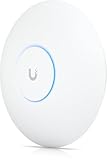
U7 Pro – £168.00
Key Specs:
- WiFi 7, tri-band (2.4 GHz, 5 GHz, 6 GHz)
- 2 × 2 MIMO per band
- 1 × 2.5 GbE port (PoE powered)
- Designed for high-density, mixed-band environments
- Cloud managed, mounting flexibility
Overview:
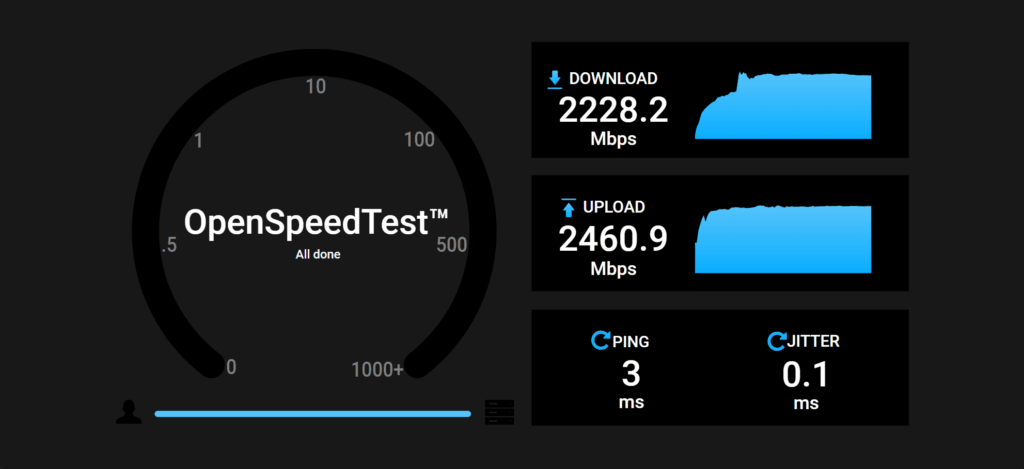
I have three of these Unifi U7 Pro access points, and I have been very happy with them. The tri-band design allows full use of 6 GHz for new devices while retaining legacy support for older kit. My only hesitation: while it is good value in the Ubiquiti ecosystem, actual 6 GHz device compatibility and local spectrum regulations can limit practical benefit at present. The increase in maximum concurrent device support is a strong plus for busy venues.
U7 Pro Max – £264

- UbiQuiti
- Wireless Access Points
Key Specs:
- Advanced version of U7 Pro with potentially higher throughput, improved hardware
- Additional features aimed at enterprise or large deployments
Overview:
Most homes and small offices should skip the Pro Max and put the savings toward better switching or more access points. For larger venues or if you need the absolute best hardware from Ubiquiti, it’s a strong piece of kit – but the price premium is significant and diminishing returns are likely in most small/medium scale setups.
Zyxel Nebula
NWA130BE – £160

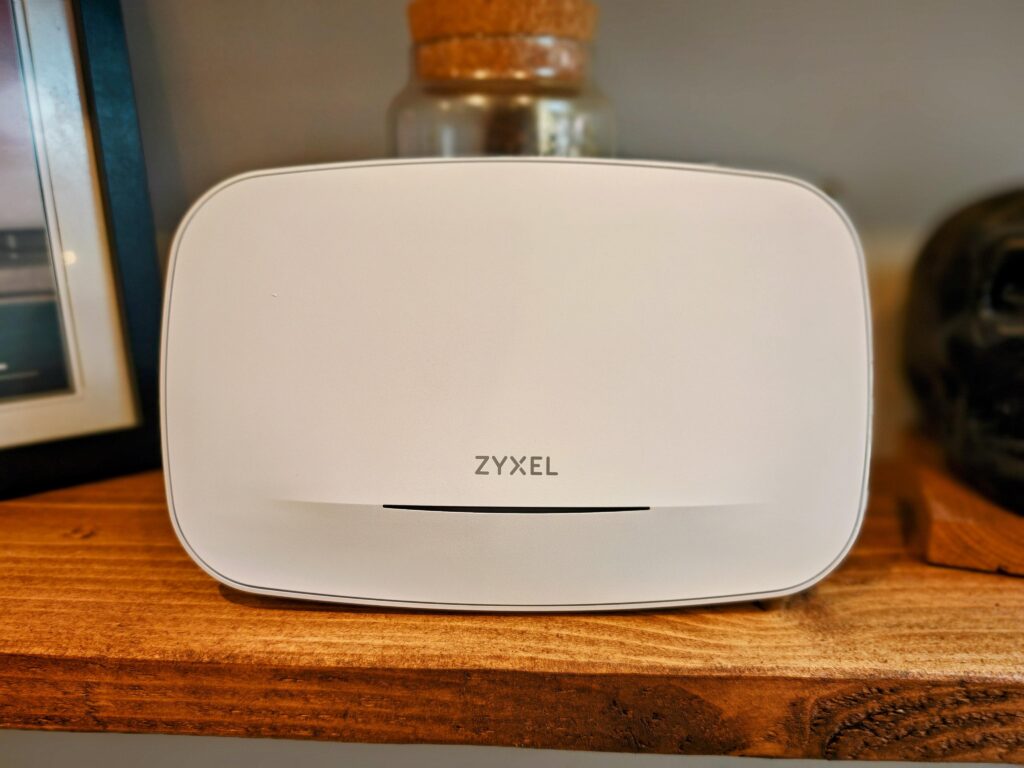
- WIFI 7 TRIPLE-BAND PERFORMANCE: Delivers 11 Gbps speeds across 2.4 GHz, 5 GHz, and 6 GHz bands with MLO technology for simultaneous multi-band connections and ultra-low latency
- DUAL 2.5G ETHERNET PORTS: Seamlessly integrates with existing infrastructure without costly re-cabling, providing fast multi-gigabit connectivity for enterprise-grade network performance
- NEBULAFLEX CLOUD MANAGEMENT: Switch between standalone and cloud-managed modes anytime with real-time monitoring, optimization, and security features via mobile app
- ADVANCED RF DESIGN: Built-in RF filter eliminates 5/6 GHz interference while Advanced Cellular Coexistence minimizes 4G/5G network disruptions for uninterrupted wireless connectivity
- INTERNAL ANTENNA SYSTEM: Features optimized 2x2 MIMO configuration with 3 dBi gain at 2.4 GHz and 4 dBi gain at 5/6 GHz bands, delivering reliable coverage and minimum -99 dBm sensitivity
Key Specs:
- WiFi 7, tri-band (2.4 GHz, 5 GHz, 6 GHz)
- 2 × 2 MIMO on each band
- 11 Gbps max throughput (aggregate)
- 2.5 GbE uplink
- Cloud or standalone managed
Overview:
Zyxel’s NWA130BE hits a real sweet spot for balanced performance and mid-market affordability. Its tri-band approach is properly futureproof, and cloud management is robust if not quite as slick as Ubiquiti or TP-Link. If you’re standardising on the Nebula ecosystem, it’s a clear pick at this price.
TP-Link Omada
EAP772

- Comprehensive After-Sales Service - Comes with manufacturer's lifetime warranty
- Next-Gen WiFi 7- BE9300 Tri-Band Wi-Fi 7 (5760 Mbps on 6 GHz + 2880 Mbps on 5 GHz + 574 Mbps on 2.4 GHz)
- Swifter, Smoother, Stronger - A clear 6 GHz band brings cleaner and wider band resources, 1× 2.5G Port unlocks the full potential of Wi-Fi 7, 320 MHz bandwidth enables many more simultaneous transmissions
- Higher Performance and Functions - Multi-Link Operation and Multi-RUs ensure the high performance of your network, with Centralized management, mesh, and AI roaming
- Ultra-Thin Design - The overall design of EAP772 utilizes a thinner circular arc with a groove around the top cover, fitting closer to various installation surfaces such as ceilings
Key Specs:
- WiFi 7, tri-band (2.4 GHz, 5 GHz, 6 GHz)
- 2 × 2 MIMO (2.4 GHz), 2 × 2 MIMO (5 GHz), 2 × 2 MIMO (6 GHz)
- Bandwidth: 320 MHz support (6 GHz), 2.5 GbE uplink/PoE
- Ultra-thin, modern form factor
- Up to 380 concurrent clients
- Cloud management via Omada SDN
Overview:
If you’re integrating into an existing TP-Link SDN environment, the EAP772 gives you most of the latest features at a reasonable price. The full 320 MHz channel capability on 6 GHz is genuinely future-oriented for flatter, open-plan commercial spaces. However, for many UK users, 6 GHz spectrum use is still patchy, so don’t overpay unless you have compatible clients and an appropriate RF environment.
EnGenius
ECW520 – $189 (not available in the UK, yet)
Key Specs:
- WiFi 7, tri-band (2.4 GHz, 5 GHz, 6 GHz)
- 2 × 2 × 2 MIMO per band
- Throughput up to 10.8 Gbps
- 2.5 GbE PoE+
- 320 MHz and 240 MHz channel widths
Overview:
I’ve not tested this directly due to UK availability, but on paper, EnGenius is pitching the ECW520 as a feature-complete, mid-tier WiFi 7 cloud-managed AP. Build quality and warranty support have been strong with previous models. Once available in the UK, it would be well-positioned as an alternative to TP-Link and Zyxel for anyone prioritising cloud controls and support. Watch out for any currency mark-ups.
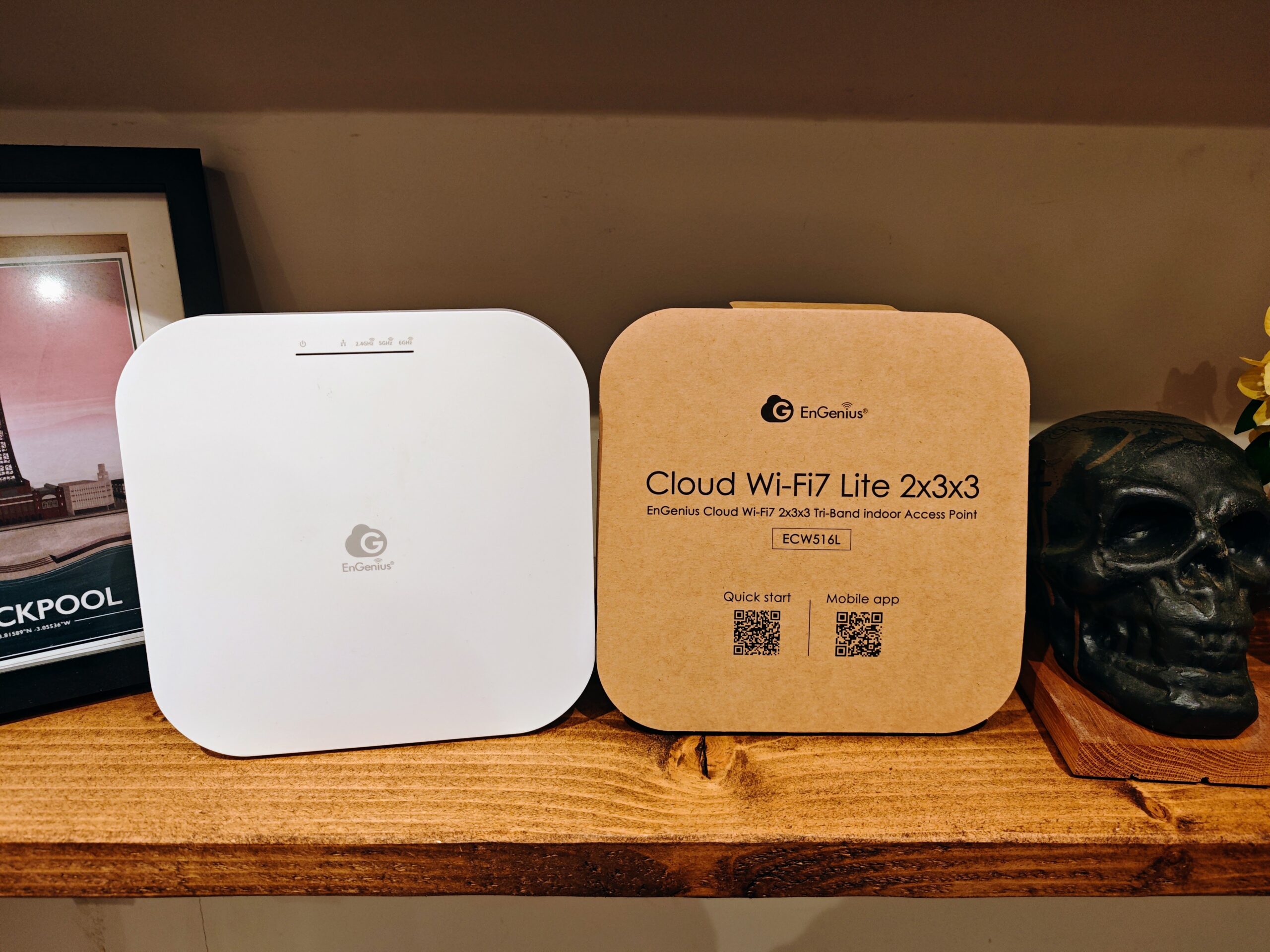
ECW516L – $199 RRP in the US, but £230 in the UK.
Key Specs:
- WiFi 7, tri-band (2.4 GHz, 5 GHz, 6 GHz)
- 2 × 2 MIMO (2.4 GHz), 3 × 3 MIMO (5 GHz & 6 GHz)
- 2.5 GbE LAN/PoE+
- Internal antenna
- Enterprise cloud management (EnGenius Cloud)
Overview:
The ECW516L, now showing up on the UK market at a frankly uncompetitive price, is a tri-band AP with more radios than the bargain-basement options but lacks some features present in higher-end EnGenius models. Management is easy with EnGenius Cloud, but pricing feels too high unless you need something specific to the EnGenius ecosystem. Unless price comes down, I’d stick to TP-Link or Zyxel.
Tri-Band WiFi 7 Access Points with 10GbE POE
Ubiquiti Unifi
U7 Pro XG – £190.80

- UbiQuiti
- Wireless Access Points
Key Specs:
- WiFi 7, tri-band, 10 GbE uplink
- 2 × 2 MIMO per band
- Heavy-duty enterprise features
- Designed for high throughput, dense environments
Overview:
The U7 Pro XG is something of a specialist offering, giving high-speed, high-density coverage for seriously demanding environments. For most readers, I simply wouldn’t recommend a 10 GbE model at these prices – your switching and backend infrastructure will quickly drive up total costs.
U7 Pro XGS – £286.80

Key Specs:
- WiFi 7, tri-band, 10 GbE uplink
- Feature-complete, fully managed
- Extra-high bandwidth, ideal for campuses
Overview:
At nearly £300, it’s hard to see the value for home use at this point. Businesses with extensive 10 GbE deployments might benefit, but for anyone else, there are diminishing returns.
Zyxel Nebula
WBE660S – £555.78
Overview:
With a price way above most of the market, the WBE660S is strictly enterprise territory. It’s excellent if you can justify the spend, but the overwhelming majority should look elsewhere.
TP-Link Omada
EAP773 – £180.00

- BE9300 Tri-Band Wi-Fi 7: 5760 Mbps (6 GHz) + 2880 Mbps (5 GHz) + 574 Mbps (2.4 GHz). Buffering will no longer be a problem
- 1× 10G Port: Unlock the full potential of Wi-Fi 7
- Clear 6 GHz Band: Brings cleaner and wider band resources to your Wi-Fi
- 320 MHz Bandwidth: Up to 320 MHz bandwidth enables many more simultaneous transmissions at the fastest possible speeds
- Low Latency and Interference: Multi-Link Operation, and Multi-RUs ensure high performance of your network
Key Specs:
- WiFi 7, tri-band, supports 320 MHz (6 GHz)
- 1 × 10 GbE port with PoE
- High-density supported, mesh, cloud management
Overview:
This is actually surprisingly good value for those wanting to match their WiFi and LAN speeds, but upgrading the rest of your network infrastructure to 10 GbE is likely to cost more than the access point itself. Only worth it for futureproofing power users or very large spaces.

I am James, a UK-based tech enthusiast and the Editor and Owner of Mighty Gadget, which I’ve proudly run since 2007. Passionate about all things technology, my expertise spans from computers and networking to mobile, wearables, and smart home devices.
As a fitness fanatic who loves running and cycling, I also have a keen interest in fitness-related technology, and I take every opportunity to cover this niche on my blog. My diverse interests allow me to bring a unique perspective to tech blogging, merging lifestyle, fitness, and the latest tech trends.
In my academic pursuits, I earned a BSc in Information Systems Design from UCLAN, before advancing my learning with a Master’s Degree in Computing.
I’m proud to share that Vuelio has consistently ranked Mighty Gadget as one of the top technology blogs in the UK. With my dedication to technology and drive to share my insights, I aim to continue providing my readers with engaging and informative content.
I work directly with the companies he reviews products for or their chosen PR agency.
For Social Media, you can find me on: